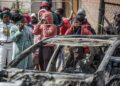






























































Rescue teams and volunteers continued a desperate search for survivors across northern Venezuela on Friday after two powerful earthquakes devastated communities around the capital, Caracas, leaving at least 235 people dead, thousands injured, and many others still missing.
Authorities warned that the death toll is expected to rise significantly as emergency workers battle through collapsed buildings in what has become Venezuela’s deadliest natural disaster in more than a century.
The twin earthquakes, measuring 7.2 and 7.5 magnitudes, struck less than 40 seconds apart on Wednesday evening, causing widespread destruction across several northern states, particularly the coastal region of La Guaira, where the country’s main international airport is located.
Officials said more than 4,000 people have been injured, while thousands remain unaccounted for as rescue operations continue around the clock.
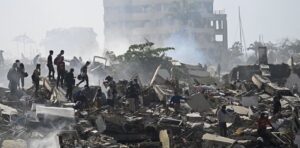
Search for survivors intensifies
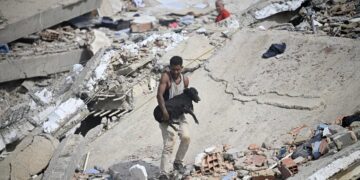
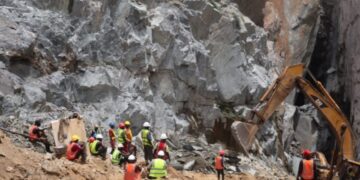
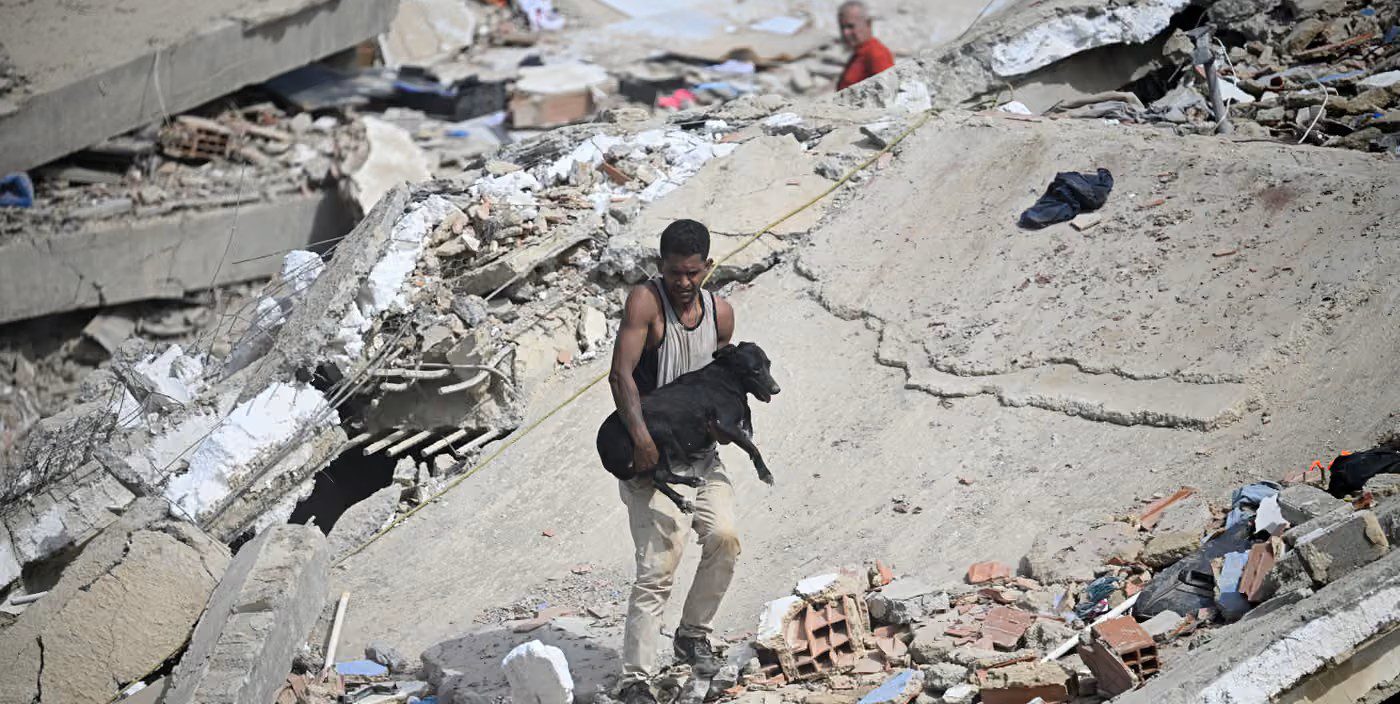
Emergency workers, military personnel and volunteers have been combing through piles of concrete and twisted steel in the hope of finding survivors trapped beneath collapsed structures.
The United Nations Office for the Coordination of Humanitarian Affairs (OCHA) reported that more than 100 buildings collapsed in La Guaira alone, including the multi-storey Ritasol Palace residential complex and the beachfront Eduard’s Hotel.
Entire neighbourhoods were reduced to rubble, leaving families searching frantically for missing relatives.
Among them is Yamileth Jiménez, whose 19-year-old son remains trapped beneath the ruins of their seven-storey apartment building.
“He’s under the slabs and there’s no machinery to get him out,” she said, appealing for urgent assistance as volunteers continued digging by hand.
Government declares state of emergency
Acting President Delcy Rodríguez has declared a nationwide state of emergency following the disaster, announcing the creation of a 200-million-dollar reconstruction fund to support the rebuilding of hospitals, homes and other damaged infrastructure.
In a televised address to the nation, Rodríguez urged private companies to provide heavy-duty construction equipment to speed up rescue operations.
“Our priority is to rescue as many people alive as possible,” she said.
The government also pledged to strengthen emergency response efforts as fears grow that many victims remain trapped beneath collapsed buildings.
International assistance mobilized
The scale of the disaster has prompted an international response, with several countries and humanitarian organizations offering assistance.
United States Secretary of State Marco Rubio said the U.S. Department of Defense would assist in deploying search-and-rescue teams to Venezuela after damage forced the closure of Simón Bolívar International Airport, complicating relief operations.
Rubio stressed that the immediate focus remained on saving lives.
“There are many collapsed buildings, and they will need substantial support to search through the debris,” he said, describing the first 72 hours after the disaster as the critical “golden window” for locating survivors.
The airport closure has disrupted the delivery of emergency supplies and slowed the arrival of international rescue teams.
Rescue operations face major challenges
While dramatic scenes of survivors being pulled alive from collapsed buildings offered moments of hope, residents in several affected communities complained that government rescue teams had been slow to reach some of the worst-hit areas outside Caracas.
In many locations, local volunteers were forced to begin rescue efforts using basic tools and their bare hands before specialized equipment arrived.
The widespread destruction has also damaged roads, communications and electricity networks, making rescue operations even more difficult.
Humanitarian crisis deepens
Humanitarian agencies warned that the disaster threatens to worsen an already fragile humanitarian situation in Venezuela, where millions of people have struggled with economic hardship and limited access to essential services in recent years.
Relief organizations are now working to provide emergency shelter, food, clean water and medical assistance to thousands displaced by the earthquakes.
As rescue efforts continue and assessments of the destruction expand, authorities say determining the full extent of the disaster may take several days, with hopes fading but search operations continuing for those still trapped beneath the rubble.