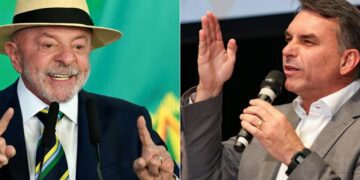




























































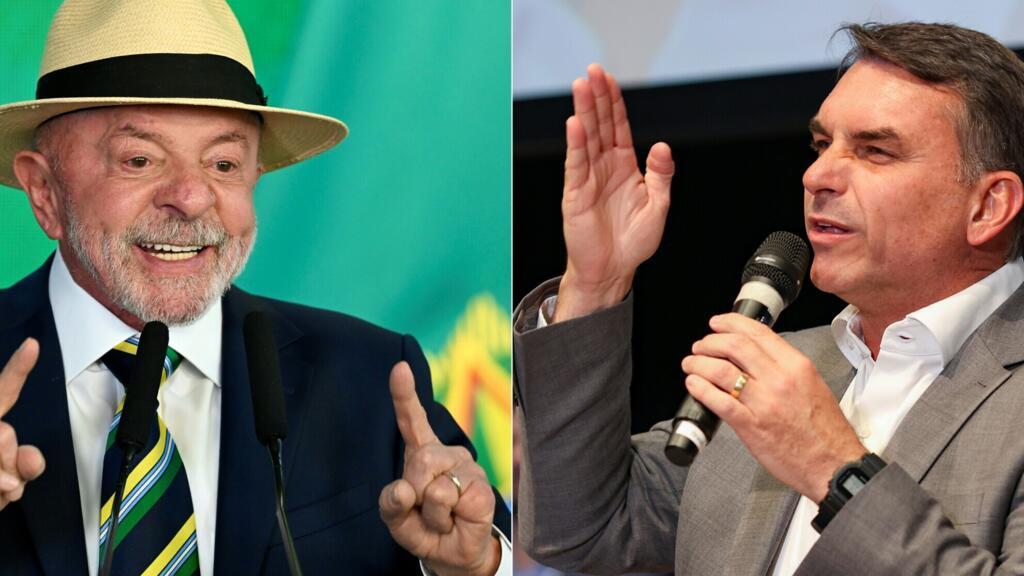
Brazilian Senator Flavio Bolsonaro has refused to accept President Luiz Inacio Lula da Silva’s victory in Sunday’s presidential election, threatening to challenge the result over a decision to extend voting hours.
Flavio, the son of former President Jair Bolsonaro, said he would seek to have the election annulled after a Supreme Court justice appointed by Lula authorized an additional two hours of voting on Sunday. The extension followed reported irregularities involving public transport.
The senator told journalists that the circumstances surrounding the decision made it impossible for him to recognize the result.
However, analysts believe his challenge faces significant obstacles, with Flavio trailing Lula by more than four million votes. An analysis of electoral records by Pedro Burgos, a professor at Insper, found that fewer than 35,000 votes, representing about 0.03 per cent of the total, were cast during the extended voting period.
The senator’s position has also drawn scrutiny because his own campaign had sought an extension of voting hours after heavy rainfall affected parts of Brazil’s conservative-leaning southern region.
Despite the scale of Lula’s victory, Flavio’s refusal to concede could fuel political tensions in a country where confidence in the electoral system and judicial independence has come under pressure.
Jair Bolsonaro’s supporters previously rejected Lula’s 2022 election victory, culminating in an attack on government buildings. The former president was later sentenced to 27 years in prison for plotting a coup.
World leaders congratulate Lula
While Flavio moved to contest the result, leaders across the world congratulated Lula on his re-election.
French President Emmanuel Macron said the two countries had much to build together, while European Commission President Ursula von der Leyen described the outcome as a victory for democracy and multilateralism.
Russia’s Kremlin welcomed Lula’s return to office, praising his contribution to bilateral relations and the BRICS bloc. Ukrainian President Volodymyr Zelenskiy also congratulated the Brazilian leader and expressed interest in expanding cooperation between their countries.
The White House and the US State Department had not issued immediate reactions to the result. Argentine President Javier Milei was also among the notable absentees from the list of leaders who publicly acknowledged Lula’s victory.
The outcome is expected to disappoint US President Donald Trump’s administration, whose State Department had led efforts to help return the Bolsonaro family to power.
Lula’s comeback rattles financial markets
Lula’s victory defied polling expectations and interrupted a series of right-wing electoral gains across Latin America. Although he trailed Bolsonaro in the first round, he secured enough support in the runoff to win another term.
The result triggered a sharp sell-off in Brazilian financial markets as investors abandoned positions built around expectations of a Bolsonaro victory.
Brazil’s currency fell by more than 11 per cent against the US dollar in early spot trading, marking one of its steepest daily declines on record. The benchmark Bovespa stock index dropped by more than 15 per cent, its largest percentage fall in a single day since 1998.
Andres Abadia, chief Latin America economist at Pantheon Macroeconomics, said the initial market reaction could ease as investors unwound election-related positions. However, he noted that investors would need convincing commitments on fiscal policy before increasing their exposure to Brazilian assets.
Speaking at a hotel in Sao Paulo on Sunday night, Lula adopted a conciliatory tone, saying he intended to govern for all Brazilians, including those who did not support him.
He acknowledged that national unity might not fully reflect the country’s political divisions but stressed that the elected president had a responsibility to govern for everyone.
Conservative Congress presents challenge for Lula
Despite his electoral comeback, Lula faces a difficult path in his fourth term, particularly as he seeks to advance his policies through a Congress dominated by Bolsonaro allies and other conservative lawmakers.
The legislature shifted further to the right after conservative candidates performed strongly in the first round of the general election, creating a significant hurdle for Lula’s legislative agenda.
During the campaign, Lula highlighted his previous record on poverty reduction and inequality, as well as improvements in employment, literacy and deforestation figures.
But analysts have warned that translating those promises into policy will be difficult given the political balance in Congress.
Carlos Melo, a political science professor at Insper in Sao Paulo, said the incoming administration would face numerous challenges as it prepares to govern.