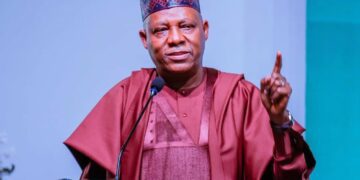



































































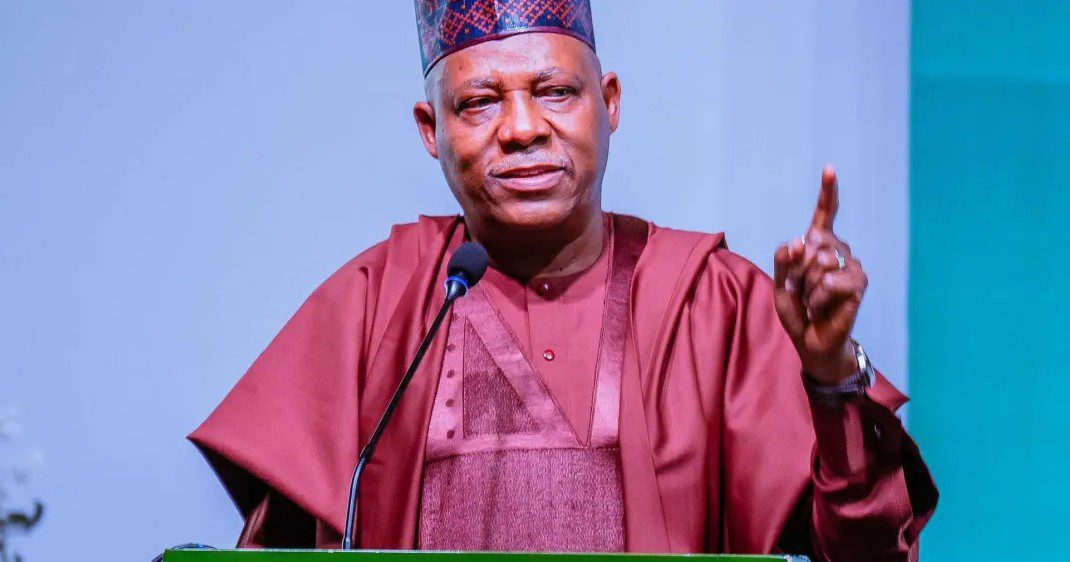
The development was disclosed on Thursday following the 160th meeting of the National Economic Council, chaired by Vice President Kashim Shettima at the State House in Abuja.
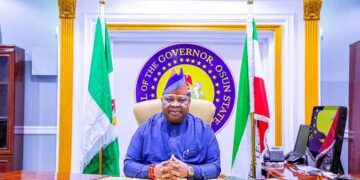
Governor Lucky Aiyedatiwa of Ondo State, who briefed journalists after the meeting, said about 80 per cent of the contractors engaged for the project had received their award letters.
He said the rehabilitation was expected to take three weeks and would prepare the facilities for the resumption of police training programmes.
“Contracts have been awarded for the rehabilitation of the 13 police training institutions, and 80 per cent of contractors have received their award letters,” Aiyedatiwa said.
According to the governor, efforts were also underway to ensure the timely release of funds needed to commence the physical rehabilitation work.
He explained that the project would cover infrastructure and equipment required to improve the quality of police training.
Aiyedatiwa said the initiative was particularly important given the security challenges facing the country and ongoing discussions around state policing.
He stressed that regardless of the structure eventually adopted for policing, officers must meet a minimum national standard of training and competence.
The rehabilitation programme is therefore expected to improve the facilities available for training officers and equip them better for security operations.
Shettima urges policy continuity
At the NEC meeting, Shettima also called for sustained implementation of the Federal Government’s economic reforms, arguing that policies must ultimately produce tangible improvements in people’s lives.
The Vice President said economic indicators would only have real meaning when Nigerians began to experience stronger purchasing power, more employment opportunities, increased business confidence and improved living conditions.
He urged members of the council to ensure that new government priorities did not result in existing commitments being abandoned.
“Continuity is a form of accountability: yesterday’s promise still deserves a place on today’s table, and no new priority absolves us of an old responsibility,” Shettima said.
He added that President Bola Tinubu had tasked NEC with ensuring that government policies translated into measurable outcomes that Nigerians could see and feel.
“A government that remembers earns the confidence of its people because its promises do not expire when the microphones are switched off,” he said.
Nigeria reclassified as frontier market
The council also received an update on Nigeria’s reclassification by FTSE Russell from an unclassified market to frontier market status.
Minister of Finance and Coordinating Minister of the Economy, Taiwo Oyedele, said the development could expand Nigeria’s access to international institutional investors.
He described the classification as an indication that Nigeria had become eligible for investment by a wider range of global funds.
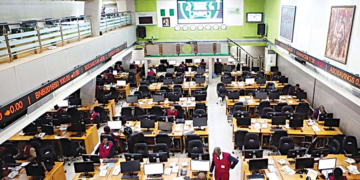
Oyedele also said Nigeria’s capital market had recorded strong gains, describing it as the world’s best-performing market as of late July and early August. He said the market had delivered returns of more than 60 per cent in dollar terms over the preceding year.
Economic indicators improve
The minister told the council that Nigeria’s real gross domestic product grew by 3.89 per cent in the first quarter of 2026, compared with 3.13 per cent during the same period the previous year. Full-year growth is projected to exceed four per cent.
Headline inflation fell to 15.43 per cent in July from 24.94 per cent a year earlier, while food inflation declined to 20.31 per cent from 26.2 per cent.
External reserves stood at $51.96 billion, representing a 38 per cent year-on-year increase and the highest level recorded since January 2009.
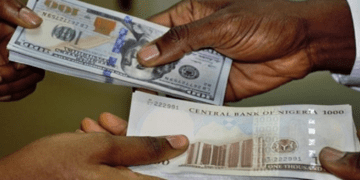
Oyedele said the naira had also strengthened by 13.5 per cent year-on-year by the end of the first half of 2026, with the exchange rate stabilising below N1,400 to the dollar.
Federation Account net revenues increased from N15.2 trillion in 2024 to N21.9 trillion in 2025, a 44 per cent rise, while the government expects another increase of at least 50 per cent in 2026.
Nigeria’s trade surplus also rose sharply, reaching N34.7 trillion in the first quarter of 2026 compared with N17.7 trillion recorded throughout 2025.
The minister said public debt remained below 37 per cent of GDP at N158 trillion, while the proportion of government revenue used for debt servicing fell from almost 100 per cent in 2022 to below 60 per cent in 2025.
Oyedele further disclosed that Fitch, Moody’s and S&P had all upgraded Nigeria’s sovereign credit rating between April 2025 and May 2026, describing the coordinated upgrades as the first such alignment in more than a decade.
Nigeria also exited the Financial Action Task Force grey list in October 2025 and the European Union’s anti-money laundering deficiency list in January 2026, he said.
Agriculture, energy, manufacturing identified as growth drivers
The council identified agriculture, energy, manufacturing, mining and the digital economy as sectors requiring accelerated investment and growth.
Oyedele said a large share of Nigerians work in agriculture and non-tradable services, putting the figure at 81.4 per cent.
However, he warned that several risks could undermine the economic gains recorded so far.
These include geopolitical tensions, commodity-price shocks, persistent food inflation, election-related fiscal pressures and negative pre-election narratives that may not be supported by economic data.
The council also ordered a review of fiscal and monetary measures aimed at bringing down high lending rates and improving access to credit for businesses.
Oyedele cautioned that the recent improvements should not be taken for granted.
“The gains on inflation, reserves, the exchange rate, and credit rating are the direct result of sustained, consistent policy. They are reversible if we waver,” he said.