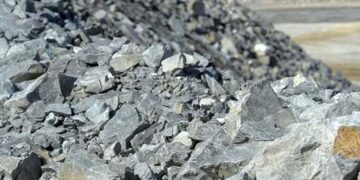









































































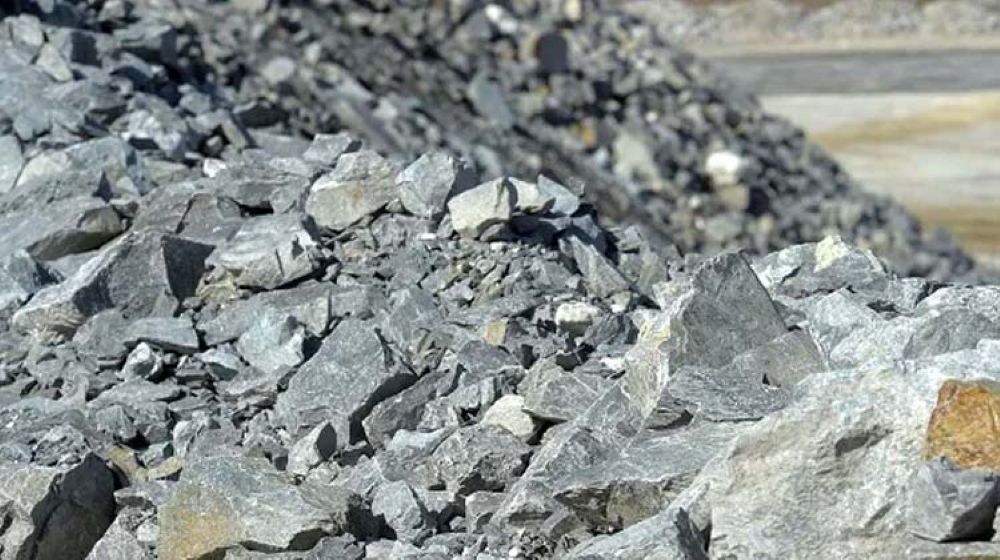
Nigeria has recorded what officials describe as one of the country’s most significant mining discoveries in recent years after identifying a world-class polymetallic mineral province in Kaduna State containing large deposits of platinum group metals, lithium, gold, nickel, copper and rare earth elements.
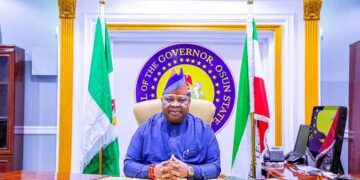
The Minister of Solid Minerals Development, Dr. Dele Alake, announced the breakthrough on Wednesday during the opening of the African Natural Resources and Energy Investment Summit (AFNIS) 2026 in Abuja, saying the discovery could transform Nigeria into a major destination for global investment in critical minerals.
The announcement came as indigenous mining firm Steron Mining and Company Limited disclosed that it had identified an estimated 3.3 million metric tonnes of lithium reserves at its Abuja mining site, further highlighting Nigeria’s growing importance in the global supply chain for minerals used in electric vehicle batteries, renewable energy technologies and advanced manufacturing.
Kaduna discovery verified by geological agency
Alake said the newly identified mineral province was verified by the Nigerian Geological Survey Agency (NGSA) following exploration conducted by a private company in partnership with the agency.
Describing the discovery as a landmark achievement, the minister said the area contains exceptionally high-grade deposits of strategic minerals that are increasingly in demand worldwide.
“Recent exploration breakthroughs verified by our Nigerian Geological Survey Agency have unveiled a world-class polymetallic mineral province in Kaduna State consisting of platinum group metals alongside significant deposits of gold, nickel, copper, lithium and rare earth elements,” Alake said.
He noted that the discovery places Nigeria among emerging global suppliers of critical minerals required for the ongoing transition to cleaner energy technologies.
Government shifts focus from raw exports
The minister said the discovery aligns with the Federal Government’s broader strategy of repositioning the mining sector as a major pillar of economic diversification under President Bola Tinubu’s administration.
According to him, Nigeria is deliberately moving away from the long-standing practice of exporting raw mineral resources without local processing.
“For too long, Nigeria’s enormous mineral wealth has not translated into sufficient national value,” Alake said.
He explained that government reforms are now focused on strengthening licensing procedures, improving regulatory compliance, enhancing transparency and ensuring that mining licences are held only by investors with genuine capacity to develop mineral assets.
As part of those reforms, he disclosed that more than 3,000 inactive and non-performing mining licences have been revoked to discourage speculation and unlock dormant mineral resources for serious investors.
Value addition now compulsory
Alake said value addition has become a mandatory requirement for investors seeking mining leases in Nigeria.
Under the new policy, applicants must submit detailed plans showing how minerals will be processed locally before export.
“We are no longer interested in a pit-to-port model where raw minerals leave Nigeria without creating domestic value,” he said.
“Our objective is to attract investments that establish processing plants, refineries, industrial clusters, create jobs, transfer technology and strengthen manufacturing.”
He said the policy has already attracted substantial investments into lithium processing and mineral refining facilities across the country.
Among the projects cited were an $800 million lithium processing investment, a $600 million lithium processing plant in Nasarawa State, a completed $200 million lithium facility near Abuja awaiting commissioning, and another $50 million lithium processing plant in the Federal Capital Territory that has already begun expanding its refining operations.
The minister also highlighted a $1 billion iron ore-to-steel project in Kogi State, describing it as one of several investments expected to deepen industrialisation and reduce Nigeria’s dependence on raw material exports.
Mining revenue records sharp growth
Alake said reforms introduced over the past two years have significantly improved government earnings from the mining sector.
According to him, annual revenue has increased from approximately ₦6 billion before the current administration assumed office to over ₦38 billion in 2024, before surpassing ₦70 billion by the end of 2025.
He attributed the growth to improved regulation, stronger enforcement and renewed investor confidence.
Call for African collaboration
Addressing delegates from across the continent, Alake urged African countries to strengthen cooperation in developing their mineral resources rather than competing individually.
He argued that the continent’s long-term prosperity depends on regional integration, cross-border processing infrastructure and coordinated industrial policies.
“The question is no longer what Africa possesses, but what Africa is prepared to do with what it possesses,” he said.
He called on investors to embrace partnerships that prioritise local processing, technology transfer, skills development and sustainable community engagement.
“Nigeria is open for serious business,” the minister declared. “We welcome investors who are prepared to process locally, employ locally, transfer technology locally and build long-term value.”
Steron unveils 3.3 million tonnes of lithium
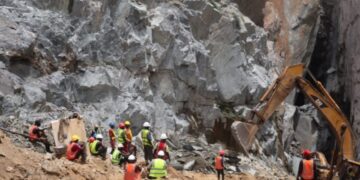
As part of the summit activities, delegates visited the Abuja mining operations of Steron Mining and Company Limited, where the company showcased its exploration and production activities.
Managing Director and Chief Executive Officer Abu Omar revealed that exploration had identified approximately 3.3 million metric tonnes of lithium reserves at the site.
He said the visit demonstrated the growing role of indigenous companies in Nigeria’s emerging critical minerals industry.
“We wanted delegates to see what a Nigerian-owned mining operation of this scale looks like, from exploration and drilling to underground mining and production,” Omar said.
He explained that the company initially focused on granite extraction before discovering commercially viable lithium deposits and later identifying occurrences of tantalite.
Strategic mineral for energy transition
Omar described lithium as one of the world’s most strategic minerals due to its central role in rechargeable batteries used in electric vehicles and renewable energy storage systems.
“Lithium is helping to power the global energy transition from fossil fuels to renewable energy,” he said.
He added that Steron already upgrades the quality of its lithium ore locally before export, in line with the Federal Government’s value-addition policy.
According to the company’s geologist, Bello Damulak, exploration activities have identified total mineral resources estimated at 94.8 million metric tonnes, including 91.4 million metric tonnes of granite and 3.3 million metric tonnes of lithium reserves.
He said continued drilling and exploration could further increase the resource estimates as mining activities expand.
The African Natural Resources and Energy Investment Summit brings together policymakers, investors, financial institutions, mining companies and development partners to promote investment, industrialization and regional cooperation in Africa’s natural resources sector amid growing global demand for critical minerals essential to clean energy technologies.