












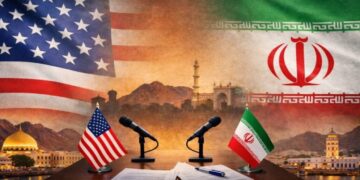






















































The first round of post-war peace talks between the United States and Iran has been postponed, raising fresh doubts over the prospects of securing a lasting agreement to end months of conflict in the Middle East.
Swiss authorities confirmed on Thursday that negotiations, originally scheduled for Friday at the Burgenstock resort, would no longer take place. The announcement came as U.S. Vice President JD Vance also dropped plans to travel to Switzerland, signalling a delay in efforts to build on the interim peace agreement signed earlier this week.
“The logistics of these negotiations have never been simple or predictable,” a White House spokesperson said, without providing a new date for the talks.
Switzerland’s foreign ministry said it remained ready to facilitate the negotiations and that preparatory work at the venue would continue.
Iranian officials have yet to formally respond to the postponement. However, Tehran had earlier indicated it was prepared to begin technical discussions only after seeing concrete evidence that Washington was implementing the terms of the interim agreement. The semi-official Tasnim news agency also reported there was no confirmation that Iran’s delegation would travel to Switzerland.
The postponement comes just days after the United States and Iran signed a 14-point memorandum of understanding extending a fragile ceasefire by at least 60 days, with both sides agreeing to pursue negotiations aimed at a permanent settlement.
The agreement followed a conflict that began on February 28 with U.S. and Israeli airstrikes on Iran. The war has reportedly claimed more than 7,000 lives, disrupted global energy markets and heightened geopolitical tensions.
Although U.S. officials had planned a formal signing ceremony for the agreement in Switzerland, Iran’s foreign ministry questioned the necessity of such an event after both countries’ presidents had already signed the accord.
Meanwhile, Israel, which was not part of the U.S.-Iran negotiations, has continued military operations against the Iran-backed Hezbollah movement in Lebanon, raising further questions about the durability of the ceasefire.
The continued fighting has also drawn criticism from some of President Donald Trump’s Republican allies, who argue the administration conceded too much in exchange for ending the conflict.
Before the war, Trump had pledged to end hostilities only through Iran’s “unconditional surrender.” Instead, the agreement includes sanctions relief, the release of frozen Iranian assets worth tens of billions of dollars and waivers allowing Tehran to resume oil exports.
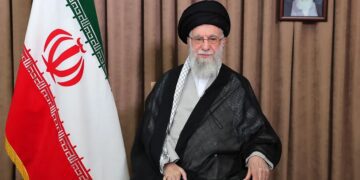
Iran’s Supreme Leader Ayatollah Mojtaba Khamenei described the agreement as the result of American desperation and warned that negotiations over Tehran’s nuclear programme would be difficult.
“If the American side wants to be too demanding, we will not accept it,” he said.
Iran’s Supreme National Security Council also warned it would respond firmly to any violation of the agreement, insisting it would show “no leniency” until the country’s rights were fully secured.
Under the terms of the memorandum, both sides have 60 days to negotiate the future of Iran’s nuclear programme, unless they agree to extend the talks. The agreement also outlines plans for a $300 billion reconstruction fund for Iran alongside other financial incentives.
Washington has said future negotiations will seek tighter restrictions on Iran’s long-range missile programme.
The conflict has also placed growing pressure on U.S. finances. According to the Wall Street Journal, the Pentagon has requested about $80 billion from lawmakers to cover war-related expenses and other defence costs.
Despite the agreement, analysts note that many of Trump’s original objectives remain unmet. Iran’s government remains in power, its missile capabilities have not been dismantled, and while Tehran has reiterated its longstanding position that it does not seek nuclear weapons, it has retained its enriched uranium stockpile inside the country, subject to proposed monitoring by the International Atomic Energy Agency.
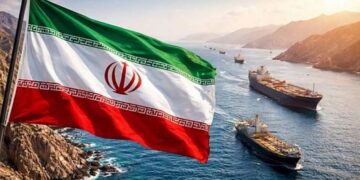
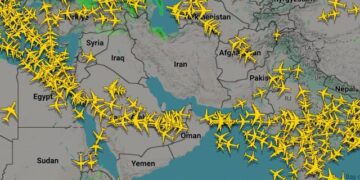
Iran has also maintained that it will continue overseeing traffic through the Strait of Hormuz alongside neighbouring Oman and intends to introduce new maritime service fees after the current 60-day negotiation period.
Oil prices edged lower on Friday as shipping resumed through the strategic waterway, easing concerns over global energy supplies.
In Lebanon, however, violence persisted. Fresh Israeli strikes reportedly killed at least 18 people on Friday, according to Lebanon’s state news agency, while Israel said it was targeting Hezbollah positions.
The renewed attacks have cast further doubt on whether the broader regional ceasefire can hold, despite the agreement’s call for a permanent end to hostilities in Lebanon. Trump has recently criticized Israel’s continued military campaign, exposing one of the deepest public disagreements between Washington and its close ally in years.