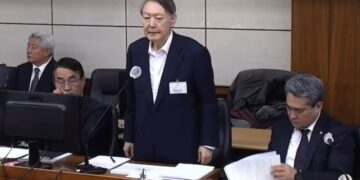





















































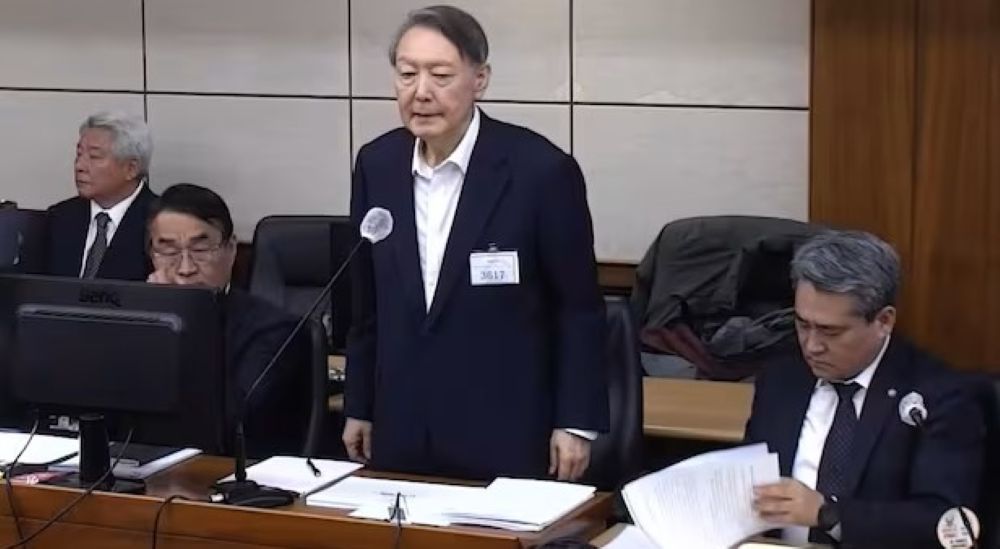
A South Korean court on Friday sentenced former President Yoon Suk Yeol to 30 years in prison after finding him guilty of offences linked to a military drone operation over North Korea that prosecutors said was used to justify his failed declaration of martial law in December 2024.
The Seoul Central District Court convicted Yoon on charges of aiding the enemy and abuse of power, ruling that he played a central role in planning and authorizing the October 2024 drone incursion into North Korean airspace.
According to the court, the operation was part of a broader effort to create conditions that could support the declaration of martial law, a move that plunged South Korea into one of its most serious political crises in decades.
In its ruling, the court stated that Yoon had conspired in the drone operation from its inception and abused the powers of his office in the process.
The former president, however, has consistently denied any wrongdoing.
His legal team maintained that Yoon neither ordered nor approved the drone mission, arguing that the operation was a legitimate military response to repeated provocations by North Korea, including the launch of balloons carrying waste materials across the border into South Korean territory.
The latest judgment adds to Yoon’s mounting legal troubles.
In February, another South Korean court sentenced him to life imprisonment after convicting him of leading an insurrection linked to the controversial martial law declaration.
Yoon was subsequently removed from office after South Korea’s Constitutional Court upheld his impeachment, paving the way for a snap presidential election won by current President Lee Jae Myung.
Prosecutors had sought a 30-year sentence in the drone incursion case during proceedings held in April, arguing that the former leader’s actions endangered national security and undermined democratic governance.
Friday’s ruling further cements Yoon’s dramatic fall from power. Once celebrated as South Korea’s chief prosecutor and later elected president, he now faces multiple convictions stemming from decisions made during his administration.
Yoon, who remains in custody, is expected to challenge the latest judgment. His legal team has already appealed previous rulings, including the life sentence handed down earlier this year.
The case continues to attract significant attention both within South Korea and internationally, given its implications for civil-military relations, executive power and democratic accountability in one of Asia’s leading democracies.