
















































































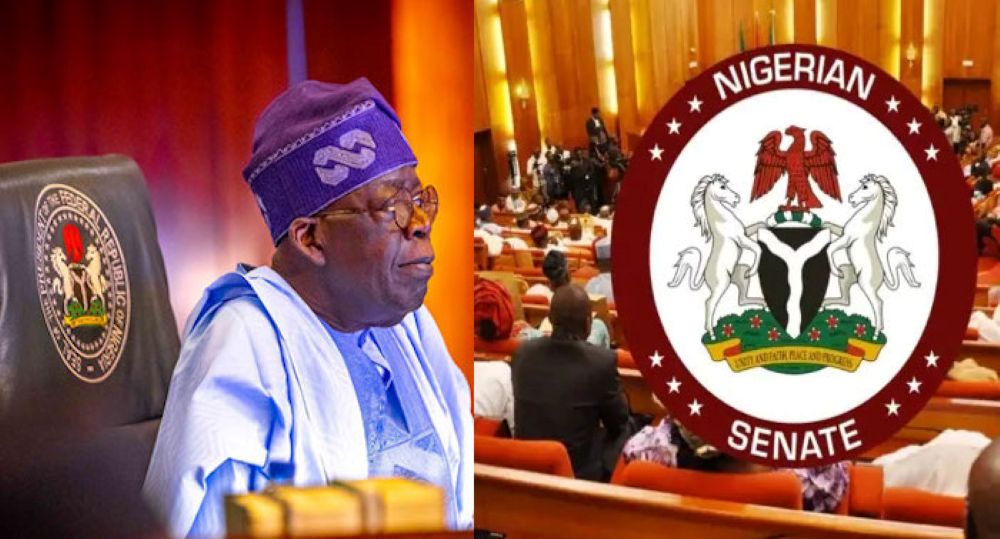
The push to establish state police in Nigeria gained fresh momentum on Tuesday after President Bola Tinubu formally transmitted a constitutional amendment bill to the Senate, seeking legal backing for what could become the country’s most significant policing reform since independence.
The proposed legislation, read during plenary by Senate President Godswill Akpabio, seeks to amend the 1999 Constitution to permit states to establish and operate their own police services alongside the Nigeria Police Force under a dual policing framework.
The bill represents a major pillar of the Tinubu administration’s security reform agenda as the Federal Government intensifies efforts to address rising insecurity through a more decentralised policing system.
In his communication to lawmakers, the President said the proposed constitutional amendment would provide the legal foundation needed to reorganise Nigeria’s security architecture and strengthen the country’s capacity to respond to emerging threats.
Tinubu explained that the reform would enable state governments, local councils and communities to play a more active role in maintaining security while complementing the responsibilities of federal law enforcement agencies.
According to the President, the proposal builds on extensive legislative work already undertaken by both chambers of the National Assembly and introduces additional safeguards to ensure effective implementation of the new policing structure.
He expressed confidence that the Senate would accord the bill accelerated consideration, describing the legislation as essential to improving the protection of lives and property across the country.
The latest executive proposal comes shortly after the Senate considered an earlier version of the state police initiative, signalling growing consensus between the executive and legislature on the need for constitutional reforms to tackle insecurity.
Addressing senators after reading the President’s letter, Akpabio described the bill as a landmark initiative capable of transforming Nigeria’s security landscape by bringing policing closer to the people.
He noted that local communities are often the first to detect suspicious movements and criminal activities, making community-based policing a more effective approach to intelligence gathering and crime prevention.
According to him, empowering states to establish police services would enhance cooperation between residents and security agencies while improving response times to security threats.
Akpabio disclosed that the implementation of the state police framework would follow a phased legislative process, beginning with constitutional amendments before detailed operational laws are enacted by the National Assembly.
He also revealed that state governments had indicated their readiness to immediately begin implementation once the constitutional framework is in place.
Describing the exercise as historic, the Senate President praised members of the Constitution Review Committee for nearly two years of consultations and stakeholder engagements that culminated in the proposed amendment.
The bill was subsequently referred to the Senate Committee on Constitution Review, chaired by Deputy Senate President Barau Jibrin, with instructions to report back on Wednesday as lawmakers prepare for what is expected to be a decisive vote.
Akpabio urged all senators to attend the sitting, reminding them that constitutional amendments require the support of at least two-thirds of the Senate.
He stressed that Nigerians would closely monitor lawmakers’ participation in a debate that could shape the future of policing in the country.
Senate Leader Opeyemi Bamidele echoed the appeal, describing the state police proposal as a national issue that transcends party affiliations, regional interests and political differences.
He urged senators who were travelling or outside Abuja to make arrangements to return before Wednesday’s session, saying the constitutional responsibility demanded full participation.
Bamidele noted that principal officers of the Senate would also reach out to absent lawmakers to ensure the required quorum for voting on the constitutional amendment.
Although the state police bill dominated proceedings, the Senate postponed final consideration until Wednesday following the announcement of the death of House of Representatives member Yaya Tongo, who represented the Gombe/Kwami/Funakaye Federal Constituency.
Lawmakers observed a minute of silence in honour of the late legislator, while Akpabio extended condolences to his family, constituents and colleagues.
If approved by the National Assembly and subsequently endorsed through the constitutional amendment process, the proposed legislation would mark a major shift from Nigeria’s long-standing centralized policing system, allowing individual states to establish police services tailored to their specific security needs while operating alongside the federal police.