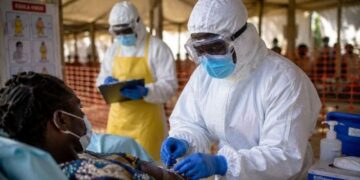








































































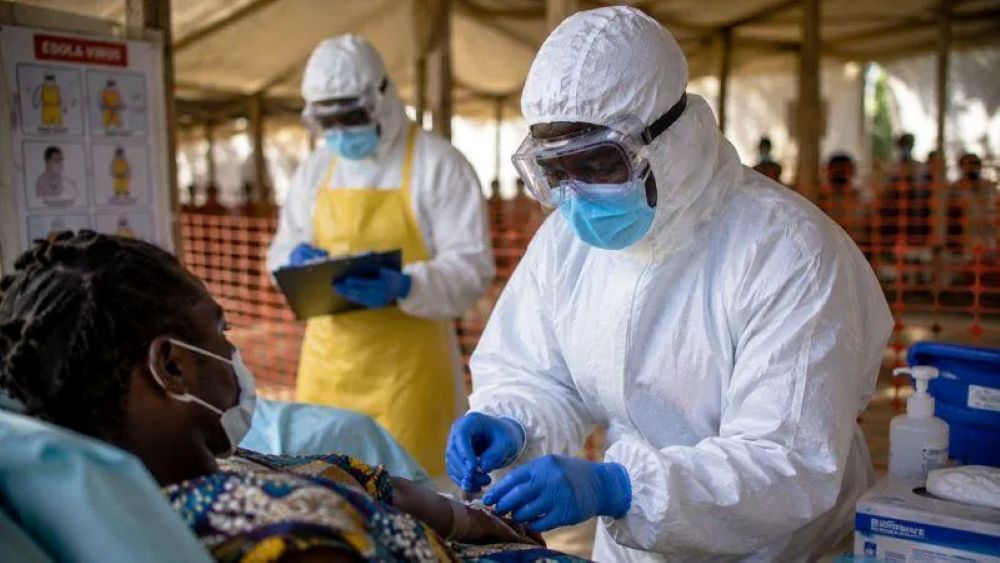
Africa’s latest Ebola outbreak has exceeded 10,000 confirmed cases, with nearly 5,000 deaths recorded, most of them in the Democratic Republic of Congo (DRC), according to figures released by Congolese health authorities on Tuesday.
The authorities reported 10,060 infections and 4,887 deaths since the virus was first detected in May, making it the deadliest Ebola outbreak in the DRC’s history.
The outbreak has also been reported in Kenya, Nigeria and Uganda, raising concerns about the spread of the virus across several regions of the continent. The World Health Organization (WHO) has described the containment effort as complex because infections have occurred in eastern, central and western Africa.
In the DRC, 2,684 patients have recovered, while the National Institute of Public Health puts the fatality rate at close to 50 per cent.
The response has been complicated by the absence of approved vaccines and treatments specifically for the Bundibugyo strain responsible for the current outbreak.
The virus circulated undetected for weeks before being identified in Ituri province in northeastern DRC, marking the country’s 17th Ebola outbreak. It has since spread across parts of the country’s north and east, where insecurity, armed-group violence and limited public trust in government have made containment more difficult.
Ituri and North Kivu province account for most of the reported cases. Parts of North Kivu are controlled by the M23 rebel group, which is backed by Rwanda.
Cases reported in Uganda, Kenya and Nigeria
Uganda was declared Ebola-free by the WHO in late August after recording 20 cases and two deaths.
Kenya, which reported no cases until 6 October, has since recorded nine infections and two deaths. Most of those infected had recently travelled to the DRC.
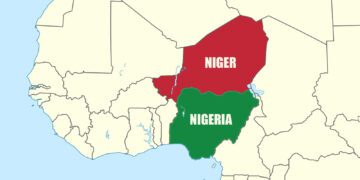
Nigeria has confirmed one case involving a 42-year-old Swiss woman who contracted the Bundibugyo strain after travelling to Uganda with her husband. She was evacuated to a hospital in Geneva on Monday.
Nigerian health authorities have identified 53 people who had contact with the patient as part of efforts to prevent further transmission.
The case has raised concerns about possible exposure after the couple arrived in Nigeria on 3 October. According to the WHO, the woman developed symptoms on 7 October and sought medical attention in Abuja on 11 October. She tested positive for the virus on 20 October.
The woman is married to an employee of the Swiss embassy in Abuja. However, a Ugandan government spokesperson rejected suggestions that she contracted the virus while in Uganda.
Health experts remain concerned about the potential for further transmission because Ebola can spread through direct contact with the bodily fluids of an infected person.
Violence disrupts response in the DRC
Efforts to contain the outbreak have also been affected by hostility towards health workers in parts of the DRC.
The WHO reported that a nurse was killed and another health worker seriously injured in an attack in Tshopo province in the country’s northeast on Saturday.
Marcel Likolo, chief medical officer of the Bafwasende health district, told AFP that young people in the area had accused the victims of attempting to infect residents with tablets before attacking them.
The Ebola treatment centre where the incident occurred has since been closed, Likolo said.
The attack highlights the difficulties facing medical teams working to control the outbreak, particularly in communities where suspicion and misinformation can undermine public health interventions.
Vaccine trials target the Bundibugyo strain
Ebola has killed more than 15,000 people across Africa since the disease was first identified about half a century ago.
Testing of the Ervebo vaccine has begun in recent weeks to determine whether it could also protect against the Bundibugyo strain. The vaccine has already demonstrated effectiveness against the more common Zaire strain of Ebola.
The outcome of the testing could provide important information for future responses, as health authorities continue efforts to contain the current outbreak and limit its spread across the continent.