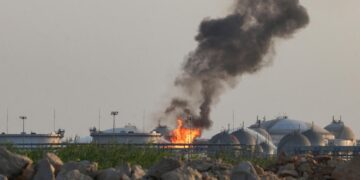





































































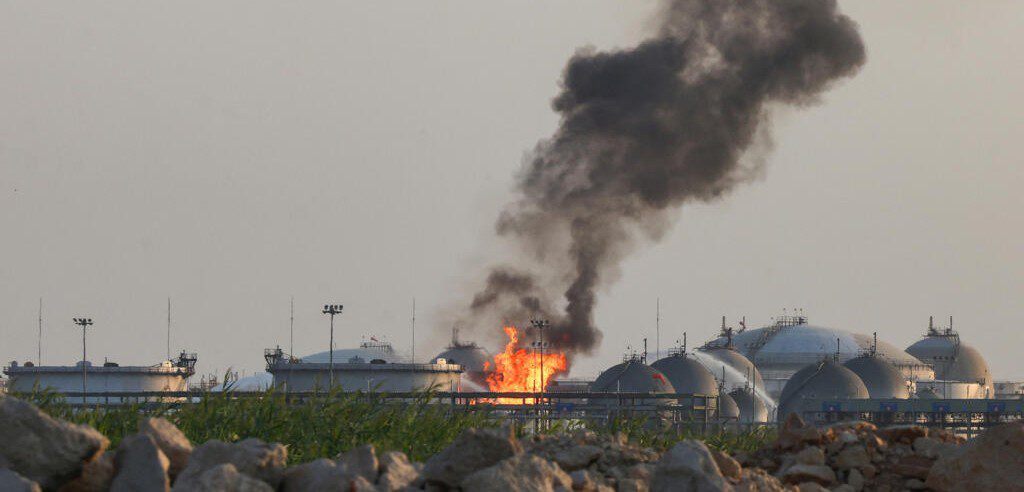
Saudi Arabia’s state-owned oil giant, Saudi Aramco, came under attack at its headquarters complex in Dhahran on Tuesday night, triggering a limited fire as Houthi missile and drone strikes intensified across the kingdom.
The Saudi Energy Ministry said an administrative building within the complex was struck, but confirmed that no casualties were recorded. Authorities responded to the incident and took the necessary measures to contain the fire.
A source within Aramco told Reuters that a ballistic missile hit an office tower at the site, damaging its top three floors. The source and two other people familiar with the incident said the building caught fire.
The Dhahran complex houses a major Aramco operations centre responsible for overseeing the company’s extensive network of oil fields, pipelines, refineries and export terminals.
The attack came amid a week of intensified Houthi strikes against strategic Saudi targets, following Riyadh’s renewed military support for government forces fighting the Iran-aligned group in Yemen.
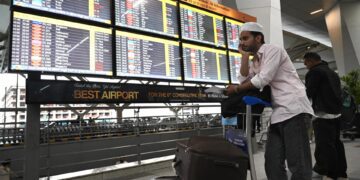
The Houthis have launched ballistic missiles and drones at Saudi sites in retaliation for the kingdom’s involvement in the conflict. Their recent attacks have also disrupted air travel, with Riyadh’s international airport struck four times, including an attack on Saturday that killed 13 people.
The Saturday strike was reported as Saudi Arabia’s deadliest attack in a decade and prompted widespread flight disruptions across the country.
Six sources told Reuters they heard loud explosions near the Aramco complex on Tuesday.
The Saudi-led coalition said fragments from a missile intercepted and destroyed over Dhahran fell into a residential area. It did not provide further details about the incident.
Saudi authorities also reported intercepting missiles and drones targeting Riyadh and the kingdom’s southern region.
Missile Debris Injures Four in Riyadh
Saudi Civil Defence said on Wednesday that four people were injured after debris from two intercepted Houthi missiles fell in Riyadh.
The injured comprised two women, a man and a child. The falling fragments also caused limited damage to 15 homes in the capital, according to a Civil Defence spokesperson.
The attacks followed threats by Houthi military spokesman Yahya Saree to deliver a “harsh and painful” response to Saudi-led airstrikes on Yemen’s capital, Sanaa.
Saree had identified potential targets as including Aramco’s headquarters in Dhahran and an oil refinery in Riyadh. The group also warned oil workers in Saudi Arabia to stay away from facilities that could be attacked.
Before the strike on Aramco, the Houthis accused Saudi Arabia of attacking Sanaa, while the Saudi-led coalition urged civilians to avoid an oil depot on the outskirts of the Yemeni capital.
Houthi-run Al-Masirah television reported that coalition forces struck the Yemen Petroleum Company’s Sabah central station, a fuel depot outside Sanaa.
The coalition confirmed attacking the station and other locations, saying the operation was intended to neutralize Houthi capabilities to threaten Saudi Arabia, Yemen and international waterways.
Earlier on Tuesday, the Saudi cabinet, chaired by Crown Prince Mohammed bin Salman, warned that the Houthis would face consequences for their repeated attacks on the kingdom.
Saudi Arabia Intensifies Yemen Campaign
Saudi Arabia has renewed its military campaign in support of Yemen’s internationally recognized government after the Houthis made rapid territorial gains last month, advancing along the Red Sea coast towards the strategic Bab el-Mandeb Strait.
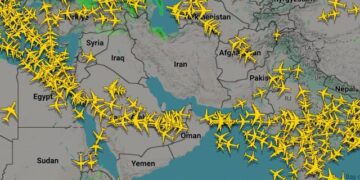
The narrow waterway connects the Red Sea to the Gulf of Aden and has become increasingly important to Saudi Arabia and other energy exporters since Iran closed the Strait of Hormuz following the outbreak of the wider US-Iran war in February.
A government offensive launched about a week ago pushed Houthi forces away from areas closest to Bab el-Mandeb. However, the group remains active in nearby territories and has made gains around the city of Taiz this month.
The renewed fighting has raised concerns about the security of energy infrastructure and shipping routes at a time of heightened pressure on global oil supplies.
Saudi Arabia has been seeking greater support from its allies to strengthen its campaign against the Houthis and defend against continued missile and drone attacks.
However, the United States, Riyadh’s principal security partner, has so far resisted Saudi efforts to draw it directly into the conflict against the Yemeni group.
The latest escalation is linked to the broader war involving the United States and Iran, which began with US-Israeli strikes on Iran on February 28.
Iran, a longstanding regional rival of Saudi Arabia and a supporter of the Houthis, has offered to mediate between Riyadh and the group. Iranian Foreign Minister Abbas Araqchi announced the proposal on Sunday, with the ministry reiterating the offer on Monday.
The attack on Aramco underscores the growing risks to Saudi Arabia’s energy infrastructure as the Yemen conflict intensifies and regional hostilities threaten key oil facilities and maritime routes.