














































































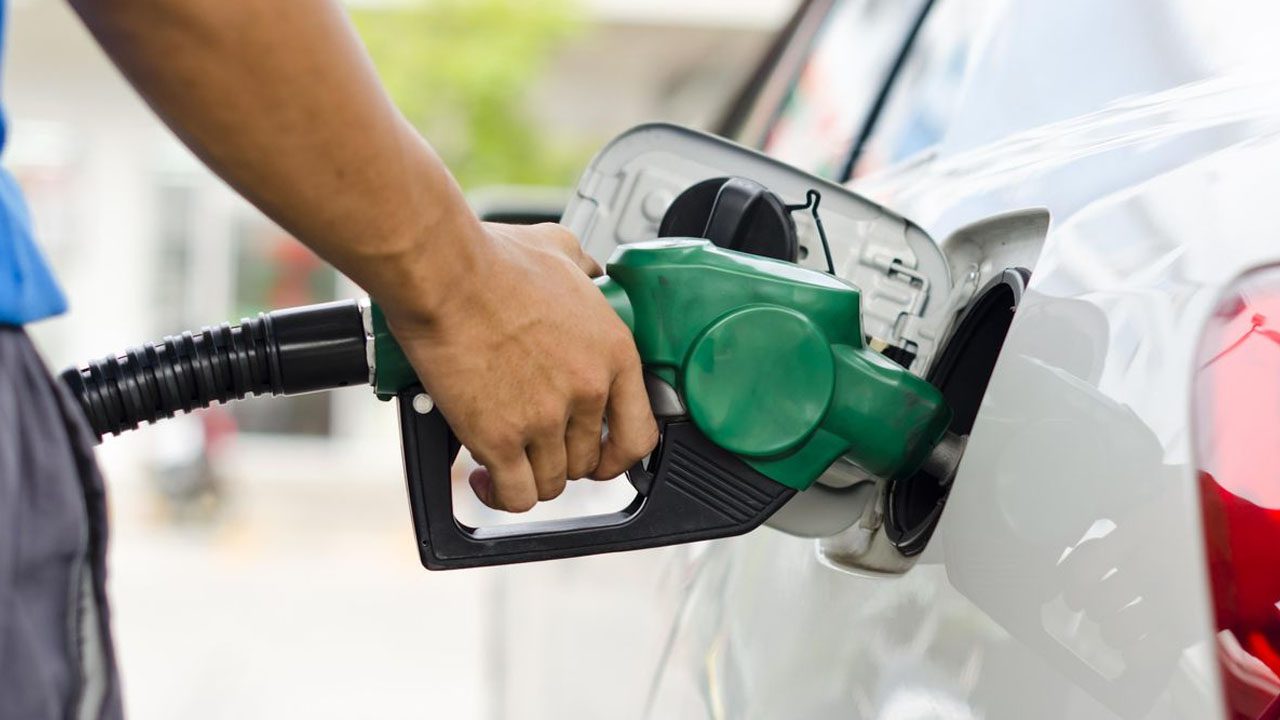
Petrol prices have risen at several filling stations in Abuja, with motorists facing fresh increases despite a recent decline in international crude oil prices.
Checks across the Federal Capital Territory on Sunday showed that a number of filling stations had raised their pump prices following successive increases in the ex-depot price of Premium Motor Spirit (PMS), commonly known as petrol.
The latest adjustments came as international crude prices fell from about $92 per barrel to $87.31 per barrel.
Brent crude was trading at $88.10 per barrel, representing a 0.47 per cent decline, while West Texas Intermediate fell 0.16 per cent to $83.40 per barrel.
The News Agency of Nigeria reported that Dangote Refinery had increased its gantry price several times within a week, moving from N1,165 per litre to N1,185, then N1,200 and finally N1,265 per litre.
The latest adjustment represents an increase of N65 per litre from the previous gantry price of N1,200.
The higher ex-depot price has subsequently filtered through to the retail market, with several Abuja outlets revising their pump rates.
At AY Shafa filling stations, the price increased from N1,250 to N1,270 per litre. Optima retail outlets also raised their price from N1,260 to N1,300 per litre.
NNPC retail outlets adjusted their price from N1,250 to N1,270 per litre.
The latest increases are adding to concerns over the impact of rising transport and energy costs on households and businesses.
Economist Samson Ogunjimi said the continued rise in petrol prices was putting additional pressure on Nigerians already struggling with higher living costs.
He described the situation as increasingly difficult for households and called on the Federal Government to take urgent steps to stabilise fuel prices and reduce the pressure on livelihoods.
Marketers blame rising replacement costs
The Independent Petroleum Marketers Association of Nigeria (IPMAN) attributed the latest pump price adjustments to repeated changes in the cost of petrol supplied by Dangote Refinery.
IPMAN National Publicity Secretary, Chinedu Ukadike, said marketers could not sustainably sell petrol below the cost of replacing their stock.
He explained that frequent changes in the ex-depot price were creating uncertainty across the downstream petroleum market, making it difficult for marketers to maintain stable pump prices.
According to him, the replacement cost of petrol can change considerably within a short period, forcing retailers to adjust their prices to avoid selling at a loss.
The latest development means motorists in Abuja will have to contend with higher petrol costs as filling stations respond to changes in supply prices.