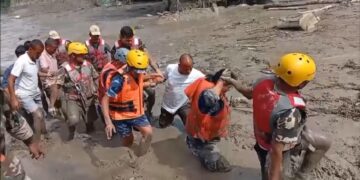












































































Nepal has appealed for specialized foreign assistance to tackle the aftermath of a catastrophic flood that has killed hundreds and left thousands missing along the country’s border with Tibet.
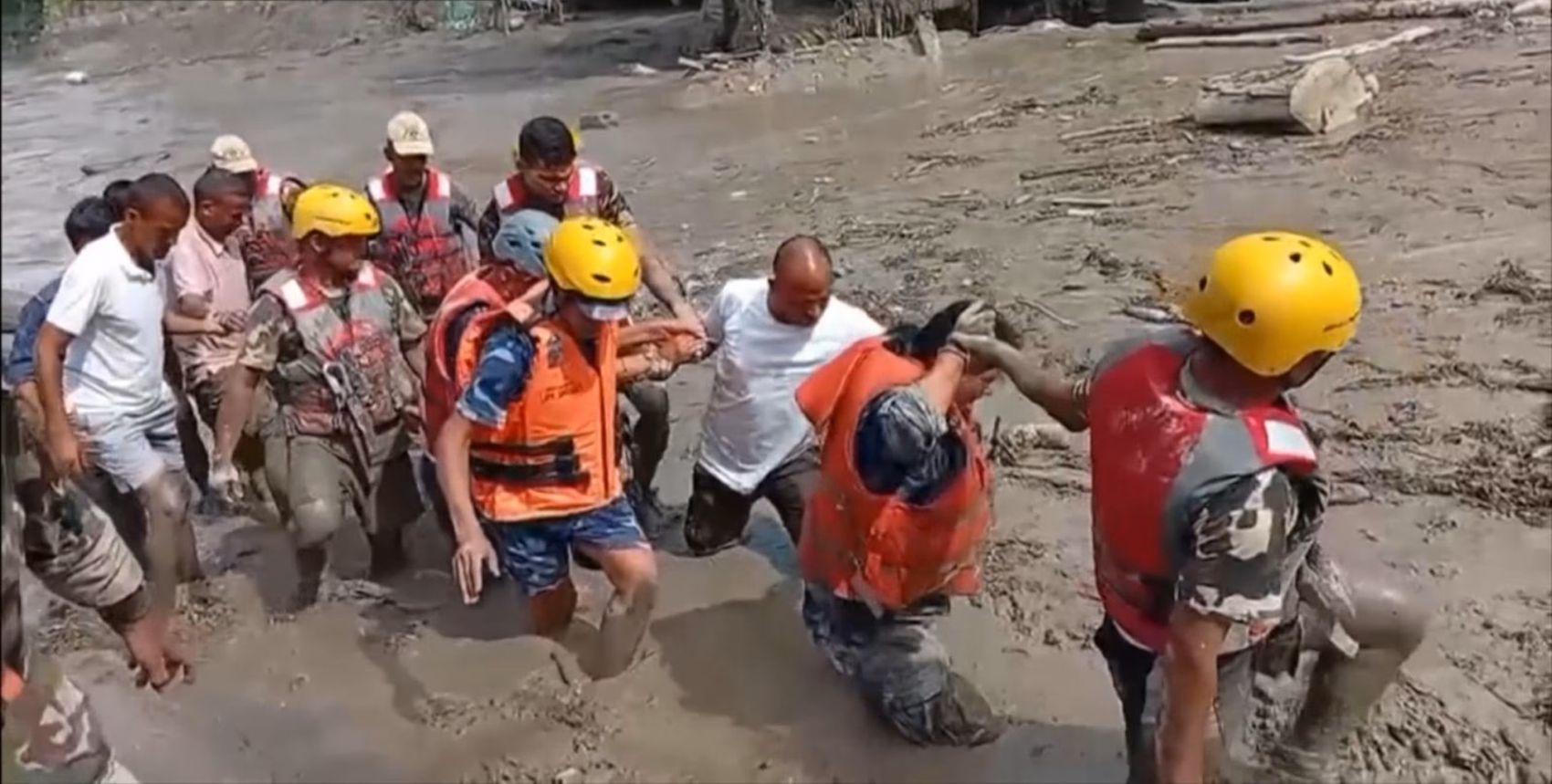
Rescue operations were suspended on Saturday because of heavy rain and poor visibility, while authorities said they needed international technical expertise for difficult tasks including tunnel rescues, DNA testing and the restoration of roads and communications destroyed by the disaster.
The scale of the destruction is also becoming clearer. Nepal’s Finance Minister Swarnim Wagle told Reuters that the country could require between $4 billion and $5 billion to rebuild damaged infrastructure and communities, although officials are still assessing the losses.
The disaster, which struck on Wednesday after a suspected glacier collapse sent a massive surge of rock, ice, mud and water through Himalayan river valleys, has killed at least 626 people in Nepal and seven in Tibet.
Nearly 3,000 people remain unaccounted for, including about 2,426 in Nepal and more than 550 in China’s Gyirong County. At least 540 foreigners are among the missing, many of them Indian pilgrims travelling through the region.
Poor weather disrupts search
Narendra Pariyar, the senior administrative official in Rasuwa district, one of the areas worst affected by the flooding, said rescue and search efforts had been temporarily stopped because of rain and thick fog.
Authorities are now concentrating on moving rescued people, including pilgrims, by road to Kathmandu.
The passage of several days since the disaster has created another challenge. Some of the bodies recovered from the flood zone have deteriorated so badly that visual identification is no longer possible.
Nepali authorities said DNA samples would be collected from unidentified remains before the bodies are buried after the necessary legal procedures.
At Maharajgunj Medical Campus in Kathmandu, relatives of missing people have gathered in the hope of identifying loved ones. Photographs of recovered bodies have been displayed around the hospital as families search for information.
Officials said only seven of the 49 bodies taken to the hospital had been identified.
Nepal asks for specialized assistance
Foreign Minister Shisir Khanal said Nepal did not require additional help with conventional search-and-rescue operations but needed outside expertise for more specialized work.
The requests include assistance in reaching people trapped inside tunnels, reopening transport and communication routes where bridges have been destroyed, identifying victims, conducting DNA tests and preserving bodies for longer periods.
“We have already made requests for such specialized services and technical assistance in areas where we don’t have enough expertise and technical know-how,” Khanal said.
India has already begun sending relief supplies. Three flights have delivered around 60 tonnes of assistance, including medicines, blankets, food and water-purification tablets.
New Delhi has also offered disaster-response personnel, medical teams, tunnel-rescue specialists and prefabricated bridges to help restore connections cut off by the floods.
China has called for international cooperation and emergency assistance for communities affected by the disaster.
Threat from flood lake eases
Another danger that had complicated rescue efforts was the formation of a lake along the Nepal-China border following the disaster.
The lake began spilling water into downstream rivers on Friday, prompting authorities to temporarily halt some rescue operations because of fears of further flooding.
Chinese authorities said on Saturday that the immediate risk had declined after satellite images indicated that water was gradually draining from the reservoir.
Nepal is nevertheless monitoring two lakes upstream of the affected areas. Officials have warned that the threat of further flooding will remain until the lakes have completely emptied.
Reconstruction could cost billions
Beyond the immediate rescue effort, Nepal faces a massive reconstruction challenge.
Wagle said the preliminary estimate of $4 billion to $5 billion was based on the damage known so far and could change as assessments continue.
Roads, bridges, buildings, power facilities and other critical infrastructure were swept away or buried under thick layers of mud and debris.
The disaster has also exposed the vulnerability of communities and transport routes in the steep Himalayan terrain, where a single landslide or glacial collapse can rapidly affect areas far downstream.
As rescuers continue searching for survivors and authorities work to identify victims, the government faces the parallel task of restoring access to isolated communities and securing international support for a long and costly recovery.