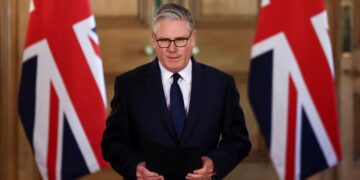

































































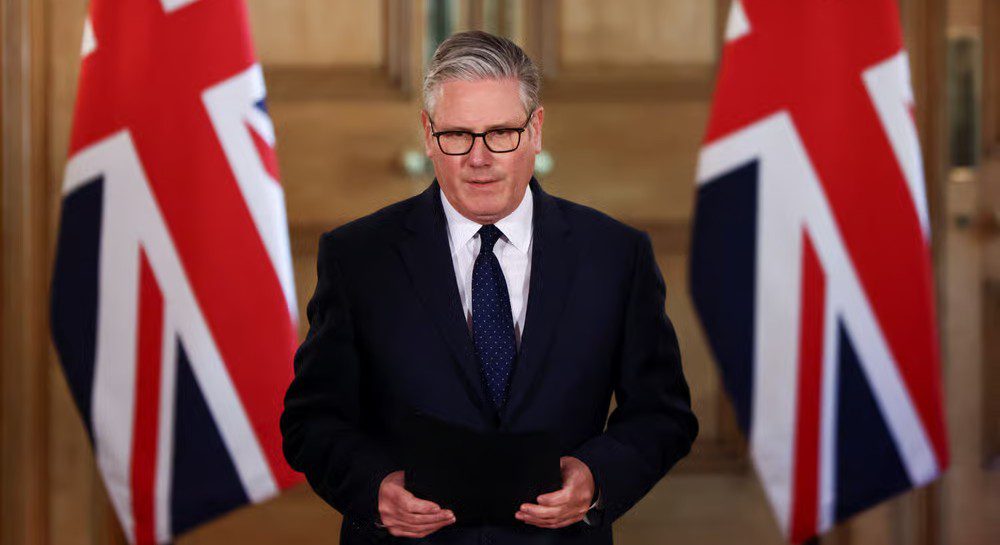
British Prime Minister Keir Starmer has announced he will step down from office, ending a premiership that lasted less than two years and setting the stage for Britain to have its seventh prime minister in just 10 years.
Starmer said he would resign before Parliament returns from its summer recess in September, acknowledging that he no longer had the confidence of his parliamentary party to lead Labour into the next general election.
His decision follows mounting pressure from within the Labour Party, which intensified after Greater Manchester Mayor Andy Burnham secured a decisive victory in a parliamentary by-election on Friday, positioning himself as the overwhelming favourite to succeed Starmer.
“The question my party is asking now is whether I am best placed to lead us into the next general election. I have heard the answer of my parliamentary party to that question, and I accept that answer with good grace,” Starmer said during an emotional address.
He confirmed that nominations for the Labour leadership contest will open on July 9, with a new party leader expected to be in place before lawmakers return to Westminster in September.
Starmer swept to power in a landslide election victory less than two years ago, promising to restore stability after years of political turmoil that followed Brexit and successive changes in government.
However, his administration struggled to reverse declining public confidence amid persistent concerns over the cost of living, sluggish economic growth, pressure on public services and rising immigration.
His popularity steadily declined, with recent opinion polls showing Labour losing ground while Nigel Farage’s Reform UK gained momentum nationally.
Although Starmer had insisted only days earlier that he would contest any leadership challenge, events over the weekend appear to have convinced him that stepping aside was the best option.
Andy Burnham’s return to Westminster has dramatically reshaped Labour’s leadership race.
Widely regarded as one of Labour’s strongest communicators, Burnham is viewed by many MPs as the politician most capable of rebuilding the party’s electoral fortunes ahead of the next general election.
His victory over a Reform UK-backed candidate has strengthened calls for a fresh direction within Labour.
Despite being the frontrunner, Burnham has yet to outline detailed positions on foreign policy, defence or the economy, leaving financial markets and political observers closely watching the upcoming leadership contest.
Financial markets reacted calmly to Starmer’s announcement, with both the British pound and government bond markets remaining largely stable, reflecting expectations that his resignation had already been priced in.
Nevertheless, economists caution that Britain’s next prime minister will inherit a difficult fiscal environment marked by weak economic growth, high public debt and rising borrowing costs.
Analysts also warn that whoever succeeds Starmer will face limited room for major spending commitments without unsettling financial markets.
Starmer’s departure will make him Britain’s seventh prime minister since the 2016 Brexit referendum, underscoring an extraordinary period of political instability unmatched in nearly two centuries.
The rapid turnover of national leaders reflects deep public dissatisfaction over stagnant living standards, struggling public services, economic uncertainty and the continuing political divisions that have shaped Britain since Brexit.
While Labour now prepares for another leadership contest, attention is turning to whether Andy Burnham can reunite the governing party and restore public confidence before the country heads into its next general election.