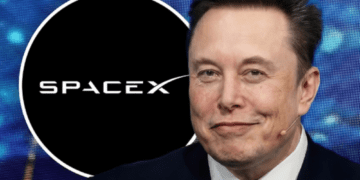





























































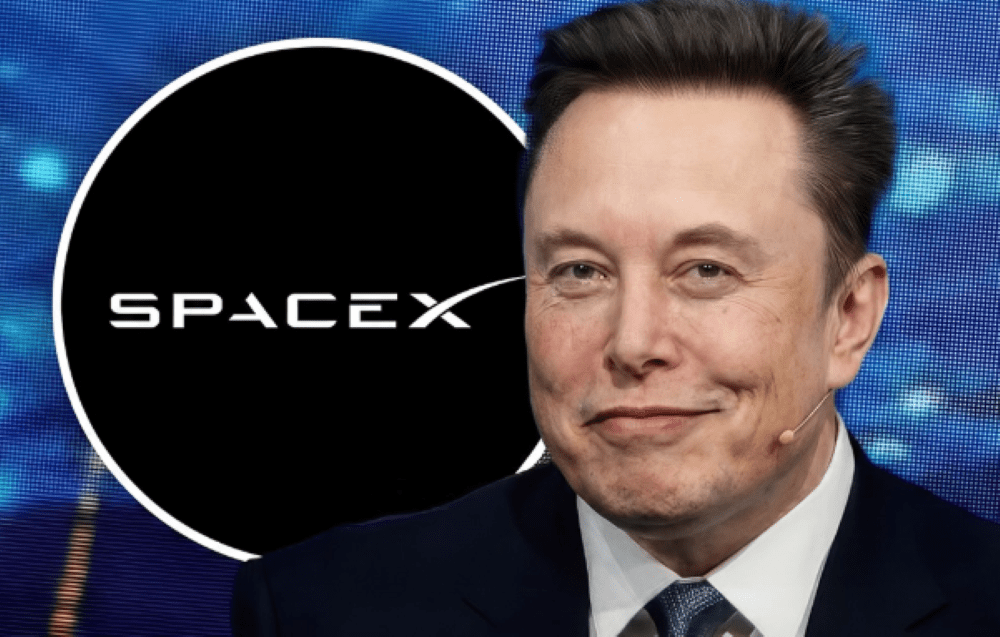
Elon Musk has become the world’s first trillionaire following the blockbuster initial public offering of SpaceX, further cementing his position as the most influential and wealthiest entrepreneur of the modern era.
The milestone follows SpaceX’s record-breaking $75 billion IPO, which significantly boosted the value of Musk’s holdings across his sprawling business empire. The successful public offering underscored strong investor confidence in the billionaire’s ventures spanning space exploration, electric vehicles, artificial intelligence, social media and emerging technologies.
Prior to the IPO, financial estimates placed Musk’s net worth at approximately $780 billion. However, the surge in SpaceX’s valuation has pushed his fortune beyond the $1 trillion mark, making him the first individual in modern world history to achieve the milestone.
Analysts estimate that Musk’s stake in SpaceX alone is now worth about $866 billion. Combined with his holdings in electric vehicle giant Tesla, social media platform X, artificial intelligence ventures, Neuralink and The Boring Company, his total net worth is projected to exceed $1.1 trillion.
The development places Musk far ahead of other global billionaires. Wealth analysts note that the world’s second-richest individuals remain in the $300 billion range, highlighting the unprecedented scale of Musk’s fortune.
SpaceX drives valuation surge
The IPO represents a major vote of confidence in SpaceX, which has evolved from a private rocket company into one of the world’s most valuable technology enterprises. Investors are betting heavily on the company’s satellite internet network, launch services, artificial intelligence initiatives and long-term ambitions in space exploration.
Despite concerns that some of SpaceX’s most ambitious projects could take years to become commercially profitable, investor enthusiasm remains strong.
Market observers say the company’s valuation reflects not only its business fundamentals but also confidence in Musk’s ability to transform industries, much as Tesla reshaped the global automotive sector.
From Tesla pioneer to global business icon
Born in Pretoria, South Africa, Musk rose to prominence through Tesla and SpaceX, becoming a household name through his aggressive pursuit of technological innovation.
As Tesla’s chief executive, he played a central role in accelerating the global shift toward electric vehicles, helping transform the company into one of the world’s most valuable automakers.
His influence expanded further following the acquisition of Twitter, later rebranded as X, giving him a direct platform to engage with hundreds of millions of users and shape public discourse on politics, technology, free speech and global affairs.
Beyond Tesla and SpaceX, Musk has co-founded several companies, including brain-implant developer Neuralink and tunnelling infrastructure firm The Boring Company.
Praise and controversy
Musk’s rise has been accompanied by both admiration and criticism.
Supporters view him as a visionary entrepreneur whose bold ideas have revitalized confidence in American innovation and technological leadership. Critics, however, have raised concerns about corporate governance, the concentration of power around a single individual and his increasingly active role in politics.
His involvement in U.S. political affairs, including advisory roles linked to President Donald Trump’s administration, has generated significant debate and, at times, sparked consumer backlash against Tesla in several international markets.
Despite the controversies, investor confidence in Musk remains remarkably resilient.
Industry analysts often refer to the valuation premium attached to his companies as the “Elon premium”—a reflection of the market’s belief that Musk can successfully execute ambitious projects that many consider impossible.
Investors continue to back Musk’s vision
Financial experts say Musk’s extraordinary wealth reflects more than traditional valuation metrics.
Instead, it represents investor confidence in his ability to create transformative businesses across multiple sectors simultaneously.
His growing influence across automotive technology, space exploration, artificial intelligence, communications and infrastructure has led some observers to describe the interconnected network of his companies as the “Muskonomy.”
With SpaceX now publicly traded and valued at unprecedented levels, Musk’s trillionaire status marks a historic moment in global business, further solidifying his position at the centre of technological innovation and corporate influence worldwide.