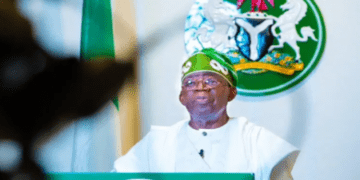






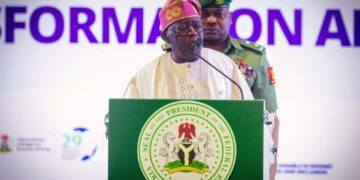










































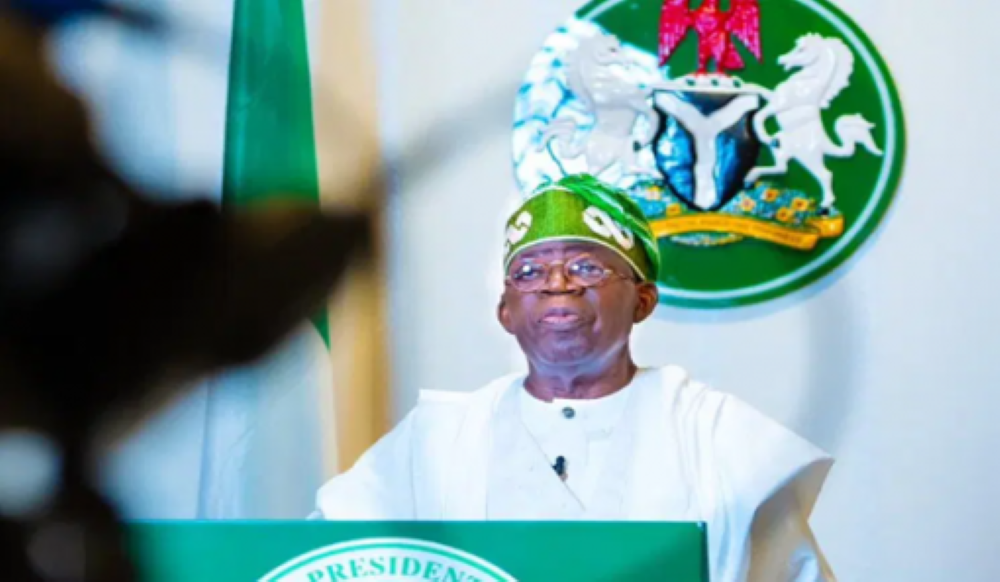
President Bola Ahmed Tinubu on Thursday used his 2026 Democracy Day address to reaffirm his administration’s commitment to tackling insecurity, deepening economic reforms and strengthening democratic institutions, while conferring national honours on dozens of pro-democracy activists, journalists, retired military officers and public figures.
In a nationwide broadcast marking 27 years of uninterrupted civilian rule, Tinubu paid tribute to the late Chief Moshood Kashimawo Olawale (M.K.O.) Abiola, widely regarded as the winner of the annulled June 12, 1993 presidential election, as well as other democracy icons whose sacrifices helped shape Nigeria’s democratic journey.
The President described democracy as Nigeria’s most enduring vehicle for national development, acknowledging existing challenges but insisting that the country’s democratic system remains worth protecting.
“Our democracy is not perfect, but it is ours, and we must continue to defend and strengthen it,” he said.
Security remains top priority
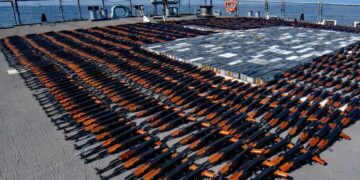
Addressing growing concerns over insecurity, particularly the recent abduction of schoolchildren and educators in Oyo and Borno states, Tinubu declared that security remains central to the survival of democracy.
“Democracy without security is a mirage,” he stated.
The President disclosed that the Federal Government had earmarked a record N5.41 trillion for defence and security in the 2026 budget while approving the recruitment of more than 50,000 police officers and thousands of military personnel to strengthen national security operations.
He said the government had intensified intelligence-led operations and precision strikes against terrorist groups, noting that security agencies had significantly degraded insurgent networks across the country.
According to him, terror-related fatalities have fallen by 81 per cent since 2015, while more than 13,000 terrorists were neutralized within the last year.
Tinubu also highlighted the success of the government’s deradicalization programme, revealing that over 124,000 fighters and their dependants had surrendered through Operation Safe Corridor since 2023.
“To bandits, kidnappers, and sponsors of terror: Surrender or face the full force of the Nigerian State. These windows of surrender will not remain open forever,” he warned.
Tinubu defends economic reforms
On the economy, the President defended the far-reaching reforms introduced by his administration since assuming office, arguing that they were necessary to stabilize public finances and restore investor confidence.
He said the reforms had improved fiscal transparency, increased federation revenues and attracted fresh investments into agriculture, energy, technology, manufacturing, mining and transportation.
“The reforms we are undertaking were not chosen for ease, but for necessity,” Tinubu said.
He added that the administration’s next objective is to ensure that the benefits of economic reforms are felt directly by ordinary Nigerians through reduced inflation, job creation and improved living standards.
“We believe that democracy must be felt in the pocket,” he said.
N4 trillion power sector intervention
As part of efforts to address the country’s long-standing electricity crisis, Tinubu announced that the Presidential Power Sector Task Force had been authorized to raise a N4 trillion bond to settle verified legacy debts within the power value chain.
The President noted that the implementation of the Electricity Act, which decentralizes power generation, transmission and distribution, was already creating opportunities for states to play more active roles in expanding electricity access.
He also highlighted ongoing efforts to close the metering gap and expand rural electrification through partnerships with the World Bank and the African Development Bank.
“Electricity is a democratic dividend we owe every Nigerian. We intend to deliver it,” he said.
Push for local government autonomy
Tinubu reaffirmed his administration’s commitment to financial autonomy for Nigeria’s 774 local government councils, arguing that weak grassroots governance had contributed significantly to rising insecurity and underdevelopment.
He said empowering local governments remained critical to delivering meaningful development and restoring public confidence in governance.
June 12 heroes remembered
The President used the occasion to honour individuals who played pivotal roles in Nigeria’s struggle for democracy, paying tribute to late and living activists, labour leaders, journalists, politicians and civil society figures who resisted military rule.
Among those remembered were M.K.O. Abiola, Kudirat Abiola, Chief Gani Fawehinmi, Chief Bola Ige, Chief Alfred Rewane, Pa Abraham Adesanya, Chief Anthony Enahoro, Dr Beko Ransome-Kuti, Frank Kokori, Arthur Nwankwo, Chima Ubani and Shehu Musa Yar’Adua.
Tinubu also announced the renaming of the Institute of Petroleum Studies in Kaduna as the General Shehu Musa Yar’Adua University of Geological Sciences and Engineering Technology in honour of the late military officer and democracy advocate.
National honours for activists, journalists and soldier-democrats
As part of the Democracy Day celebrations, the President approved national honours for 51 Nigerians who contributed to the struggle for democratic governance.
The list includes prominent journalists, media executives, activists and public intellectuals such as Dele Alake, Olatunji Bello, Louis Odion, Sam Omatseye, Lade Bonuola, Femi Kusa, Bola Bolawole, Gbemiga Ogunleye, Babajide Kolade-Otitoju, Richard Akinnola, Dr Joe Okei-Odumakin, Prof. Sylvester Odion-Akhaine and Dr Arthur Nwankwo (posthumous).
Tinubu also recognised several retired military officers who opposed military dictatorship and supported the June 12 struggle, including Col. Sambo Dasuki (retd), Col. Lawan Gwadabe (retd), Major-General Ishola Williams (retd), Brigadier General Lawal Jaafaru Isa and Brigadier Yahaya Abubakar, the Etsu Nupe.
The President said the full honours list would be released in the coming days.
Call for unity and prosperity
Concluding his address, Tinubu urged Nigerians to remain united despite prevailing challenges and to continue believing in the country’s democratic future.
“The generation of our founding fathers secured independence. The generation of June 12 secured democracy. Our generation must secure prosperity,” he said.
He called on citizens to reject division and despair, insisting that Nigeria possesses the resilience and collective strength needed to overcome its challenges and achieve lasting development.