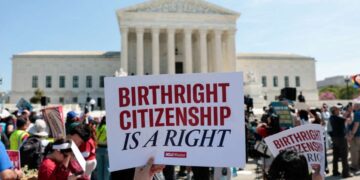




























































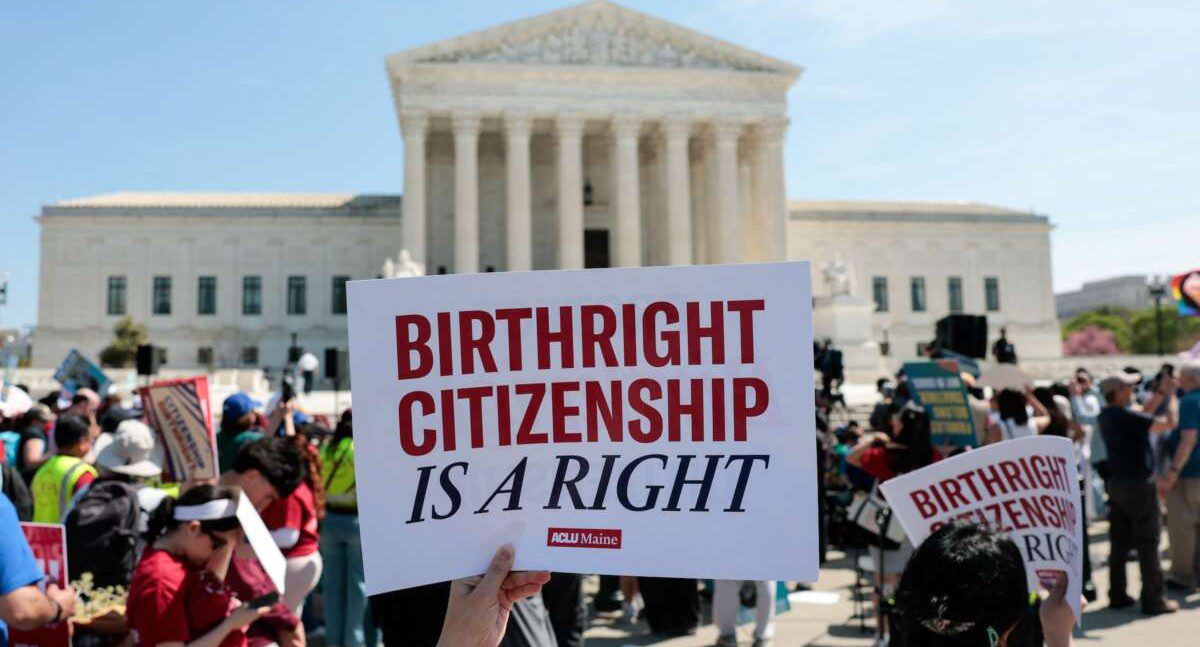
The United States Supreme Court has ruled that children born on American soil to undocumented immigrants or parents holding temporary visas remain entitled to automatic US citizenship, dealing a significant legal setback to President Donald Trump’s immigration agenda.
In a 6-3 decision delivered on Tuesday, the nation’s highest court upheld long-established constitutional protections under the 14th Amendment, rejecting the administration’s attempt to narrow the scope of birthright citizenship.
The ruling effectively invalidates an executive order signed by Trump at the start of his second term, which sought to deny automatic citizenship to children born in the United States if their parents were either in the country illegally or present on temporary visas.
Writing for the majority, Chief Justice John Roberts said the Constitution leaves little room for the interpretation advanced by the administration.
He stated that children born in the United States to parents who are unlawfully or temporarily present remain “subject to the jurisdiction” of the United States and are therefore citizens at birth under the Citizenship Clause of the 14th Amendment.
The decision reinforces more than a century of constitutional precedent and preserves the long-standing principle that nearly every child born on US soil automatically acquires American citizenship, with only limited exceptions such as children of foreign diplomats.
Constitutional challenge
Trump’s executive order formed a key part of his broader immigration strategy, which includes stricter border enforcement and expanded deportation measures.
The administration argued that birthright citizenship encourages illegal immigration and so-called “birth tourism,” where foreign nationals travel to the United States specifically to give birth so their children can obtain American citizenship.
Government lawyers maintained that the framers of the 14th Amendment intended it to protect formerly enslaved people following the Civil War rather than extend citizenship to children of undocumented migrants or temporary visitors.
However, the Supreme Court rejected that interpretation, reaffirming that the constitutional guarantee applies broadly to individuals born within US territory who are subject to American laws.
Historic court appearance
The case drew national attention after Trump made the unusual decision to personally attend oral arguments before the Supreme Court earlier this year, becoming one of the few sitting US presidents to appear in person during proceedings involving his own administration.
While Trump remained in court for arguments presented by Solicitor General John Sauer, he departed before lawyers representing civil rights organizations concluded their submissions defending birthright citizenship.
The American Civil Liberties Union (ACLU) and other advocacy groups argued that the administration’s position contradicted both the Constitution and decades of settled legal precedent.
Long-standing legal precedent reaffirmed
The court’s decision also reaffirmed its landmark 1898 ruling in United States v. Wong Kim Ark, which established that a child born in the United States to foreign parents is entitled to American citizenship regardless of the parents’ immigration status.
That precedent has served as the constitutional foundation for birthright citizenship for more than 125 years.
Another legal setback
The ruling marks another major judicial defeat for the Trump administration’s policy agenda.
In recent months, the Supreme Court has also ruled against key elements of the administration’s tariff programme and blocked efforts to remove a member of the Federal Reserve Board.
Tuesday’s judgment is expected to preserve existing citizenship rules nationwide and is likely to shape future debates over immigration and constitutional rights in the United States.