



















































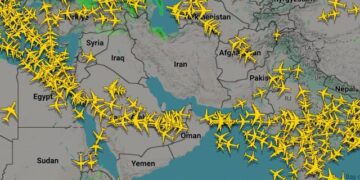




















Tensions in the Middle East escalated sharply on Sunday after Iran launched drone and missile attacks targeting Bahrain and Kuwait in retaliation for recent United States airstrikes, while warning that continued American military action could derail ongoing efforts to end months of conflict.
The latest exchange of attacks has further strained an already fragile ceasefire agreement and raised fresh concerns over regional security, particularly around the strategic Strait of Hormuz, one of the world’s most important oil shipping routes.
Iran’s Islamic Revolutionary Guard Corps (IRGC) said the attacks were carried out in response to what it described as American aggression against Iranian military installations, following U.S. strikes on surveillance facilities and coastal defence infrastructure.
The Guard also warned that any further violations of the ceasefire by Washington would lead to a “complete halt” of diplomatic efforts aimed at ending the conflict.
Kuwaiti authorities said the country’s air defence systems intercepted two incoming ballistic missiles and several drones early Sunday. Officials confirmed there were no casualties or significant damage.
Kuwait hosts Camp Arifjan, one of the United States’ largest military facilities in the Gulf region.
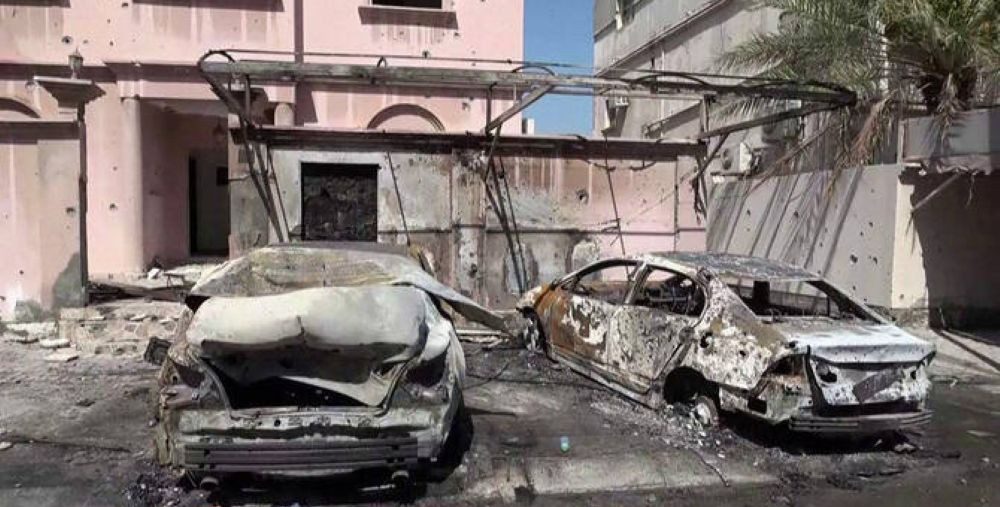
In neighbouring Bahrain, officials reported that an Iranian drone strike damaged a residential building near the country’s international airport. Authorities said no deaths were recorded, although the attack destroyed the upper floor of the building and caused extensive structural damage.
Bahrain, which hosts the headquarters of the U.S. Navy’s Fifth Fleet, condemned the attack as a serious violation of its sovereignty.
In a statement, Bahrain’s Foreign Ministry accused Tehran of pursuing “a systematic pattern of aggression” that threatens the kingdom’s security and regional stability.
The Iranian strikes followed renewed military action by the United States over the weekend.
The U.S. Central Command (CENTCOM) said American forces carried out precision strikes against Iranian surveillance systems, communications facilities, air defence sites, drone storage locations and naval mine-laying capabilities after Tehran allegedly attacked a commercial oil tanker in the Strait of Hormuz.
According to U.S. officials, the Panamanian-flagged tanker Kiku, carrying crude oil for Qatar’s state energy company, came under attack while navigating the strategic waterway.
President Donald Trump defended the military response, accusing Iran of repeatedly violating the ceasefire agreement.
In a post on his Truth Social platform, Trump said U.S. forces had targeted Iranian missile and drone facilities after what he described as another breach of the truce.
He also warned Tehran against further escalation, saying Washington would respond decisively if attacks continued.
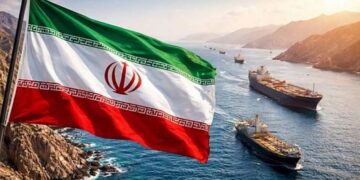
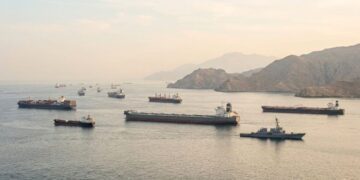
At the centre of the latest confrontation is growing disagreement over navigation through the Strait of Hormuz, the narrow passage linking the Persian Gulf to international waters and through which nearly one-fifth of global oil supplies are transported.
A multinational maritime security body supported by the U.S. Navy recently expanded an alternative shipping corridor near Oman’s coastline to facilitate safer movement of commercial vessels.
Iran has rejected the arrangement, insisting that shipping through the strait must remain under its own supervision following the conflict.
Tehran has also warned neighbouring Gulf states against supporting American maritime operations and maintains that any vessel using routes it has not approved risks interception.
Iranian parliamentary National Security Committee Chairman Ebrahim Azizi said Tehran would respond firmly to any vessel that ignored Iranian navigation directives.
Iran’s Revolutionary Guard claimed responsibility for recent attacks on regional targets, insisting they were legitimate responses to U.S. military operations.
The Guard reiterated that continued military pressure from Washington could end ongoing diplomatic efforts aimed at achieving a lasting ceasefire.
Meanwhile, U.S. officials accused Tehran of undermining the truce through repeated attacks on commercial shipping and regional security partners.
Vice President JD Vance said the United States had complied with the ceasefire agreement and warned that further Iranian attacks would be met with force.
“If Iran has concerns about implementation of the agreement, there are diplomatic channels available. Violence will be answered with violence,” Vance said.
The renewed hostilities come despite efforts by Gulf states and international mediators to preserve the fragile peace agreement reached last week.
Although global oil prices have eased in recent days following expectations of reduced fighting, analysts warn that continued attacks around the Strait of Hormuz could once again disrupt energy markets and threaten global supply chains.
Regional leaders have continued to call for restraint as fears grow that further military exchanges could jeopardize ongoing diplomatic efforts and widen the conflict across the Gulf.