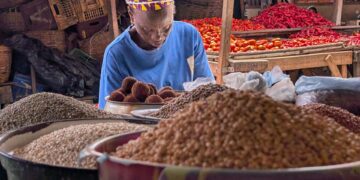


















































































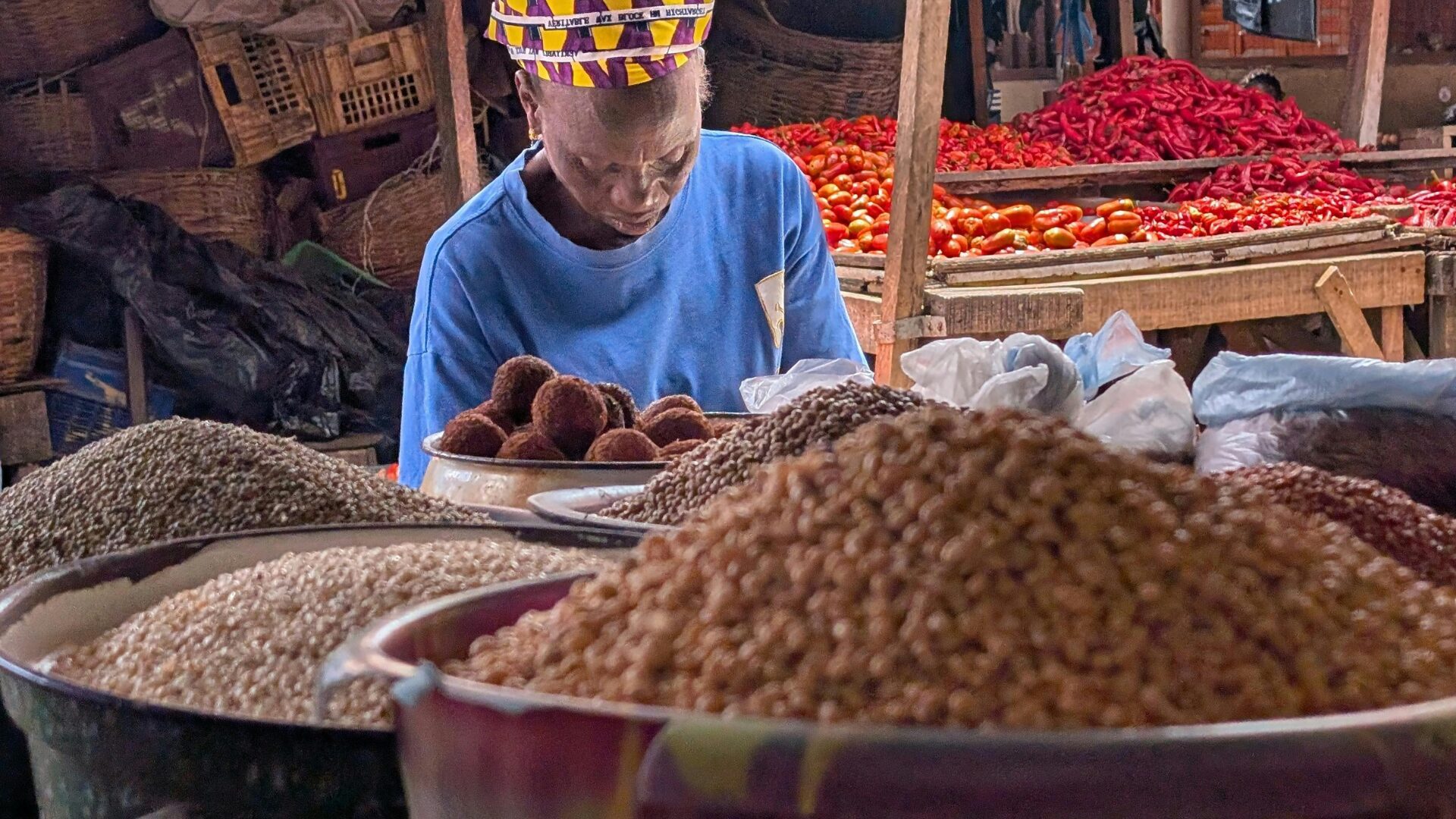
The prices of several staple food items, including tomatoes, beans, garri, onions and ginger, increased in April 2026 compared to the previous month, according to the latest Selected Food Prices Watch report released by the National Bureau of Statistics (NBS).
The report, published on Tuesday in Abuja, showed that while food prices recorded modest month-on-month increases across many categories, several items remained cheaper than they were a year ago, reflecting a gradual easing of inflationary pressures in some parts of the food market.
According to the NBS, the average retail price of one kilogramme of tomatoes rose by 6.6 per cent from N1,104.85 in March to N1,177.92 in April 2026. However, the price was still 8.23 per cent lower than the N1,283.57 recorded in April 2025.
Brown beans also recorded a monthly increase of 0.99 per cent, rising from N1,325.85 in March to N1,338.93 in April. On a yearly basis, the commodity recorded a sharp decline of 44.89 per cent compared to N2,429.39 in April last year.
Similarly, the average price of one kilogramme of white garri increased slightly by 0.93 per cent from N801.54 in March to N808.96 in April. Despite the increase, the commodity remained significantly cheaper than the N1,345.10 recorded in April 2025, representing a 39.86 per cent year-on-year decline.
Onions also became more expensive during the month, with the average price rising by 0.98 per cent from N1,153.14 to N1,164.39 per kilogramme. Compared to the same period last year, however, onion prices were down by 22.56 per cent.
Fresh ginger continued its upward trend, increasing by 0.73 per cent month-on-month to N5,581.82 per kilogramme from N5,541.25 in March. Unlike most of the other commodities, ginger recorded a year-on-year increase of 12.3 per cent from N4,970.66 in April 2025.
Palm oil prices also edged higher, rising by 0.12 per cent from N2,393.38 per litre in March to N2,396.32 in April. The commodity remained 4.77 per cent higher than its price a year earlier.
Regional disparities persist
The report highlighted significant variations in food prices across states and geopolitical zones.
Bayelsa recorded the highest average price of tomatoes at N1,600.73 per kilogramme, while Plateau had the lowest at N730.48.
For brown beans, Oyo State recorded the highest average price at N1,938.91 per kilogramme, while Taraba had the lowest at N750.
Abia posted the highest average price for white garri at N1,075.47 per kilogramme, while Plateau again recorded the lowest at N517.94.
Abia also recorded the highest average price for onions at over N2,100 per kilogramme, while Kwara and Nasarawa were among the states with the lowest onion prices.
In the case of palm oil, Ekiti recorded the highest average price at N2,819.09 per litre, while Abia had the lowest at N2,024.41.
South records highest prices for several food items
Analysis by geopolitical zones showed that the South-South recorded the highest average price of tomatoes at N1,561.10 per kilogramme, followed by the South-East at N1,379.57. The North-West recorded the lowest average price at N822.72.
The South-West and South-South zones recorded the highest average prices for brown beans, while the North-East posted the lowest.
The South-East emerged as the most expensive zone for white garri and onions, while the North-Central recorded the lowest average prices for both commodities.
For fresh ginger, the South-West recorded the highest average price at N6,812.92 per kilogramme, followed by the South-East, while the North-East recorded the lowest average price.
The latest figures underscore the continued pressure on household food budgets despite improvements in the annual prices of some major staples. The report also highlights the sharp regional differences in food costs, reflecting ongoing challenges in transportation, supply chains and local production across the country.