













































































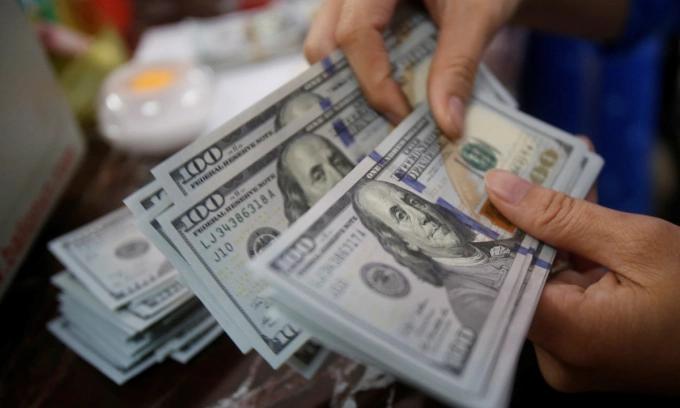
The US dollar weakened on Thursday after reaching an 18-month high in the previous session, as falling Treasury yields and comments from Federal Reserve officials reduced expectations of an interest rate increase this month.
The dollar index, which measures the greenback against a basket of major currencies, fell 0.2 per cent to 102.03 after climbing to its highest level in 18 months on Wednesday following stronger-than-expected US inflation data.
The euro recovered 0.5 per cent to $1.1216 from an 18-month low, putting it on course for its strongest daily gain in nearly two months. Sterling also rose 0.5 per cent to $1.3253 after figures showed the UK economy expanded by 0.1 per cent in August, exceeding expectations.
The dollar’s pullback came amid renewed demand for US government bonds, which pushed Treasury yields to their lowest levels in about three weeks. The benchmark 10-year Treasury yield fell to 5.0892 per cent, while the 30-year yield declined to 5.4319 per cent.
Markets had initially strengthened expectations of tighter US monetary policy after September inflation figures showed prices rising faster than anticipated. The data also intensified concerns about the financial risks facing heavily indebted artificial intelligence companies, prompting investors to reduce exposure to riskier assets.
However, comments from several Federal Reserve officials suggested the central bank could wait for further evidence before deciding whether another rate increase was necessary.
Fed Policy Outlook Shifts After Inflation Data
Market expectations for an October rate hike rose to around 50 per cent after the inflation report was released, but those odds subsequently eased as policymakers signalled caution ahead of the Federal Open Market Committee’s October 27-28 meeting.
Federal Reserve Vice Chair for Supervision Michelle Bowman and San Francisco Fed President Mary Daly were among the officials indicating that policymakers could afford to assess incoming economic data before taking further action.
The market reassessment suggests investors remain uncertain about whether the latest inflation figures are sufficient to prompt an immediate rate increase.
The timing of the meeting, just days before the US midterm elections, has also contributed to caution among traders assessing the likelihood of a policy shift.
Attention is now turning to Thursday’s US producer price index and retail sales reports, which could provide further insight into business costs, consumer spending and the direction of inflation.
Investors are also monitoring comments from Federal Reserve officials attending the annual meetings of the International Monetary Fund and World Bank in Bangkok, including Chair Kevin Warsh, for additional signals about the central bank’s next move.
Asian Currencies Reflect Mixed Economic Signals
Elsewhere in currency markets, the Australian dollar fell 0.6 per cent to $0.6930 after employment data showed an unexpected loss of 39,300 jobs in September, raising concerns about the country’s labour market.
The Japanese yen strengthened to 157.74 per dollar, while the offshore Chinese yuan remained broadly steady at 6.6909 per dollar.
The yuan’s performance followed data showing that Chinese factory-gate inflation accelerated in September as higher commodity costs fed into producer prices.
Currency markets remain sensitive to changes in interest rate expectations, particularly as investors weigh persistent US inflation against signs of pressure on technology stocks and the wider economic outlook.
The dollar’s next move is likely to depend on whether upcoming US economic reports reinforce expectations of further monetary tightening or give the Federal Reserve more room to keep interest rates unchanged.