



































































Tensions between the United States and Iran escalated sharply on Saturday after both countries exchanged fresh military strikes, raising fears that the fragile ceasefire reached last week could collapse completely as the conflict spreads across the Gulf region.
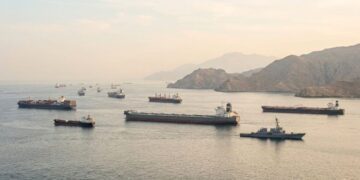
The latest confrontation followed U.S. airstrikes on Iranian military infrastructure, which Washington said were carried out in response to an Iranian drone attack on a commercial vessel in the strategic Strait of Hormuz.
Hours after the American operation, Iran launched missile and drone attacks targeting Bahrain and Kuwait, two Gulf states that host major U.S. military installations, while accusing Washington of violating the ceasefire agreement.
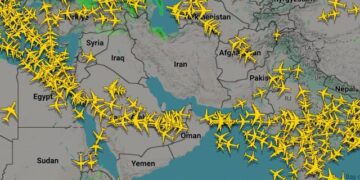
The renewed violence has heightened concerns over regional stability and the security of global energy supplies, with the Strait of Hormuz remaining at the centre of the dispute.
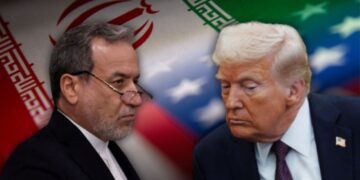
U.S. President Donald Trump warned that Washington was prepared to intensify military action if Iran continued what he described as hostile acts.
In a post on his Truth Social platform, Trump said the United States had successfully struck Iranian missile storage sites, drone facilities and coastal radar installations.
He warned that Washington’s patience was limited.
“There may come a point when we are no longer able to be reasonable and will be forced to militarily complete the job that we very successfully started,” Trump said.
He further warned that such a development could threaten the future of the Islamic Republic if hostilities continued.
Iran said its military operations were a direct response to the U.S. strikes, maintaining that the attacks targeted facilities connected to American forces in the Gulf.
Authorities in Kuwait said their air defence systems intercepted incoming missiles and drones, preventing casualties or significant damage.
In Bahrain, officials confirmed that an Iranian drone struck a residential building near the country’s international airport, causing structural damage but no reported fatalities.
The Bahraini government condemned the attack as a violation of its sovereignty and accused Tehran of undermining regional security.
The latest exchange of attacks comes amid growing disagreement over navigation through the Strait of Hormuz, one of the world’s most important maritime trade routes.
Iran has insisted that shipping through the strategic waterway should remain under its supervision following the conflict, while the United States and its allies continue to advocate unrestricted international navigation.
The dispute intensified after a U.S.-backed maritime initiative sought to expand alternative shipping routes near Oman’s coastline, a move Tehran has opposed.
Iranian Foreign Minister Abbas Araghchi warned that any attempt to challenge Tehran’s role in the Strait of Hormuz would further increase regional tensions.
The U.S. military maintained that its latest strikes were defensive, saying Iran had violated the ceasefire through repeated attacks on commercial shipping and regional targets.
American officials accused Tehran of targeting a commercial tanker in the Strait of Hormuz earlier in the week, prompting the retaliatory operation against Iranian military infrastructure.
U.S. Vice President JD Vance defended the administration’s approach, arguing that Washington had already achieved its primary objective.
“If we reach a final agreement, that’s positive. If we don’t, Iran’s nuclear programme has been severely weakened and the country is significantly less capable than before,” Vance said during a television interview.
The latest military exchanges have renewed concerns that the conflict could widen beyond Iran and Israel, drawing more Gulf states into the crisis.
International observers have warned that continued attacks around the Strait of Hormuz could threaten global energy markets, as roughly one-fifth of the world’s oil exports pass through the strategic waterway.
Diplomatic efforts to preserve the ceasefire remain uncertain as both Washington and Tehran continue to accuse each other of violating the terms of the agreement.