
































































The International Monetary Fund (IMF) has urged Sub-Saharan African countries to urgently strengthen their domestic economies and institutions as international development assistance continues to decline, warning that the region can no longer depend on foreign aid as a reliable source of financing.
In its latest Country Focus: Economic Developments in Countries and Regions report released on Wednesday, the IMF said the rapid fall in Official Development Assistance (ODA) marks a major turning point for Africa, where many governments still depend heavily on donor support to fund healthcare, education, humanitarian relief and other essential public services.
“For decades, official development assistance has been a central pillar of financing in Sub-Saharan Africa. That pillar is now weakening, quickly and broadly,” the Fund stated.
The report, prepared by economists in the IMF’s African Department, warned that as aid becomes increasingly unpredictable, African countries must build stronger internal resilience through improved domestic revenue mobilization, more efficient public spending, stronger institutions and better policy implementation.
According to the IMF, bilateral aid to Sub-Saharan Africa dropped by an estimated 26 per cent in 2025, representing one of the sharpest annual declines on record.
Official development assistance to the region fell from approximately $36 billion in 2024 to about $29.2 billion in 2025, while multilateral development financing is also expected to come under pressure as major international institutions reduce their budgets.
The Fund noted that donor nations are increasingly redirecting spending priorities amid changing geopolitical realities, making development assistance less predictable than in previous decades.
Despite years of efforts to diversify financing sources, Sub-Saharan Africa remains the world’s most aid-dependent region.
The IMF estimates that official development assistance accounted for an average of three per cent of Gross Domestic Product (GDP) across the region in 2024.
For low-income and fragile states, however, aid represented six per cent of GDP or more, providing critical funding for health systems, schools, food security programmes and humanitarian interventions.
The report warned that many development partners and non-governmental organizations deliver services directly to vulnerable communities, meaning any reduction in funding could have immediate consequences for millions of people.
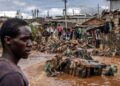
It highlighted ongoing humanitarian emergencies, including Ebola response efforts in the Democratic Republic of Congo and Uganda, conflict-driven displacement across several countries and worsening drought conditions in the Horn of Africa, as sectors particularly vulnerable to declining donor support.
The IMF said African governments now face increasingly difficult fiscal decisions as they contend with rising debt burdens, shrinking fiscal space and limited foreign exchange reserves.
Based on surveys conducted across 28 African countries, the Fund identified four major responses governments are adopting to cope with declining aid:
- Allowing donor-funded programmes to expire without replacement funding;
- Cutting government expenditure, particularly capital and infrastructure projects;
- Increasing borrowing, including domestic debt, despite growing fiscal risks; and
- Expanding domestic revenue mobilization through improved tax administration.
However, the IMF cautioned that each option carries significant risks.
Replacing lost aid through borrowing may help sustain essential public services but could worsen debt levels and widen fiscal deficits.
Conversely, failing to replace aid may preserve macroeconomic stability but could undermine long-term investments in education, healthcare and human capital development.
Rather than relying on external assistance, the IMF urged African governments to accelerate reforms aimed at strengthening internal economic capacity.
Among its key recommendations are:
- Prioritizing scarce aid for humanitarian emergencies, fragile states and critical social sectors;
- Improving coordination among development partners to eliminate duplication and maximise impact;
- Expanding the use of blended finance to attract private investment into infrastructure, agriculture and energy;
- Strengthening domestic revenue collection;
- Improving public expenditure efficiency; and
- Enhancing institutional capacity for policy design and service delivery.
The Fund stressed that while the decline in international assistance presents significant short-term challenges, it also offers an opportunity for African countries to build more sustainable and self-reliant economies.
The IMF noted that the reduction in aid comes after African economies have already endured multiple global crises over the past six years, including the COVID-19 pandemic, tighter global financial conditions and food and energy price shocks.
Those events have significantly weakened public finances across much of the continent, leaving governments with fewer resources to absorb further external funding cuts.
The report concluded that Africa’s long-term resilience will increasingly depend not on foreign assistance but on stronger domestic institutions, improved governance and sustained economic reforms capable of generating growth and financing development from within.