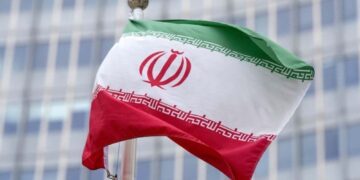










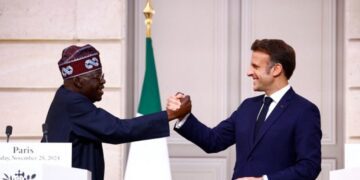



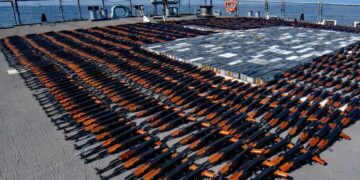

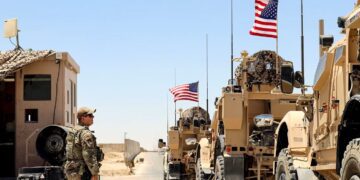


























































The peace agreement between the United States and Iran has drawn mixed reactions from Washington’s allies, with many welcoming an end to the three-month conflict while expressing alarm that the deal grants Tehran significant political, economic and strategic gains.
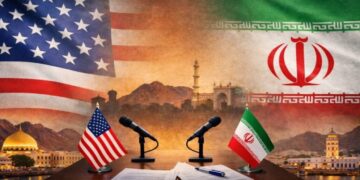
The agreement, described as the first signed between American and Iranian presidents since Iran’s 1979 Islamic Revolution, was formalized on Wednesday by U.S. President Donald Trump and Iranian President Masoud Pezeshkian during the G7 summit in Versailles, France.
The 14-point Memorandum of Understanding extends an existing ceasefire by 60 days, including in Lebanon, to allow negotiations on a permanent peace settlement and unresolved issues such as Iran’s nuclear programme.
Supporters have hailed the accord as a historic diplomatic breakthrough capable of ending one of the region’s most dangerous conflicts. However, critics across the Middle East argue that it leaves Iran more secure, internationally recognized and politically influential than before the war.
Lebanese political commentator Sarkis Naoum described the agreement as a “grand bargain” between Washington and Tehran.
“For Washington and Tehran, this is a grand bargain, the deal of the century, with no turning back,” Naoum said.
“The probability of success outweighs the risk of failure. Iran cannot endure further economic pain under sanctions, and Trump has no incentive to start a new war.”
Israel sees strategic setback
In Israel, however, the agreement has been widely criticized as a major strategic defeat.
Danny Citrinowicz, a senior Iran researcher at Israel’s Institute for National Security Studies, described the deal as a “catastrophe” for Israeli security interests.
According to him, what had initially been presented as a joint U.S.-Israeli effort to weaken or even overthrow Iran’s leadership has instead resulted in Washington effectively recognizing and strengthening the Islamic Republic.
“We went to topple the regime with U.S. backing and ended with Washington effectively giving legitimacy and strengthening the same regime we wanted to bring down,” Citrinowicz said.
He argued that the agreement failed to secure Israel’s primary objectives, including restrictions on Iran’s ballistic missile programme, limits on Tehran’s regional proxy groups and a clear commitment to dismantling its nuclear facilities.
Citrinowicz also said the ceasefire arrangement in Lebanon, negotiated at Iran’s insistence, had constrained Israel’s military campaign against Hezbollah.
“The deal delivers none of Israel’s core demands,” he said, adding that the agreement could further isolate Israel diplomatically while strengthening Iran’s regional position.
Iran secures key gains
If fully implemented, the agreement is expected to provide Iran with several major benefits, including an end to hostilities, phased sanctions relief, renewed oil exports and access to reconstruction funding.
Analysts note that while Washington had initially sought to weaken Iran’s leadership, dismantle its nuclear programme and curb its regional influence, the current framework falls short of those objectives.
Instead, the agreement effectively restores Iran’s position without requiring immediate concessions on several issues that had formed the basis of the conflict.
Although President Trump has maintained that the deal will ultimately prevent Iran from acquiring nuclear weapons, further negotiations are expected to determine the future of Tehran’s enriched uranium stockpile and broader nuclear activities.
Lebanon remains a flashpoint
The agreement also has major implications for Lebanon, where hostilities between Israel and the Iran-backed Hezbollah movement have intensified since the conflict began.
Under the memorandum, all parties are expected to observe a 60-day ceasefire covering every front, including Lebanon.
However, the arrangement has generated debate within Lebanon itself.
President Joseph Aoun recently warned that Iran should not negotiate on Lebanon’s behalf regarding issues such as ceasefire terms or Israel’s withdrawal from occupied southern territories.
Sources close to Hezbollah, however, argue that the U.S.-Iran negotiations actually strengthen Lebanon’s position by elevating its security concerns into broader regional talks between Washington and Tehran.
Gulf states express concern
Across the Gulf, officials are also reassessing their security outlook following the agreement.
Regional sources say the deal reinforces Iran’s status as a lasting regional power while raising fresh doubts about the reliability of long-standing U.S. security guarantees.
Many Gulf governments are now expected to pursue greater accommodation with Tehran rather than confrontation, according to analysts familiar with regional diplomacy.
However, Alex Vatanka, a senior fellow at the Middle East Institute in Washington, believes the agreement represents the least damaging outcome after months of conflict.
“They tried to take Iran down militarily. They couldn’t,” Vatanka said.
“The alternative would have been catastrophic. A wider war could have devastated the Gulf for decades.”
He cautioned that the agreement is only the beginning of a much longer diplomatic process.
“It’s big, but it’s not the end of it. It’s just the beginning,” he said.
Some analysts also believe Israel could still complicate implementation of the agreement, particularly if disagreements over Lebanon or Iran’s regional activities escalate.
Despite the ceasefire framework, uncertainty remains over how the agreement will be implemented and whether it can produce a lasting peace in one of the world’s most volatile regions.