


































































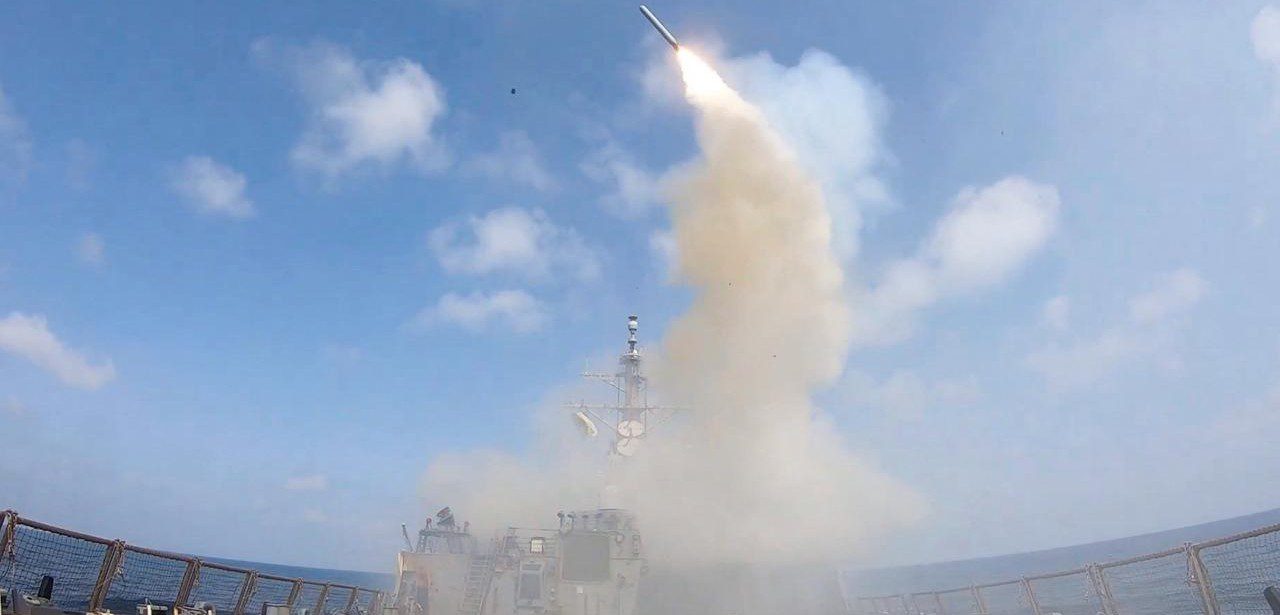
The United States military said it carried out strikes on Iranian coastal surveillance facilities on Saturday after intercepting drones launched by Iran toward the strategic Strait of Hormuz, marking a significant escalation in the ongoing conflict between Washington and Tehran.
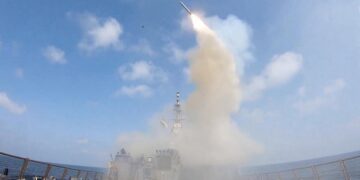
According to U.S. Central Command, American forces shot down four Iranian drones believed to have been targeting maritime traffic in and around the vital shipping corridor. Following the interceptions, U.S. forces struck Iranian radar and surveillance installations in Goruk and on Qeshm Island, both located along the Strait of Hormuz.
A U.S. official told reporters that intelligence assessments indicated the drones posed a potential threat to commercial and military vessels operating in the region.
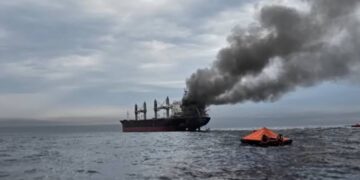
Iran’s Islamic Revolutionary Guard Corps (IRGC) said it responded by launching missiles at U.S. military bases in the Gulf and firing on four oil tankers attempting to transit the Strait of Hormuz without what it described as Iranian authorization.
The claims came as regional security concerns intensified. Authorities in Kuwait reported that air defence systems intercepted missile and drone attacks of unspecified origin, while emergency sirens sounded across Bahrain, where residents were advised to seek shelter.
Tehran claimed responsibility for ballistic missile strikes against U.S. facilities in both countries. However, the U.S. military said six missiles were intercepted, while a seventh failed to reach its intended target.
The latest confrontation threatens to derail ongoing indirect negotiations between Washington and Tehran aimed at securing an interim agreement to pause the three-month conflict while broader issues, including Iran’s nuclear programme, are addressed in future talks.
Despite repeated diplomatic contacts, progress has remained limited as military exchanges continue.
Iran has reportedly demanded access to billions of dollars in frozen oil revenues, sanctions relief on crude exports, the lifting of restrictions affecting its ports, and greater influence over maritime activities in the Strait of Hormuz as part of any potential settlement.
The waterway, through which roughly one-fifth of global oil shipments previously passed before the conflict, has become a major flashpoint. Disruptions to maritime traffic have contributed to rising energy prices and growing concerns over global supply chains.
U.S. President Donald Trump is facing increasing domestic pressure over the economic fallout from the conflict, particularly rising fuel prices.
Speaking to NBC, Trump said U.S. military operations had significantly degraded Iran’s missile and drone production capabilities but acknowledged that Tehran still retained a substantial arsenal.
“They have some missiles, they have some drones. I would say percentage-wise, maybe 21% to 22% of their missiles. It’s a lot of missiles, but it’s not what it was when we first attacked,” he said.
Trump suggested that Iran’s leadership remained reluctant to accept a deal despite mounting military pressure because of national pride and strategic calculations.
The conflict has increasingly affected global markets and humanitarian conditions. The United Nations World Food Programme warned this week that higher fuel and transportation costs linked to the crisis are pushing millions of vulnerable people closer to food insecurity.
Meanwhile, Mohsen Rezaei, an adviser to Iran’s Supreme Leader, told CNN that prospects for peace would depend partly on Washington unfreezing $24 billion in Iranian assets. He warned that renewed U.S. attacks could deepen the conflict further.
Beyond the U.S.-Iran confrontation, violence continues elsewhere in the Middle East.
In southern Lebanon, the Iran-backed militant group Hezbollah claimed responsibility for attacks on Israeli forces near Beaufort Castle, while Lebanese security officials reported Israeli airstrikes targeting several communities across the region.
Iran has reiterated its support for Hezbollah and continues to insist that any broader settlement with Washington must include an end to hostilities between Israel and Hezbollah.
The latest fighting between the two sides resumed in March and has persisted despite U.S.-backed ceasefire efforts. Hezbollah leader Naim Qassem recently rejected a U.S.-mediated arrangement between Israel and the Lebanese government, arguing that it failed to guarantee an Israeli withdrawal from southern Lebanon.
As tensions spread across the Gulf and the wider Middle East, analysts warn that the risk of a broader regional conflict remains elevated, with maritime security, energy markets and civilian populations increasingly caught in the fallout.