













































































Houthi fighters launched a major military push on Monday to capture strategic mountain heights in Yemen, aiming to isolate the Red Sea coast from remaining strongholds held by Saudi-backed forces, following reports that United States President Donald Trump called off planned military strikes at the last minute.
A swift advance by the Iran-aligned movement this month has expanded regional hostilities, threatening global energy supply lines and sparking urgent appeals from Saudi Arabia and Yemen’s internationally recognized government for direct American military intervention.
Aborted Airstrikes and Diplomatic Strains
A report by The New York Times indicated that the Trump administration had prepared to execute airstrikes against Houthi targets on Sunday in response to direct pleas from Saudi Crown Prince Mohammed bin Salman. However, President Trump reportedly aborted the operation while munitions were actively being loaded onto military aircraft.
During a telephone conference on Sunday, the President of Yemen’s Saudi-backed Presidential Leadership Council, Rashad al-Alimi, formally requested U.S. military assistance. Sources familiar with the call stated that Washington offered no firm commitment to join the campaign.
The developments follow a weekend escalation in which Houthi forces claimed responsibility for a missile attack targeting Riyadh, marking the first strike on the Saudi capital since the recent flare-up began. Saudi authorities have not officially commented on the incident.
Battle for the Highlands
Following their capture of Yemen’s Red Sea coast earlier this month, Houthi forces have targeted the strategic Kahboub Mountain range across the Taiz and Lahij governorates. Control of these heights would sever connections between the Red Sea corridor and government-held territories in the south, including the key port city of Aden.
According to United Nations estimates, recent fighting has killed nearly 700 people, injured thousands, and displaced approximately 130,000 Yemenis within the country, while over 3,000 citizens have fled across the Red Sea to East Africa.
Energy Market Impact
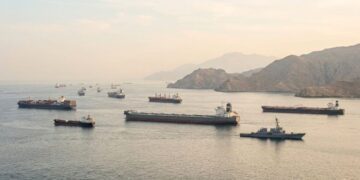
The renewed conflict poses significant risks to global oil logistics. The Houthi offensive along the Red Sea threatens Saudi Arabia’s primary alternative export route designed to bypass the congested Strait of Hormuz. In response, Saudi crude exports through Hormuz have surged to 2.9 million barrels per day in recent days, up from 700,000 barrels per day in August, as tankers perform high-risk ship-to-ship transfers off the coast of Oman.
While the increased throughput has moderated global crude oil prices near $100 per barrel, refined product markets remain under pressure, with United States retail diesel prices reaching record highs on Monday.