










































































Fitch Ratings has revised Nigeria’s economic outlook from stable to positive while retaining the country’s long-term credit rating at ‘B’, citing stronger foreign reserves, moderating inflation and progress in economic reforms.
The Federal Government said the decision reflected growing confidence in Nigeria’s economic direction and could pave the way for a credit rating upgrade if the current improvements and reform momentum are sustained.
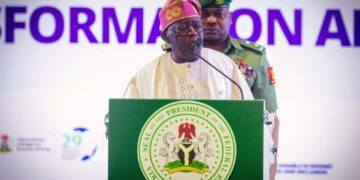
The Minister of Finance and Coordinating Minister of the Economy, Taiwo Oyedele, disclosed this in a statement issued in Abuja on Saturday, a day after Fitch announced its decision.
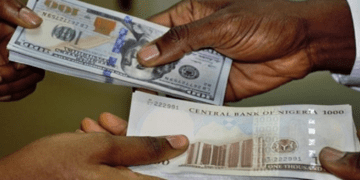
Oyedele said the ratings agency identified greater flexibility in the naira, easing inflationary pressures and faster-than-expected growth in foreign exchange reserves as key factors behind the improved outlook.
Nigeria’s gross external reserves rose to $54.9 billion as of September 25, from $32 billion in mid-April 2024, according to the minister.
He attributed the increase to stronger portfolio investment inflows, higher export earnings, remittances and efforts to bring more foreign exchange transactions into the formal market.
The minister said the improved reserve position had strengthened Nigeria’s ability to withstand external economic shocks. Fitch also projected a current account surplus equivalent to 6.4 per cent of gross domestic product in 2026.
Growth projected to remain above 4%
Fitch expects Nigeria’s economy to expand by 4.3 per cent in 2026, compared with four per cent in 2025, with growth projected to remain above four per cent in both 2027 and 2028.
Oyedele said non-oil activities were expected to remain the main drivers of the expansion as the government seeks to reduce the economy’s dependence on crude oil.
He added that crude oil production had met Nigeria’s Organization of the Petroleum Exporting Countries target of 1.5 million barrels per day since May.
The minister also pointed to increased domestic refining capacity, saying it was helping to reduce imports of refined petroleum products and ease demand for foreign exchange.
Average inflation is projected to fall to 15.4 per cent in 2026, less than half its 2024 level, although price pressures remain a concern.
Debt and revenue reforms in focus
On public finances, Oyedele said Fitch expects tax reforms to boost non-oil revenue as a share of GDP, while Nigeria’s government debt is projected to average 32 per cent of GDP between 2026 and 2028.
That would be below the median of 56 per cent for countries with a ‘B’ credit rating, according to the minister.
Fitch also recognized the depth of Nigeria’s domestic debt market and the ongoing recapitalization of banks, with many lenders reporting capital adequacy ratios above 20 per cent.
However, the government acknowledged that the country continued to face significant fiscal challenges, including persistent inflation, low revenue collection relative to the size of the economy and high debt-servicing costs.
Oyedele said addressing these weaknesses remained central to the administration’s economic programme.
The government plans to sustain a market-reflective foreign exchange regime, implement new tax laws, improve public spending efficiency, strengthen debt management and encourage growth outside the oil sector.
Positive signals from global rating agencies
The finance minister said the three major international credit rating agencies had taken positive rating actions on Nigeria in 2026.
S&P Global Ratings upgraded Nigeria’s credit rating to ‘B’ from ‘B-’ in May, while Moody’s Ratings revised its outlook on the country to positive in August.
Separately, index provider FTSE Russell restored Nigeria to Frontier Market status, effective September 21, 2026.
Oyedele said the decisions reflected increased confidence in the country’s reform efforts, including the removal of the petrol subsidy, exchange rate unification and changes to the tax system under President Bola Tinubu.
He said the administration’s medium-term objective was to put Nigeria on a sustained path towards investment-grade credit status.
According to the minister, continued reforms could help lower borrowing costs, attract private investment and support job creation.
Government pledges to sustain reforms
Despite the improved outlook, the government said it recognized that stronger macroeconomic indicators must translate into better living conditions for Nigerians.
Oyedele pledged continued efforts to strengthen food security, create jobs, improve human development and support small businesses.
He said the administration would maintain its reform programme while working to ensure that economic stability delivers broader benefits across the country.
Fitch’s decision does not constitute an immediate upgrade of Nigeria’s credit rating. Rather, the positive outlook signals the possibility of an upgrade if economic conditions improve further and the country sustains the progress identified by the agency.