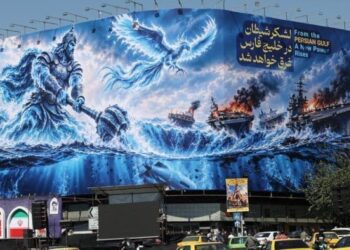

















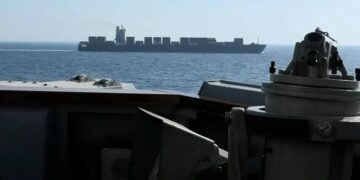







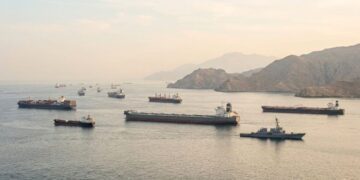














































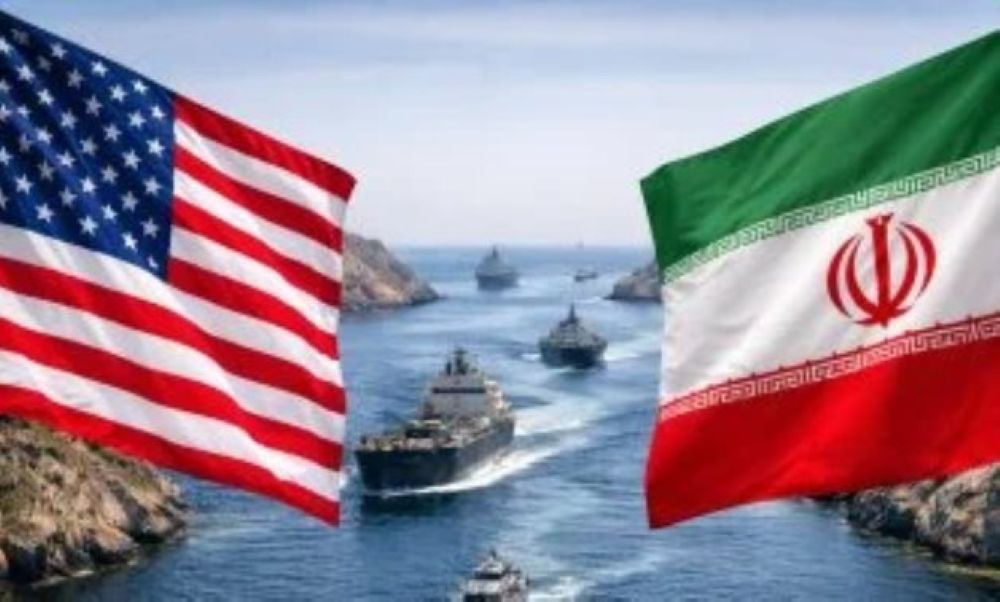
The United States has warned Iran of significantly tougher economic measures as attacks on commercial vessels push traffic through the Strait of Hormuz to some of its lowest levels since the conflict began.
Two vessels operated by the United Arab Emirates’ state-owned Abu Dhabi National Oil Company were attacked while travelling through the strategic waterway on Thursday, according to UAE state media. The UAE blamed Iran for the incidents, although Tehran had not immediately responded to the accusation.
The attacks came as the United States indicated that its naval blockade of Iranian ports could remain in place indefinitely, adding to pressure on Tehran and further complicating efforts to restore commercial shipping through the strait.
Shipping activity through the Strait of Hormuz has dropped dramatically since the war began.
Data from ship-tracking firm Kpler showed that only nine vessels crossed the waterway on Thursday, compared with five the previous day. The figure was also well below the August daily average of 12 crossings.
No visible vessel crossings were recorded early on Friday, although some ships could have passed through with their tracking systems switched off.
Before the conflict, however, more than 130 vessels crossed the Strait of Hormuz each day.
The waterway is one of the world’s most important energy routes, carrying roughly one-fifth of global oil and liquefied natural gas shipments before the war.
US Defence Secretary Pete Hegseth said Washington has the capacity to keep its naval blockade in place for as long as necessary.
He said US forces could maintain the operation by rotating naval vessels in and out of the region.
The economic pressure campaign is also expected to intensify.
US Treasury Secretary Scott Bessent said Washington would announce additional measures against Iran in the coming week, describing them as potentially unprecedented in the history of economic sanctions.
The moves come as President Donald Trump faces domestic pressure over the cost of the war and higher fuel prices ahead of the US midterm elections in November.
Tehran has maintained that commercial shipping will not return to normal until its demands are addressed.
Among the conditions cited by Iran are the removal of US economic sanctions and the release of Iranian assets frozen abroad.
An Iranian parliamentary committee has also approved a proposed framework for managing traffic through the Strait of Hormuz.
Under the plan, reported by Iran’s semi-official Tasnim news agency, vessels and equipment belonging to the United States, Israel and other countries designated as hostile would be prohibited from using the waterway.
Iran has also rejected claims that negotiations with Washington have made significant progress.
The breakdown of a ceasefire and the failure to revive an earlier agreement have contributed to renewed attacks on vessels Tehran accuses of attempting to pass through the strait without its approval.
Washington temporarily lifted its blockade of Iranian shipping and ports for a month in June but later reinstated the restrictions.
The blockade has sharply reduced Iran’s access to foreign currency and added to the economic damage caused by attacks on its energy infrastructure.
The United States had previously indicated that it could lift the blockade if Iran and Oman, which share control of the approaches to the strait, reached an agreement allowing commercial shipping to resume.
That prospect now appears increasingly uncertain.
The disruption has already altered global energy flows.
Brent crude and US West Texas Intermediate futures were trading at about $87 and $81 per barrel, respectively.
India’s purchases of Russian crude also reached a record level in July as refiners sought alternative supplies. Asian refiners, meanwhile, have increased purchases of US crude to protect against further disruptions to Gulf energy exports.
The situation has raised concerns about a prolonged reduction in global oil supplies, with economists warning that an extended conflict could weigh heavily on economic growth and increase the risk of recession in some regions.
Additional concerns emerged after reports that Iran-aligned Houthi forces in Yemen had attacked a Saudi Aramco refinery with drones, raising fears that the conflict could spread further across the region.
For now, the Strait of Hormuz remains at the centre of the standoff, with Washington relying increasingly on economic pressure while Tehran continues to use control over the vital shipping route as leverage.