























































The World Health Organization (WHO) and the Africa Centres for Disease Control and Prevention (Africa CDC) have unveiled a $518 million six-month emergency response plan aimed at containing the rapidly expanding Ebola outbreak in Central and East Africa, warning that the epidemic has become one of the most serious in recent history.
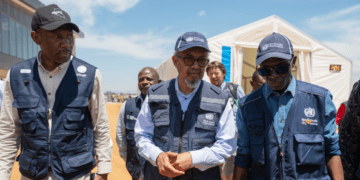
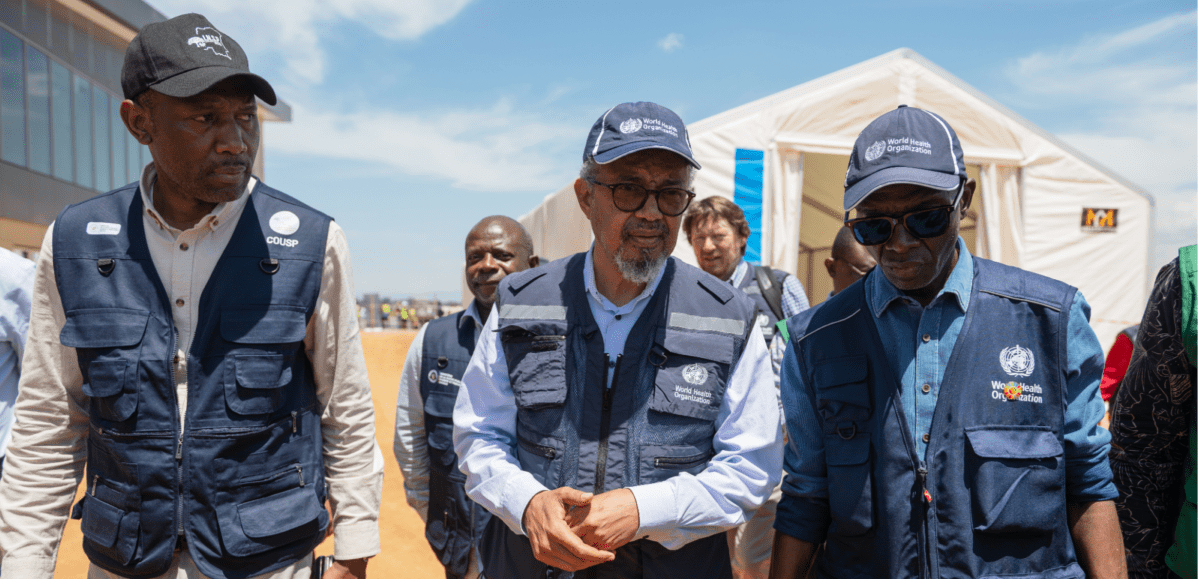
Announcing the initiative on Friday, WHO Director-General, Tedros Adhanom Ghebreyesus, said urgent financial support, political commitment and community engagement are needed to halt the spread of a disease that has already become the fourth-largest Ebola outbreak ever recorded.
The joint strategy focuses on strengthening response efforts in the Democratic Republic of the Congo and neighbouring Uganda, while helping other African countries enhance preparedness through measures such as improved surveillance, rapid testing capacity and reinforced border screening systems.
“The outbreak is moving fast and we are still playing catch-up,” Tedros said, stressing that effective containment would depend not only on funding but also on public trust and cooperation within affected communities.
Rising Cases Raise Alarm
According to Africa CDC data, the outbreak has so far resulted in 381 confirmed cases and 62 deaths in the Democratic Republic of the Congo, while Uganda has recorded 19 confirmed infections and two fatalities.
Health officials say the outbreak involves the rare Bundibugyo Ebola Virus Disease strain of Ebola, a variant for which there is currently no approved vaccine or specific treatment, making containment efforts significantly more challenging.
Africa CDC Director-General, Jean Kaseya, described the outbreak as the most severe Bundibugyo-strain epidemic ever documented.
“This outbreak is very serious. If you compare it with previous Bundibugyo outbreaks, this is the most serious Bundibugyo outbreak we have seen,” he said.
Funding Gap Persists
Although international donors have pledged approximately $315.8 million toward the response, health authorities say a substantial funding gap remains.
The newly launched $518 million plan is intended to support emergency treatment centres, surveillance operations, laboratory testing, logistics, public awareness campaigns and cross-border preparedness initiatives over the next six months.
The outbreak was officially declared by Africa CDC on May 15, with WHO subsequently classifying it as a public health emergency of international concern.
Testing and Detection Challenges
Health officials acknowledge that the epidemic gained momentum partly because it went undetected for several weeks.
Compounding the challenge, commonly used Ebola diagnostic tests initially struggled to identify the Bundibugyo strain, resulting in delays in diagnosis and treatment.
According to aid workers operating in affected regions, laboratory results can sometimes take several days or longer to process, slowing efforts to isolate infected individuals and trace contacts.
Security Threats Hampering Response
Beyond medical challenges, insecurity and community resistance are complicating containment efforts.
Health workers have reported attacks on treatment facilities and burial teams in some affected communities, while misinformation and mistrust continue to undermine public cooperation.
In response to growing security concerns, WHO confirmed it has received three armoured vehicles from the United Nations peacekeeping mission operating in the Democratic Republic of the Congo to support frontline health teams working in volatile areas.
Public health experts warn that unless transmission is brought under control quickly, the outbreak could spread further across borders, increasing pressure on already fragile healthcare systems in the region.