














































































Arsenal’s long wait for a UEFA Champions League title continued after a heartbreaking final defeat to Paris Saint-Germain, with questions now being asked about whether Mikel Arteta’s ultra-cautious approach ultimately denied the Gunners European glory.
For much of the final, Arsenal appeared to be executing their game plan perfectly. Kai Havertz’s early strike handed the North London club the lead, while a disciplined defensive structure frustrated PSG’s star-studded attack.
Yet when the final whistle blew after penalties, it was the French champions celebrating, leaving Arsenal to reflect on a painful missed opportunity.
Arteta’s tactical blueprint was clear from the outset. Rather than engaging PSG in an open contest, Arsenal focused on limiting the influence of dangerous attackers such as Khvicha Kvaratskhelia, Ousmane Dembele and Vitinha.
The strategy worked for long periods.
PSG dominated possession, completing 837 passes compared to Arsenal’s 199, while the Gunners spent much of the match defending deep in a compact shape designed to absorb pressure and deny space.
The approach reflected the identity Arsenal have developed under Arteta in recent seasons, combining defensive discipline with efficiency in key moments.
However, the game also highlighted the risks of such a conservative setup.
After Havertz’s sixth-minute goal, Arsenal failed to register another shot on target throughout normal time and extra time. While they succeeded in frustrating PSG, they offered little attacking threat themselves.
That lack of ambition eventually proved costly.
The turning point arrived when defender Cristhian Mosquera was caught on the wrong side of Kvaratskhelia inside the penalty area, conceding a penalty that allowed PSG to draw level after Arsenal had protected their lead for nearly an hour.
The equaliser shifted momentum and exposed the fine margins upon which Arsenal’s game plan depended.
Having committed so many players to defensive duties, Arsenal needed near-perfect execution. One mistake was enough to undo their hard work.
The tactical setup also limited the impact of some of Arsenal’s most creative players.
Captain Martin Odegaard struggled to influence proceedings and managed only a handful of touches before being substituted. Bukayo Saka was largely kept quiet, while Leandro Trossard’s involvement in Arsenal’s goal came through pressing rather than creative play.
In contrast, Havertz emerged as Arsenal’s standout performer. The German forward scored the opener and became only the third player to score in Champions League finals for two different clubs.
His performance justified Arteta’s decision to start him ahead of Viktor Gyokeres, despite questions over the selection before kick-off.
Yet even Havertz’s contribution could not save Arsenal from another painful chapter in their European history.
The penalty shootout ultimately delivered the final blow.
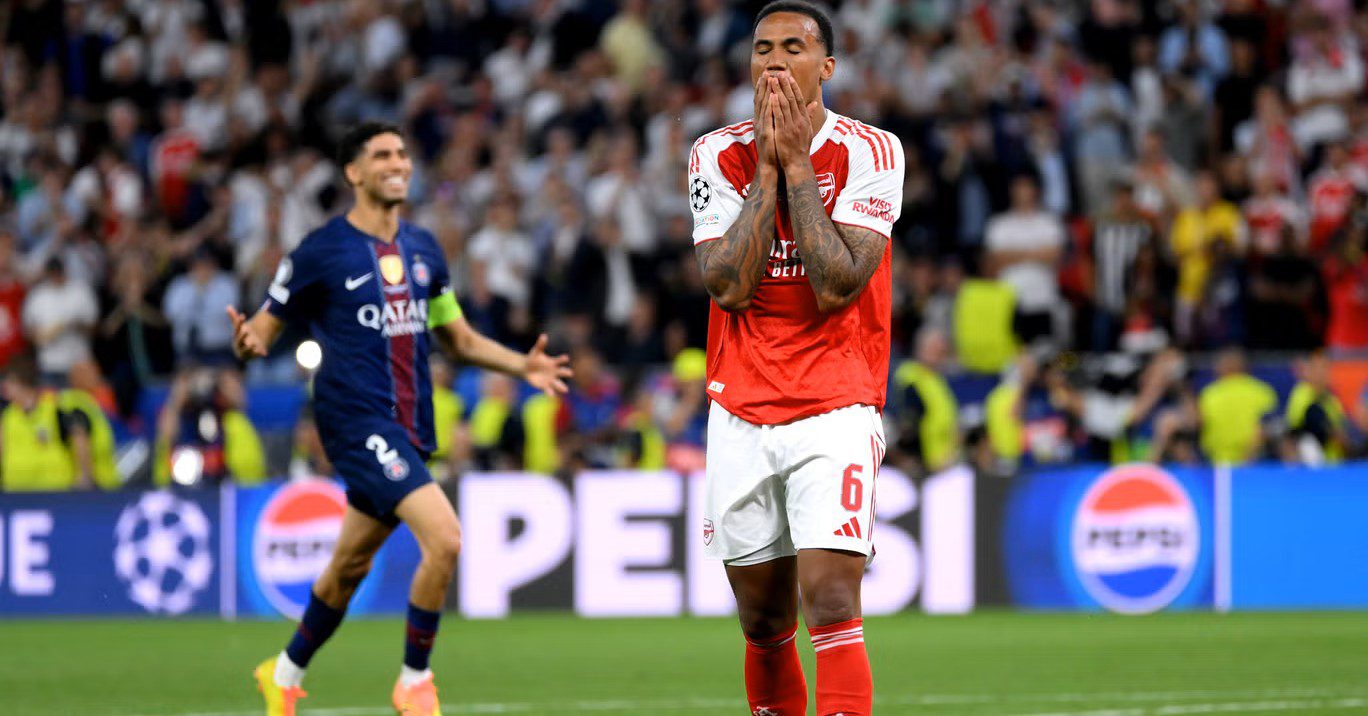
Despite goalkeeper David Raya producing a crucial save, Arsenal failed to capitalise. Gabriel Magalhaes blasted his effort over the bar, while Eberechi Eze also missed the target, handing PSG the advantage they needed.
There was a cruel irony in Arsenal’s downfall.
Throughout the season, set-pieces had been one of the club’s greatest strengths, helping them compete at the highest level both domestically and in Europe. But in the final, another dead-ball situation led to PSG’s equaliser, while missed penalties sealed Arsenal’s fate.
The defeat will inevitably fuel debate about Arteta’s tactical choices.
Supporters may argue that Arsenal reached the final by remaining organised, disciplined and difficult to break down. Others will point to the team’s reluctance to attack after taking the lead, particularly against a PSG side that had shown vulnerabilities throughout the competition.
What is certain is that Arsenal’s defensive masterclass came at a cost. In trying to neutralise PSG’s attacking strengths, the Gunners also restricted many of their own.
For a club still chasing its first Champions League crown, the final may ultimately be remembered not for what PSG did right, but for whether Arsenal’s fear of losing prevented them from seizing their biggest opportunity.
Twenty years after their first Champions League final ended in disappointment, Arsenal were left wondering if a little more courage could have changed history.