














































































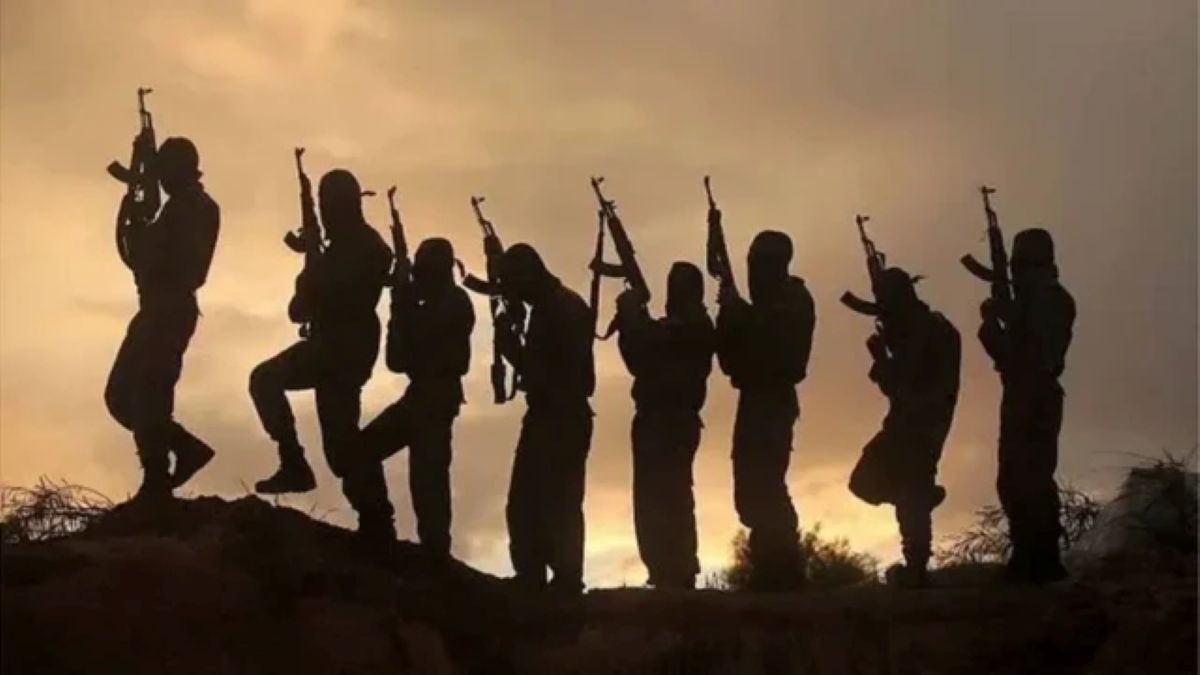
At least 18 Nigerian soldiers, including a senior military officer, are feared dead after suspected Boko Haram fighters launched a deadly attack on a military base in Borno State, highlighting a fresh surge in insurgent violence across the country’s north.
Local government and intelligence sources said the overnight assault occurred in Benisheikh, about 75 kilometres from Maiduguri, the Borno State capital. The attackers reportedly overran the base, killed troops and set military vehicles and buildings ablaze before withdrawing.
Among those killed was O.O. Braimah, a brigadier general and brigade commander at the facility. His death was confirmed by multiple sources, including the chairman of Kaga Local Government Area, Zannah Lawan Ajimi.
“Unfortunately, the brigade commander… lost his life,” Ajimi said.
Military and intelligence sources placed the death toll at “at least” 18, although the Nigerian military has yet to release an official figure. In a statement, defence headquarters spokesman Michael Onoja said insurgents attempted to breach the base but were “decisively engaged and forced to retreat,” acknowledging the loss of “a few brave and gallant soldiers.”
The attack marks the second killing of a high-ranking officer in less than six months, following the death of Musa Uba, who was killed in November by fighters linked to the Islamic State West Africa Province.
Rising insecurity across the north
The latest assault comes amid a broader escalation of violence in northern Nigeria, where at least 90 people have been killed in multiple attacks since the start of the week, according to local and humanitarian sources.
Nigeria has battled a jihadist insurgency since the 2009 uprising by Boko Haram, a conflict that has since splintered into rival factions, including ISWAP. The violence has displaced millions and destabilised large parts of the northeast.
Security concerns are no longer confined to the region. In recent months, jihadist activity has spread into northwestern and central states, overlapping with long-running banditry and organised criminal networks.
In Kebbi State, attacks blamed on a local extremist group linked to Al-Qaeda have left dozens dead and displaced at least 1,900 people, according to the Christian Association of Nigeria. Clergy in affected communities described coordinated raids on villages over several days with little immediate military response.
Analysts warn that the growing reach of militant groups reflects a dangerous convergence between Sahel-based jihadist networks and Nigeria’s internal security challenges.
International concern grows
The deteriorating security situation has drawn international attention. On Wednesday, the United States Department of State authorized the departure of non-emergency government personnel from Abuja, citing rising risks.
There are also increasing signs of foreign military involvement. Earlier this year, the United States deployed about 200 troops to Nigeria to provide training and technical support, while joint operations have targeted extremist groups operating along the country’s northern borders.
Despite these efforts, security experts say the persistence and spread of attacks suggest insurgent groups remain resilient and capable of launching coordinated assaults on military targets.
For residents in affected regions, the latest attack underscores a grim reality: even heavily guarded installations are no longer immune, and the path to lasting peace remains uncertain.