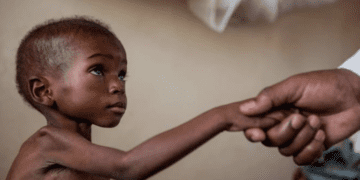







































































Sharp reductions in foreign aid spending by the United Kingdom, Germany and France could contribute to more than 11.5 million preventable deaths by the end of the decade, according to a new study warning of a growing global humanitarian and health crisis.
The report, produced by the Barcelona Institute for Global Health, said Europe’s leading donor nations were rapidly scaling back international development assistance, creating what researchers described as a “new normal” of reduced global engagement.
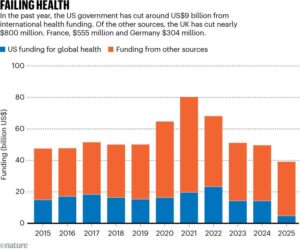
According to the findings, UK official development assistance spending is projected to decline by 45 per cent between 2020 and 2026, while Germany’s aid budget is expected to fall by 37 per cent between 2023 and 2026. France’s aid spending is projected to drop by 30 per cent over the same period.
Researchers estimated that Britain’s cuts alone could contribute to about 5.1 million additional deaths by 2030. France’s reductions could result in roughly 3.5 million deaths, while Germany’s cuts could lead to nearly 2.9 million preventable deaths worldwide.
Gonzalo Fanjul, one of the report’s authors, said the impact of Europe’s shifting spending priorities could be devastating for vulnerable populations.
“Much of the debate focuses on Trump and his administration, but our estimates suggest that Europe’s shifting spending priorities will prove equally devastating for some of the most vulnerable communities in the world,” Fanjul said.
He warned that weakening international health systems at a time of growing disease outbreaks could have serious global consequences.
“The Ebola outbreak now declared a global health emergency is a stark reminder that a weakened global health system leaves everyone exposed,” he added.
The report linked declining aid budgets to rising geopolitical tensions, increased military spending and a broader retreat from multilateral cooperation.
According to the study, cuts to UK-funded sexual and reproductive health programmes could contribute to 1.1 million unintended pregnancies, 375,000 unsafe abortions and more than 1,000 maternal deaths.
Researchers also warned that France’s reduction in contributions to the Global Fund could undermine efforts to combat HIV/AIDS, tuberculosis and malaria, potentially contributing to more than 710,000 additional deaths by 2028.
In Germany, aid reductions are expected to leave nearly four million people without food assistance because of deep cuts to humanitarian programmes.
The report noted that development assistance has historically served as a stabilizing tool by supporting health systems, reducing poverty and addressing some of the root causes of conflict and displacement.
“Weakening it may ultimately prove more costly than sustaining it,” the report stated.
The findings come as European governments significantly increase defense spending amid global security concerns and ongoing conflicts.
The UK government previously defended its aid reductions while announcing plans to increase defense spending in line with NATO targets.
British Foreign Secretary Yvette Cooper said earlier this year that the government remained committed to international development but was seeking to modernize spending and improve value for taxpayers.
Aid organizations and health experts, however, warn that continued reductions in humanitarian funding could worsen food insecurity, disease outbreaks and instability across low- and middle-income countries already under severe economic pressure.