















































































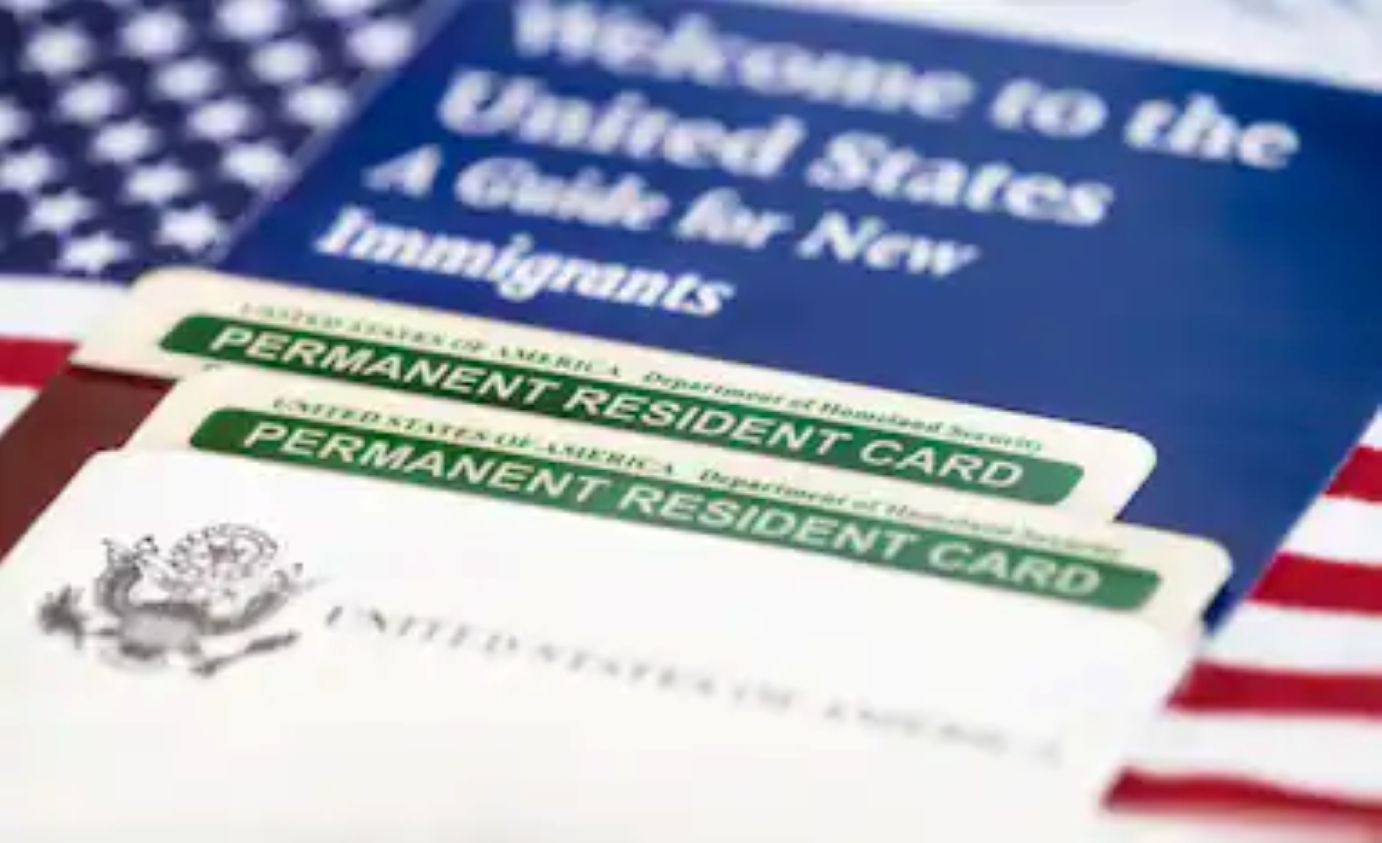
The United States is preparing to apply stricter scrutiny to some green card applicants, with immigration officers set to take a broader look at applicants’ financial circumstances and potential reliance on government assistance.
The revised approach will take effect on 18 September 2026, under updated guidance from the U.S. Citizenship and Immigration Services (USCIS).
The change is particularly relevant to immigrants seeking to adjust their status to lawful permanent residence from within the US. Under the revised framework, officers will assess whether an applicant is likely to become a “public charge”, meaning someone considered likely to depend primarily on government support.
Five key factors to be assessed
USCIS said officers will examine five factors required by law when assessing an applicant:
- Age
- Health
- Family status
- Assets, resources and financial position
- Education and skills
Rather than relying on one issue to make a decision, officers will consider the applicant’s circumstances as a whole and review relevant evidence contained in the case file.
The agency said receipt of certain means-tested public benefits could also be taken into account.
Broader benefits review
The treatment of government benefits will change under the new framework.
For benefits received before September 18, USCIS will consider public cash assistance for income maintenance and long-term institutionalization at government expense.
For benefits received from September 18 onward, the agency will consider a wider range of means-tested benefits when making public charge determinations.
The changes stem from a Department of Homeland Security rule that repeals the 2022 public charge regulation. The final rule was published in the Federal Register on July 20 and is scheduled to become effective on September 18.
USCIS said the revised approach is intended to reinforce the principle that immigrants should be capable of supporting themselves rather than becoming dependent on taxpayer-funded assistance.
Some immigrants are exempt
The public charge rule does not apply to every person seeking permanent residence.
USCIS said exemptions will continue to cover several categories of immigrants, including refugees and asylees, certain victims of human trafficking and qualifying crimes, special immigrant juveniles and certain applicants protected under the Violence Against Women Act.
The agency will also retain the option of requiring a public charge bond in qualifying cases.
If an immigration officer determines that an applicant is inadmissible solely because they are likely to become a public charge, USCIS may allow the person to post a financial bond.
The amount could take into account the government assistance the applicant might qualify for and potentially receive during the following five years.
What applicants need to know
The updated guidance will apply to Form I-485 applications that are subject to the public charge ground of inadmissibility and are either postmarked or submitted electronically on or after 18 September 2026.
USCIS stressed that the assessment will be based on the applicant’s overall circumstances, rather than any single factor.
For immigrants planning to apply for a green card, the change means their financial situation, family circumstances, health, education, employment prospects and other relevant factors could receive closer scrutiny under the new rules.