










































































The conflict between the United States and Iran re-escalated on Sunday as both countries exchanged fresh military strikes, raising fears of a wider regional crisis and renewed disruption to global energy supplies.
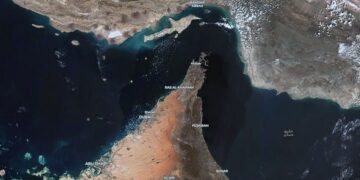
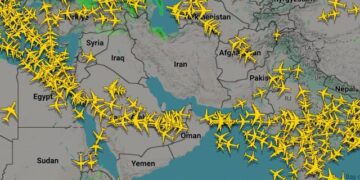
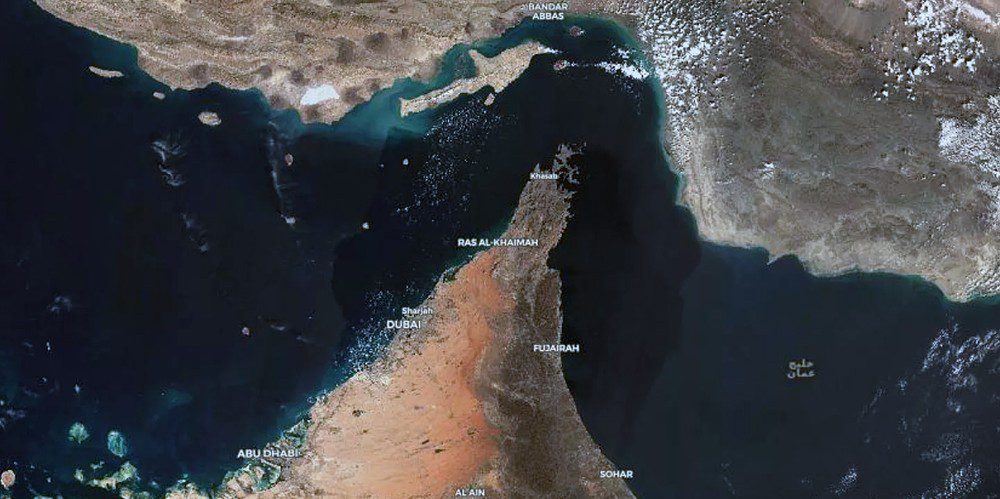
Iran launched missile and drone attacks targeting U.S. military facilities and allied positions across parts of the Gulf, while also declaring that the Strait of Hormuz would remain closed until what it described as the end of American military interference in the region.
The latest escalation followed days of retaliatory attacks after the United States carried out extensive strikes on Iranian military infrastructure in response to attacks on commercial shipping in the Gulf.
According to U.S. Central Command, American forces struck more than 140 Iranian military targets on Saturday as part of a broader campaign aimed at weakening Iran’s ability to threaten commercial shipping and regional security. The operation formed part of a larger offensive that has reportedly hit more than 300 military targets over several days.
Iranian authorities reported explosions in several coastal cities following the strikes.
In response, Iran’s Revolutionary Guards said they had carried out attacks against U.S. military assets and facilities across the Gulf region, including targets in Jordan, Kuwait, Oman and Qatar. The group also claimed responsibility for strikes on military support infrastructure linked to U.S. operations.
Qatar confirmed that falling debris from one of the attacks injured three people, including a child. Bahrain activated air raid sirens during the assault, while the United Arab Emirates said its air defence systems intercepted missiles and drones launched towards its territory.
Jordanian authorities also reported that missiles landed inside the country, causing limited material damage but no casualties.
Iran maintained that the Strait of Hormuz would remain closed, insisting the move was necessary until U.S. military activities in the region ceased. However, the U.S. military said commercial vessels continued to transit the strategic waterway despite heightened security concerns.
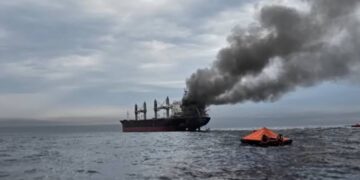
The renewed confrontation follows a series of attacks on commercial vessels operating near the Strait of Hormuz, a route that carries a significant share of global oil and liquefied natural gas exports.
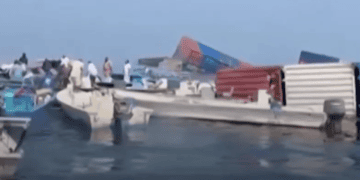
India also confirmed that one of its nationals was missing after a commercial vessel came under attack off the coast of Oman. Ten other Indian crew members were rescued, according to the country’s foreign ministry.
The latest developments have further weakened prospects for a lasting ceasefire between Washington and Tehran after recent diplomatic efforts aimed at ending months of hostilities.
Iranian officials accused the United States of failing to honour previous understandings, while insisting Tehran would continue responding to what it considers acts of aggression.
Diplomatic contacts nevertheless continued over the weekend, with Iranian Foreign Minister Abbas Araqchi holding discussions with Pakistani and Omani officials on regional developments and maritime security. Oman, which has played a mediating role throughout the crisis, said technical and political consultations on shipping and navigation through the Strait of Hormuz would continue.
The renewed fighting has heightened concerns over regional stability, with analysts warning that prolonged disruptions around the Strait of Hormuz could significantly affect global energy markets and international trade.