



























































The Defence Headquarters (DHQ) on Saturday revealed that senior Islamic State commander Abu-Bilal al-Minuki, recently killed in a joint counterterrorism operation by Nigerian and United States forces, played a central role in the group’s global weapons production, drone development, media coordination, and economic warfare strategy.
The operation was earlier confirmed by U.S. President Donald Trump, who described al-Minuki as “the most active terrorist in the world” and claimed he served as the “second in command of ISIS globally.” Trump said the militant leader had believed he could evade capture while operating from Africa.
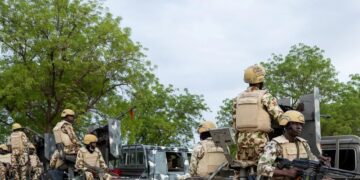
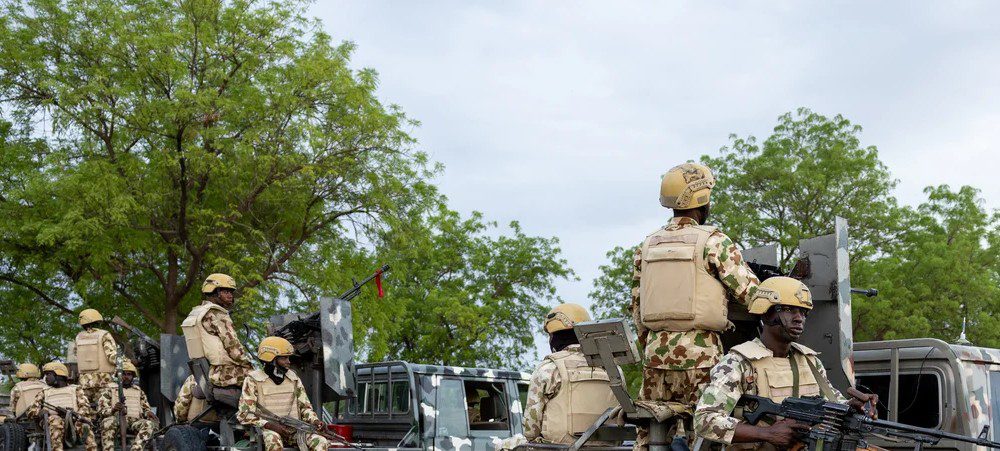
Confirming the development, the DHQ, through its Director of Defence Information, Maj. Gen. Samaila Uba, described the mission as a “meticulously planned and highly coordinated” precision strike.
According to Uba, al-Minuki was a key strategic figure within the Islamic State network, providing operational guidance to ISIS affiliates outside Nigeria on media operations, economic warfare, and the manufacturing of weapons, explosives, and drones.
“His death removes a critical node through which ISIS coordinated and directed operations across different regions of the world,” Uba stated.
Intelligence assessments further suggest that as recently as February 2026, al-Minuki may have been elevated to the position of Head of the ISIS General Directorate of States, effectively making him the second most senior figure within the global terror group’s hierarchy.
The DHQ disclosed that al-Minuki’s involvement in extremist networks spanned more than a decade. Before aligning with ISIS in 2015, he was reportedly a prominent leader within Boko Haram.
Military intelligence also linked him to the 2018 Dapchi schoolgirls’ abduction, where over 100 girls were kidnapped in an attack that sparked global outrage.
According to the DHQ, al-Minuki also served in 2023 as the Nigeria-based Emir of the al-Furqan GDP Office, overseeing ISIS-linked activities across the Sahel and West Africa, including attacks targeting civilians and minority ethnic and religious communities.
Authorities further alleged that between March 2015 and early 2016, he coordinated the movement of fighters into Libya to support ISIS operations in North Africa.
The DHQ described the operation as a major breakthrough in ongoing counterterrorism efforts across Nigeria, the Lake Chad Basin, and the wider Sahel region.