







































































The Academic Staff Union of Universities (ASUU) has criticized the Federal and state governments over the continued withholding of part of lecturers’ salaries and what it described as inconsistent implementation of the agreement reached with the union in December 2025.
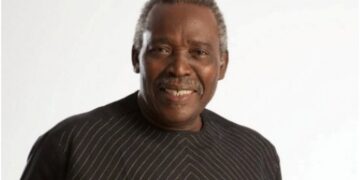
ASUU President, Prof. Christopher Piwuna, raised the concerns while appearing on Frontline, a current affairs programme on Eagle 102.5 FM, Ilese-Ijebu.
Piwuna said the union had entered the December agreement expecting it to bring greater stability to Nigeria’s public university system, improve the welfare of academic staff and address some of the sector’s longstanding challenges.
He, however, said the government had fallen short in implementing several of its commitments.
“It’s really painful to have a conversation on issues like this. Our expectation, when we signed an agreement in December 2025, was that we are going at this time to talk about the progress that we have made, the stability in the system and concern ourselves with issues that affect Nigerians,” he said.
Three-and-a-half months’ salaries still unpaid
Piwuna said lecturers were still owed three-and-a-half months out of the seven-and-a-half months in withheld salaries from the previous administration.
According to him, the Federal Government has paid four months of the outstanding salaries, leaving affected lecturers with another three-and-a-half months yet to be settled.
He described the unpaid balance as a major concern for members of the union and urged the government to resolve the matter.
The ASUU president also said some universities were struggling to implement the new salary structure, leaving lecturers in certain institutions uncertain about receiving their full entitlements.
“As we stand now, funding is not properly being done according to what was agreed to. Individual universities have to embark on strike before salaries are being paid. Some universities are cut off from the new salary structure,” Piwuna said.
State universities face different realities
Piwuna said the implementation problems extended beyond federally owned universities, stressing that state governments also had responsibilities under the agreement concerning institutions under their control.
While some states had started implementing the December 2025 agreement, he said others had yet to fully comply, creating differences in the conditions of service among lecturers at public universities.
He identified Abia State Governor, Alex Otti, as one of the governors who had begun implementing the agreement.
“Only Governor Alex Otti of the South-Eastern part has implemented it,” he said.
Piwuna called on other governments to honour their commitments, saying ASUU had continued to pursue the matter through dialogue rather than immediately resorting to industrial action.
He said the union had held discussions with the Minister of Education and Senator Larry Tejuosho, chairman of the committee overseeing implementation of the Federal Government agreement.
“We have engaged them; the Minister of Education at federal level, we engaged Senator Larry Tejuosho, the chairman of the implementation committee monitoring the Federal Government agreement. We have reminded them to do the needful,” he said.
ASUU demands increased education funding
The union also renewed its call for stronger funding of the education sector, particularly public universities.
Piwuna identified inadequate financing as a persistent challenge affecting research, infrastructure and the development of academic and other human resources.
He argued that increased investment was necessary for Nigerian universities to generate research and innovation capable of contributing to national development and competing in the global knowledge economy.
According to him, governments should work towards allocating as much as 26 per cent of their annual budgets to education.
“Every government should at least aim to supply or to fund their budget or dedicate their budget up to 26 per cent to education, and Nigeria is not an exception,” he said.
However, Piwuna said ASUU had accepted a lower benchmark during negotiations with the Federal Government, taking into account the country’s financial constraints.
He said the union agreed to a 15 per cent education budget target as an initial step, with the expectation that funding could be increased gradually.
“So while negotiating with the government, we told the government to reduce the budget to 15 per cent and they agreed. Although it may be difficult, it can be done incrementally,” he said.
December agreement covers salaries, funding and research
Piwuna said the December 2025 agreement contained provisions covering several areas of the university system, including funding, improved salaries and research support.
“The agreement, when we signed it, had provision for funding for public universities. It had provisions for improved salary, and it had provision for research council, amongst others,” he said.
He stressed that strengthening research capacity should remain a priority, arguing that universities cannot effectively contribute to economic development without adequate resources for research and innovation.
Piwuna said continued underfunding of education would have consequences beyond the university system, affecting human-capital development, research, innovation and the wider economy.
“We all know the value of education and we expect our leaders to carry out policies and actions that will promote education,” he said.
The ASUU president said the union remained committed to engaging the Federal and state governments through dialogue but urged the authorities to address the outstanding salary payments, ensure consistent implementation of the December 2025 agreement and provide sustainable funding for public universities.