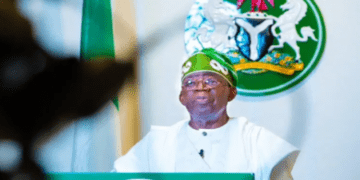





































































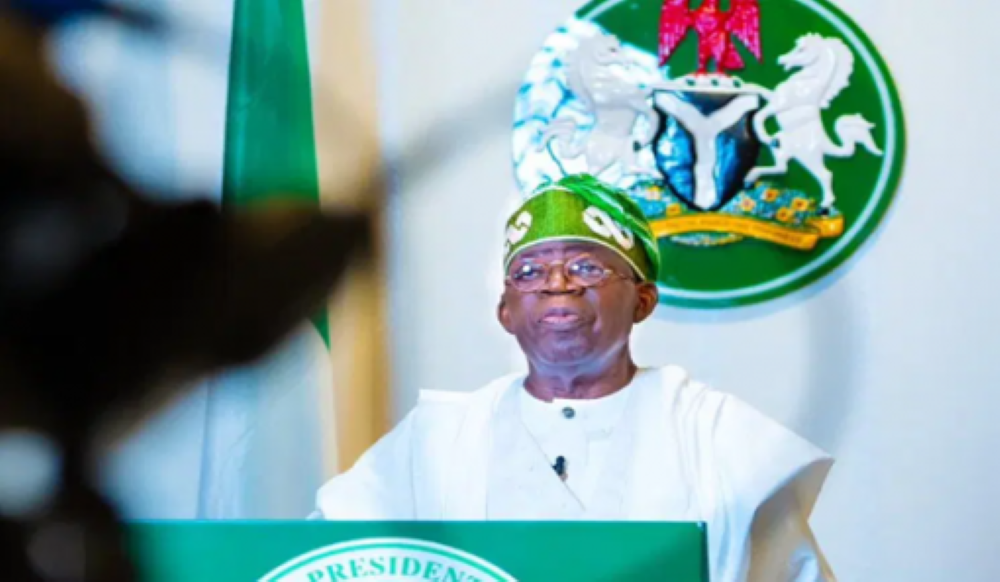
President Bola Ahmed Tinubu has declared that Nigeria has moved beyond the difficult phase of economic reforms and entered what he described as an “age of prosperity”, urging Nigerians to focus on the opportunities ahead rather than return to policies he said contributed to the country’s economic challenges.
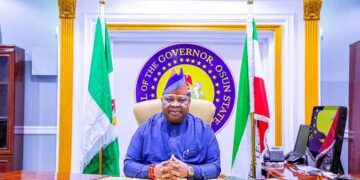
Tinubu made the declaration in his Independence Day address to Nigerians on Thursday as the country marked its 66th anniversary.
While acknowledging that millions of Nigerians are still struggling with the high cost of food, education, healthcare and transportation, the President said his administration’s next phase would focus on turning economic reforms into broader prosperity.
Tinubu Says Economy Is Strengthening
The President said Nigeria’s economy grew by more than four per cent in 2026, with both the oil and non-oil sectors contributing to what he described as sustained and stable growth.
He said oil theft had declined, inflation had fallen significantly from its peak, foreign reserves had recovered and the foreign exchange market had become more stable.
Tinubu also said Nigeria generated more than $6 billion in non-oil export revenue in 2025, which he described as the highest figure ever recorded by the country.
President Defends Economic Reforms
Tinubu defended the economic measures introduced by his administration, comparing Nigeria’s pre-reform economy to a patient suffering from cancer who must undergo painful treatment before recovering.
He argued that previous administrations had delayed difficult decisions and maintained inefficient economic arrangements, saying his government instead chose to confront the structural problems.
“Our reforms did not create the weaknesses in our economy. They confronted them,” he said.
The President also rejected calls for a return to what he called “addictive subsidies”, urging Nigerians to remember the reasons behind the reforms.
‘Age of Prosperity’ Begins
Tinubu said the government’s focus had now shifted from repairing the economy to delivering “shared and widespread prosperity”.
He said economic progress should not be judged solely by headline figures, but by whether farmers can work safely, factories have reliable electricity, businesses can obtain credit and young Nigerians can find productive employment.
“The emergency treatment is over. The foundation has been repaired,” he said.
Government Targets Cost of Living
The President said lowering the cost of producing and transporting goods would be central to efforts to ease the pressure on households.
He highlighted mechanized irrigation, dry-season farming, improved access to seeds and fertilizer, mechanization, storage and transportation as areas of focus.
Tinubu also said the government was building and completing roads, railways and ports to improve connections between farms, factories and markets.
Jobs and Industry Take Centre Stage
Tinubu said Nigeria’s large youth population should become an engine of production and economic growth rather than a source of frustration.
He said job creation, enterprise and industrial expansion would remain central to government policy.
According to the President, the administration plans to use gas to power industries, support businesses seeking to reopen factories, expand digital connectivity, develop skills and provide Nigerian businesses with infrastructure and financing.
He also expressed his ambition for more Nigerian companies to produce goods for domestic consumption and compete in export markets.
Tinubu Acknowledges Continuing Hardship
Despite highlighting improvements in the economy, the President acknowledged that millions of Nigerians remain under financial pressure.
He said many families were still struggling to pay for food, school fees, medical care and transportation.
Tinubu attributed the country’s long-running difficulties to decades of low productivity, inadequate infrastructure, limited opportunities and weak institutions.
“We cannot erase in four years what accumulated over generations. But we can change its course,” he said.
He said the government was strengthening support for vulnerable households, improving the National Social Register and expanding access to education through the Nigerian Education Loan Fund.
He also cited CREDICORP, primary healthcare, basic education and other public services among measures designed to support Nigerians facing hardship.
‘We Will Defeat Poverty’
Tinubu said social support programmes should serve as a bridge towards prosperity rather than become an alternative to it.
“Our objective is not to manage poverty more efficiently. We will defeat it,” he said.
He acknowledged that achieving that goal would require time, discipline, sustained economic growth and the creation of millions of productive opportunities.
The President ended his address by declaring that “the age of reform has done its work” and that “now begins the age of prosperity”, while calling on Nigerians to look ahead with confidence in the country’s future.