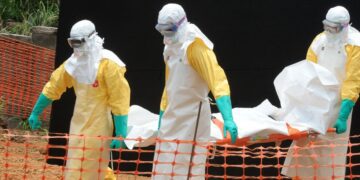












































































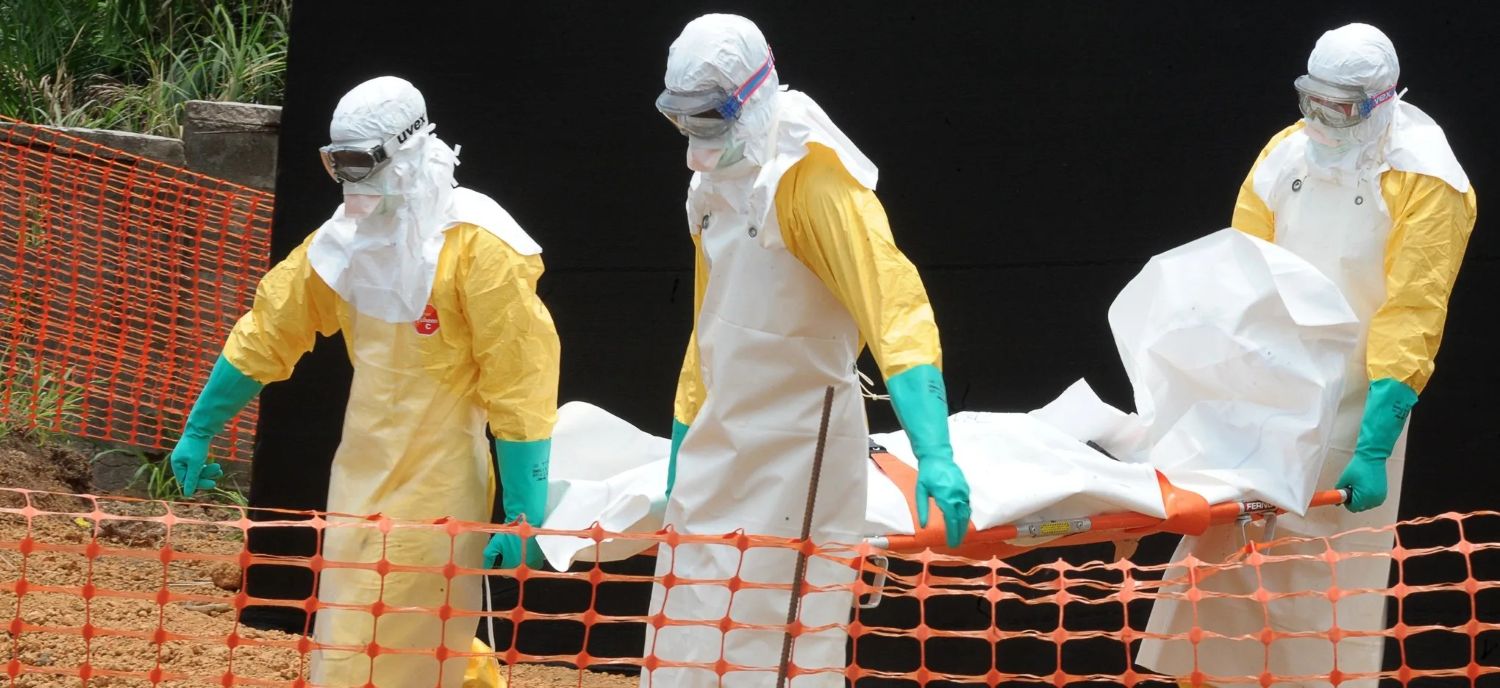
Panic and uncertainty are spreading across eastern Democratic Republic of Congo after authorities confirmed that deaths linked to a new Ebola outbreak have risen to at least 80, with the deadly virus now crossing into neighbouring Uganda.
Health officials in Congo said Saturday that emergency teams were intensifying contact tracing, testing and border surveillance in a bid to contain the outbreak, which has already triggered fears of a wider regional health crisis.
Residents in affected communities in Ituri Province say frequent burials and rising infections have left many people living in fear.
“People are dying and being buried constantly. Everyone is afraid,” one local resident in Bunia reportedly said as health officials continued investigations.
Congo Confirms New Ebola Variant
Congolese Health Minister Samuel-Roger Kamba said authorities have so far recorded 246 suspected cases and at least eight laboratory-confirmed infections, including four confirmed deaths.
Testing has identified the outbreak as the Bundibugyo strain of Ebola, a less common but dangerous variant of the virus that has appeared only occasionally in previous outbreaks.
The current outbreak is Congo’s 17th Ebola epidemic since the disease was first identified in the country in 1976.
According to officials, the suspected first patient was a nurse who died in a hospital in Bunia around April 24 after developing symptoms associated with Ebola.
Only 13 blood samples have so far been analyzed at Congo’s National Institute of Biomedical Research. Eight tested positive for the Bundibugyo strain, while five samples could not be processed due to insufficient material.
Uganda Records Imported Ebola Case
The outbreak has already spread beyond Congo’s borders.
Uganda confirmed on Friday that a patient infected with Ebola had died at Kibuli Muslim Hospital in Kampala after travelling from Congo.
Ugandan authorities described the infection as an “imported case” and said the body was later returned to Congo for burial.
No additional local infections have yet been confirmed in Uganda, but health officials have stepped up screening and monitoring measures at hospitals and border crossings.
At Kibuli Muslim Hospital on Saturday, health workers screened visitors and staff as part of containment efforts.
The Africa Centres for Disease Control and Prevention warned that the outbreak poses a serious regional risk because of heavy cross-border movement between Congo, Uganda and South Sudan.
Kenya Strengthens Border Monitoring
Kenya has also moved to strengthen surveillance systems amid fears the outbreak could spread further through regional travel networks.
Kenyan authorities described the risk of Ebola entering the country as “moderate” but confirmed that a national Ebola preparedness team had been activated.
Additional health screening measures have reportedly been introduced at airports and border entry points.
Conflict and Poor Infrastructure Complicate Response
Health experts say Congo’s vast geography and persistent insecurity could make containment difficult.
Ituri Province, where the outbreak is concentrated, has long suffered from armed violence involving militias linked to the Islamic State group and other rebel factions.
The affected areas, including Bunia, Rwampara and Mongwalu, are located far from the capital Kinshasa and often face shortages of medical supplies, transport infrastructure and healthcare personnel.
Despite the outbreak, daily life in Bunia appeared largely normal on Friday, with businesses and public places remaining open.
Ebola Remains One of Africa’s Deadliest Diseases
Ebola is a severe viral disease spread through direct contact with infected bodily fluids such as blood, vomit and semen.
Symptoms include fever, fatigue, vomiting, diarrhoea and internal bleeding. The disease has one of the world’s highest fatality rates during outbreaks if not quickly contained.
Previous Ebola outbreaks in West and Central Africa have killed thousands of people and severely strained already fragile health systems across the continent.
Health authorities are now racing to prevent the latest outbreak from escalating into another regional humanitarian emergency.