







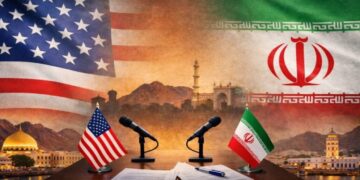












































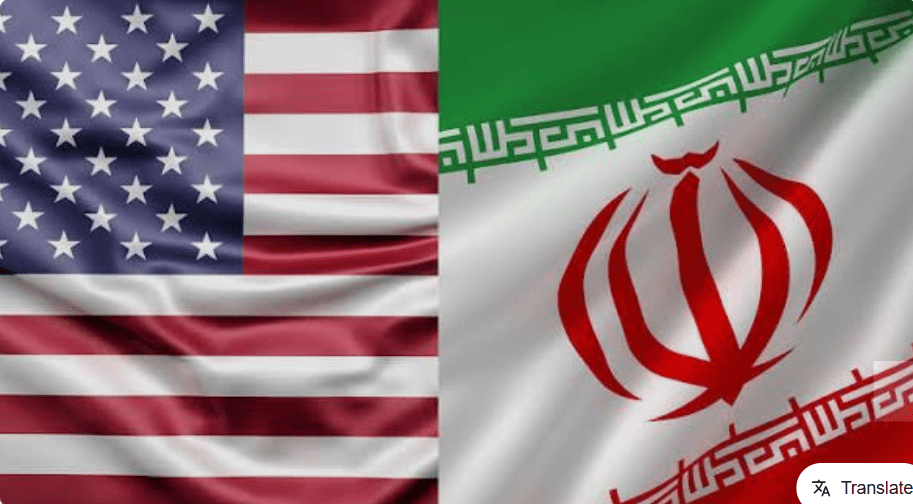
The United States has granted Iran a 60-day sanctions waiver as both countries move to consolidate last week’s interim peace agreement, even as President Donald Trump warned Tehran that Washington would respond decisively if it failed to honour its commitments.
The temporary sanctions relief, announced by the U.S. Treasury on Monday, allows Iran to resume oil and related product exports until August 21, marking the first major economic concession under the 14-point peace accord signed last week after more than three months of conflict.
The announcement followed the conclusion of the first round of high-level negotiations between U.S. and Iranian officials at the Swiss mountain resort of Buergenstock, where both sides agreed on a roadmap toward negotiating a permanent peace agreement within the next 60 days.
U.S. Vice President JD Vance, who led the American delegation, described the talks as productive, saying they had laid “a very good foundation for a successful final deal.”
“We’re going to hopefully make progress on the nuclear issue and the Lebanon ceasefire issue,” Vance said after the talks.
However, Iranian officials swiftly disputed parts of the U.S. assessment, insisting that discussions on Tehran’s nuclear programme had not yet begun.
Iran’s Foreign Ministry spokesman, Esmail Baghaei, said Tehran had neither met with International Atomic Energy Agency (IAEA) Director General Rafael Grossi nor agreed to allow international inspectors back into its nuclear facilities.
“There are no plans for the IAEA to inspect Iran’s damaged nuclear sites at this stage,” Baghaei stated.
Despite the differing interpretations, mediators Pakistan and Qatar confirmed that both countries had endorsed a structured roadmap covering sanctions relief, regional security and future nuclear negotiations.
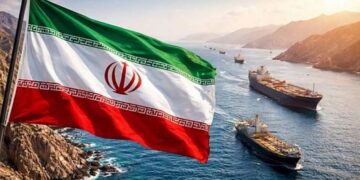
The agreement also established mechanisms aimed at ending hostilities between Israel and the Iran-backed Hezbollah movement in Lebanon, while creating a direct communication channel to safeguard commercial shipping through the strategic Strait of Hormuz.
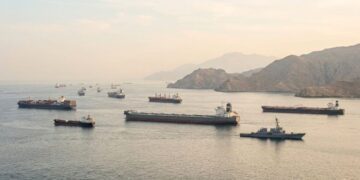
The waterway, which previously carried nearly one-fifth of global oil supplies, became a flashpoint during the conflict after Iran declared restrictions on maritime traffic following Israeli military operations in Lebanon.
Although Iranian authorities had earlier claimed to have closed the strait, U.S. Central Command reported that commercial shipping continued uninterrupted, with 55 merchant vessels carrying more than 17 million barrels of crude oil transiting the waterway on Saturday.
Trump reiterated that no tolls would be imposed on vessels using the Strait of Hormuz during the current ceasefire period.
“If Iran doesn’t live up to their agreement, or if they’re not behaving, I will do what I have to do,” Trump told reporters, while also asserting on his Truth Social platform that Tehran would eventually accept weapons inspections to guarantee what he called “nuclear honesty.”
Iranian President Masoud Pezeshkian, however, cautioned that the success of the negotiations depended on full implementation of the agreed commitments by both sides.
“The effectiveness of these talks depends on complete adherence to the obligations that have been agreed,” Pezeshkian wrote on social media, adding that “statements outside the agreed text do not help advance negotiations.”
Iran’s ambassador to the United Nations in Geneva, Ali Bahreini, described the discussions as encouraging and announced that two technical working groups would begin negotiations in the coming days.
One group will focus on sanctions removal while the second will address Iran’s nuclear activities.
According to Bahreini, five key provisions of the interim agreement must first be fully implemented before detailed negotiations on Iran’s nuclear programme or the role of the IAEA can commence.
As part of the initial confidence-building measures, the U.S. sanctions waiver permits Iran to export crude oil and petrochemical products while receiving payments previously blocked under American sanctions.
Iranian Foreign Minister Abbas Araqchi also said the agreement provides for the gradual release of frozen Iranian assets abroad and the launch of a reconstruction and development programme for the country.
However, disagreement emerged over how the unfrozen funds would be used.
Vance said a framework proposed by White House envoy Jared Kushner would allow the United States and Qatar to supervise the released assets, with funds primarily directed toward purchasing American agricultural products such as corn, soybeans and wheat.
“So, the money that we lift is going to go to our farmers,” Trump said.
But Iran’s Central Bank Governor, Abdolnaser Hemmati, rejected suggestions that Tehran would be restricted to buying only U.S. farm products, insisting that at least part of the released funds could be spent on other non-sanctioned imports.
Meanwhile, progress on the diplomatic front continued to calm global energy markets.
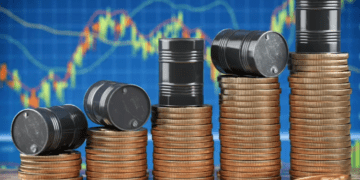
Oil prices extended losses on Tuesday after falling about three per cent in the previous session as investors welcomed signs that the peace process could stabilize Middle East crude supplies.
Attention is also shifting to Lebanon, where the ceasefire remains fragile despite a noticeable reduction in hostilities.
While Israeli officials maintain that troops will continue occupying security positions in southern Lebanon to counter potential threats, Israeli and Lebanese representatives are expected to begin a fresh round of negotiations in Washington aimed at resolving outstanding security issues.
Although significant differences remain over Iran’s nuclear programme, sanctions implementation and regional security arrangements, diplomats from both sides expressed cautious optimism that the first round of negotiations had established a workable framework for pursuing a lasting peace agreement.