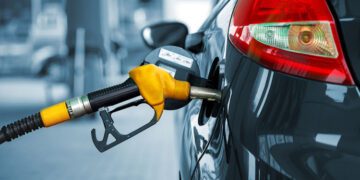


















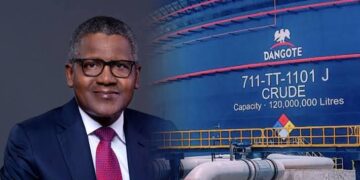














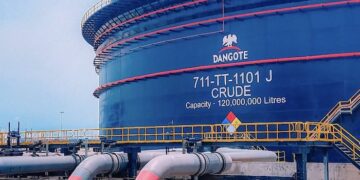
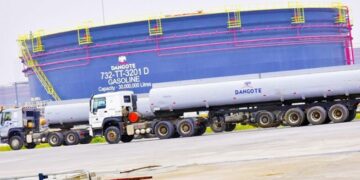

































Petrol prices have increased at several filling stations in Abuja following an upward adjustment in the wholesale price of Premium Motor Spirit by the Dangote Petroleum Refinery.
The refinery raised its gantry price by N85, from N1,265 to N1,350 per litre, representing an increase of about 6.7 per cent.
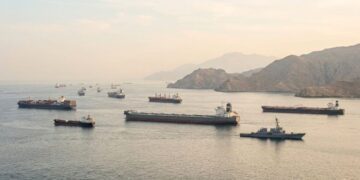
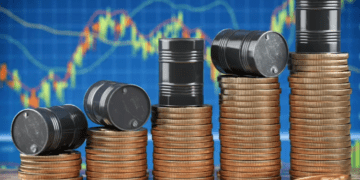
The latest adjustment comes as international crude oil prices continue to rise, with Brent crude, the benchmark relevant to Nigeria’s oil market, trading above $108 per barrel.
The new Dangote price is also higher than the current estimated petrol landing cost of about N1,311 per litre, putting additional pressure on fuel marketers and downstream operators.
Filling stations adjust pump prices
A survey by the News Agency of Nigeria in Abuja on Sunday showed that several filling stations had already increased their retail prices.
MRS outlets raised their pump price from N1,350 to N1,395 per litre, while NIPCO increased its price from N1,350 to N1,430.
Mobil stations also adjusted their prices upward, moving from N1,350 to N1,400 per litre.
An attendant at an MRS outlet, who spoke on condition of anonymity, said consumers could face another increase as stations replenish their existing stocks.
“We are currently selling our old stock at N1,395 per litre, but from tomorrow, once the new stock arrives, the price will be higher,” she said.
The latest increases are expected to raise transportation costs and add to the financial pressure on households and businesses, particularly if the trend continues.
Economists warn of inflationary pressure
Economist and development expert Aliyu Ilias warned that another increase in petrol prices could worsen inflation and raise the cost of producing and transporting goods.
He said the impact would likely be felt most strongly in the prices of food and other essential commodities because of the country’s dependence on road transportation.
“There should be a way of absorbing these costs. If you do not absorb them, they will show up in our next inflation figures and economic analysis,” Ilias said.
He added that higher fuel prices increase transportation expenses throughout the economy, eventually pushing up the cost of production and basic goods.
According to him, the development could further intensify economic hardship for consumers.
Calls for stronger government intervention
Former Secretary-General of the Organization of African Trade Union Unity, Owei Lakemfa, called on the Federal Government to develop stronger mechanisms for protecting consumers from sudden movements in international oil prices.
Lakemfa argued that Nigeria’s status as a crude oil-producing country should give it an advantage over nations that depend entirely on imported petroleum products.
He said domestic refining should reduce some of the expenses associated with importing fuel, including shipping, insurance and other costs incurred along the international supply chain.
Lakemfa also pointed to the ongoing geopolitical tensions and instability in the Middle East as factors capable of pushing global oil prices higher.
He said such developments should be anticipated by policymakers rather than allowed to trigger immediate and substantial increases in domestic petrol prices.
“It cannot just be that any time Iran attacks the US or there is another conflict, the price goes up. We have to plan. And that is the only sense of governance,” he said.
He further expressed concern about the structure of Nigeria’s downstream petroleum market, arguing that excessive concentration among major operators could give powerful players considerable influence over petrol prices.
Lakemfa urged regulatory authorities to ensure that no individual or group is allowed to exercise disproportionate control over the price of such an essential commodity.
He also called on the government and consumer protection agencies to scrutinise price increases and take action against what he described as arbitrary adjustments.
Marketers face pricing uncertainty
The National Publicity Secretary of the Independent Petroleum Marketers Association of Nigeria, Chinedu Ukadike, said petrol marketers had adjusted their pump prices in response to successive changes in the refinery’s wholesale rate.
Ukadike said frequent price adjustments were creating uncertainty within the downstream market because marketers could face different replacement costs shortly after purchasing their existing stock.
The latest development highlights the sensitivity of Nigeria’s petrol market to both domestic refinery pricing and movements in international crude oil prices.