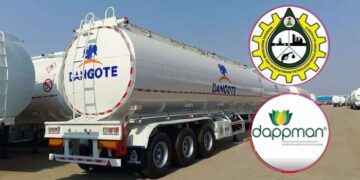











































































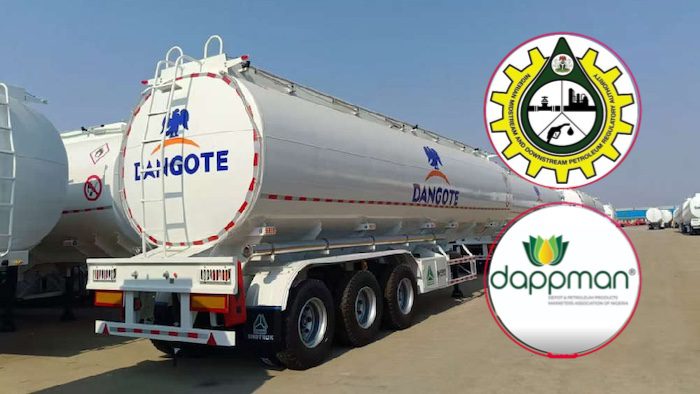
Fuel marketers in Nigeria have pushed back against a lawsuit filed by the Dangote Petroleum Refinery seeking to invalidate fuel import licenses issued to marketers and the state-owned NNPC Limited, warning that the move could disrupt supply stability and weaken competition in Africa’s largest fuel market.
The legal dispute marks a fresh escalation in the battle over control of Nigeria’s downstream petroleum sector, even as consumers continue to grapple with rising fuel prices and supply concerns.
According to reports, the Dangote refinery recently approached the court to challenge licenses granted by the Nigerian Midstream and Downstream Petroleum Regulatory Authority, arguing that continued importation of refined petroleum products undermines the viability of its $20 billion refinery project and sustains inefficiencies in the sector.
The refinery, which began commercial operations in 2024, has repeatedly maintained that it possesses the capacity to satisfy Nigeria’s domestic fuel demand and reduce the country’s long-standing dependence on imports.
However, the Depot and Petroleum Products Marketers Association of Nigeria (DAPPMAN) rejected the refinery’s position, insisting that import licenses remain critical to guaranteeing fuel availability across the country.
In a statement released on Sunday, the association said the licenses issued by the regulator were not mere administrative privileges but legal instruments designed to protect national energy security and ensure uninterrupted fuel supply.
“These licenses exist to protect supply, not to disadvantage any single producer,” the association stated.
DAPPMAN argued that the Petroleum Industry Act empowers regulators to approve imports whenever necessary to maintain stability in the downstream sector, particularly during periods of supply uncertainty or distribution challenges.
The association also warned that any attempt to retroactively invalidate existing licenses could create serious disruptions in the market, noting that many operators had invested heavily in storage facilities, logistics infrastructure and distribution networks based on approvals already granted by the authorities.
“We respect Dangote’s right to pursue legal remedies,” the marketers stated. “What we do not accept is that a private refinery’s commercial interests should override a regulator’s mandate.”
Industry analysts say the dispute reflects deeper tensions over market control in Nigeria’s evolving oil sector, where the Dangote refinery is expected to play a dominant role after decades of reliance on imported refined products despite the country’s status as a major crude oil producer.
The controversy also comes at a sensitive time for Nigeria’s economy, with inflationary pressures and fluctuating fuel costs continuing to affect households and businesses nationwide.
Although the Dangote refinery is widely viewed as a major step toward energy self-sufficiency, questions remain over pricing, distribution capacity and whether the market should remain open to multiple suppliers.
DAPPMAN insisted that competition should not be eliminated from the sector, stressing that a healthy downstream market requires the participation of several operators to avoid monopolistic control and ensure price stability for consumers.
The association said it would engage legal advisers and relevant government authorities to defend the existing licensing framework and preserve what it described as an open and competitive market structure.