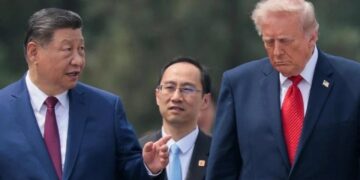






















































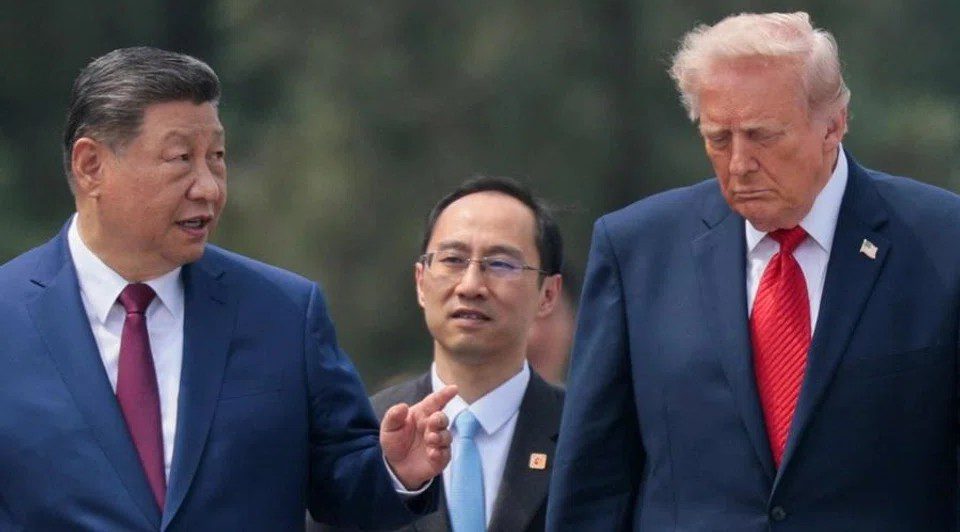
Chinese President Xi Jinping has warned U.S. President Donald Trump that disagreements over Taiwan could push both nations toward direct confrontation, highlighting deep divisions between Washington and Beijing despite public displays of diplomacy during Trump’s state visit to China.
Speaking during high-level talks in Beijing on Thursday, Xi reportedly told Trump that Taiwan remains the “most important issue” in China-U.S. relations and cautioned that mishandling the matter could lead to “clashes and even conflicts” between the world’s two largest powers.
The warning came during Trump’s three-day visit to China, where both leaders held closed-door discussions at the Great Hall of the People following an elaborate state welcome ceremony attended by senior officials, military representatives and schoolchildren waving Chinese and American flags.
While Trump adopted a friendly tone publicly, praising Xi as “a great leader” and describing him as a friend, Chinese officials signalled that Beijing remains deeply concerned over growing U.S. military and political support for Taiwan, the self-ruled island China considers part of its territory.
Xi also invoked the concept of the “Thucydides Trap”, a term used in international relations to describe the risk of war between a rising global power and an established one, suggesting Beijing fears strategic rivalry with Washington could spiral into open conflict if tensions continue to rise.
The meeting underscored the increasingly fragile relationship between both powers at a time of global instability driven by the Middle East crisis, economic uncertainty and growing military competition in the Indo-Pacific region.
Taiwan Remains Major Flashpoint
The latest diplomatic tension follows reports that the Trump administration approved an $11 billion arms package for Taiwan, a move strongly opposed by Beijing.
Although the United States officially recognizes Beijing under the “One China” policy, Washington continues to provide Taiwan with military assistance under longstanding security commitments aimed at helping the island defend itself against possible Chinese aggression.
China has repeatedly condemned such support, accusing Washington of interfering in its internal affairs and encouraging separatist sentiments in Taiwan.
Taiwanese officials, however, welcomed continued U.S. backing, saying international support remains crucial for regional stability amid increasing military pressure from Beijing.
Iran War, Trade and Energy Crisis Dominate Talks
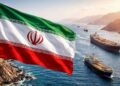
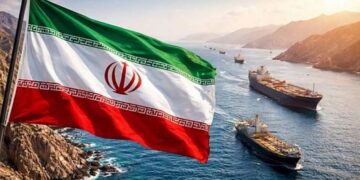
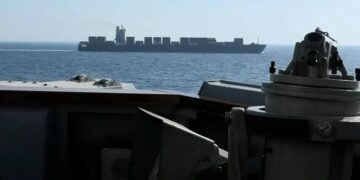
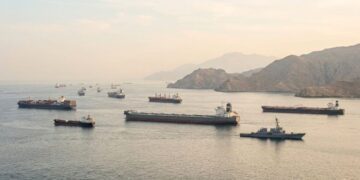
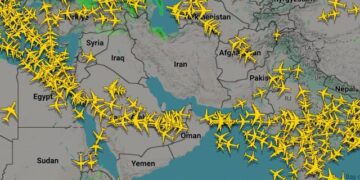
Beyond Taiwan, the leaders also discussed the worsening conflict involving Iran and the global economic fallout linked to disruptions in the Strait of Hormuz, a critical route for global oil shipments.
The closure and militarization of the strait have triggered fresh concerns about energy shortages and rising fuel prices worldwide, with many African economies expected to feel the impact through higher import costs and inflation.
China remains one of the largest buyers of Iranian oil, and Trump reportedly urged Beijing to use its influence to help ease tensions and stabilize global energy supplies.
According to the White House, both leaders agreed that the Strait of Hormuz should remain open to international shipping, though no major breakthrough was announced.
Trade relations also featured prominently during the summit, with discussions focusing on expanding Chinese purchases of American agricultural products and easing tensions that have strained economic ties in recent years.
African Economies Watching Closely
Analysts say worsening tensions between the U.S. and China could have serious implications for African countries that maintain strong economic relations with both powers.
China remains Africa’s largest trading partner and a major investor in infrastructure projects across the continent, while the United States continues to play a significant role in security cooperation, technology and financial markets.
Any escalation involving Taiwan or prolonged disruptions in Middle East energy supplies could trigger global market instability, weaken trade flows and worsen inflationary pressures already affecting several African economies.
Despite the sharp exchanges behind closed doors, both Washington and Beijing signalled interest in maintaining diplomatic engagement and preventing relations from deteriorating further.
Xi Tells Trump: “China, US Must Be Partners, Not Rivals”
President Xi Jinping has urged the United States to pursue cooperation rather than confrontation, warning that worsening tensions over Taiwan could push both global powers toward conflict.
Speaking during high-level talks with U.S. President Donald Trump in Beijing on Thursday, Xi described China-US relations as the world’s most important bilateral relationship and stressed the need for stability between both nations despite growing disagreements over trade, security and Taiwan.
“Today, President Trump and I had in-depth exchanges on China-US relations and the international and regional dynamics,” Xi said.
“We both believe that the China-US relationship is the most important bilateral relationship in the world. We must make it work and never mess it up.”
Xi further stated that cooperation remains the best path for both countries.
“Both China and the United States stand to gain from cooperation and lose from confrontation. Our two countries should be partners rather than rivals,” he added.
Trump also publicly praised Xi during the meeting, describing him as “a great leader” and expressing optimism about future ties between Washington and Beijing.
The summit also focused heavily on the Middle East crisis, especially the worsening standoff involving Iran and the Strait of Hormuz, a major global oil shipping route. China, one of Iran’s biggest oil buyers, is seen as a key player in diplomatic efforts to prevent further escalation.
Analysts say the Beijing meeting reflects the complicated balance between rivalry and cooperation that continues to define relations between the world’s two largest economies.