












































































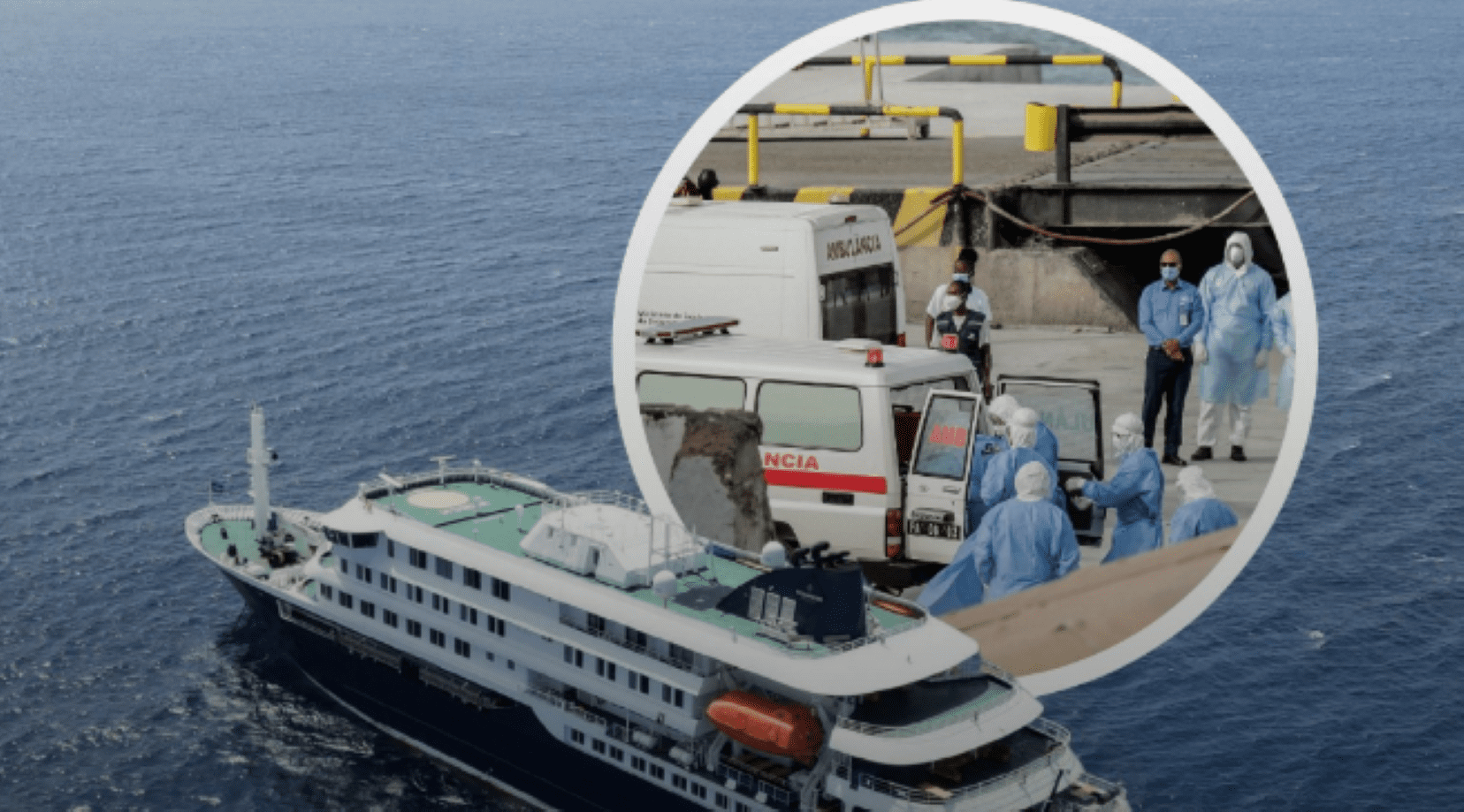
Health authorities across several countries have launched urgent contact-tracing operations following a suspected hantavirus outbreak aboard the cruise ship MV Hondius, as governments move to prevent any wider international spread of the rare disease.
The response intensified after passengers and crew members who had already disembarked from the vessel before the outbreak was confirmed began travelling across multiple countries, raising concerns among public health agencies about possible exposure.
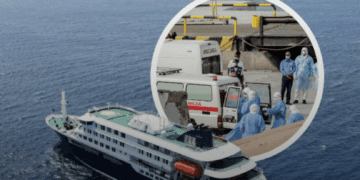
The Dutch-flagged MV Hondius, operated by Oceanwide Expeditions, remains anchored off the coast of Cape Verde after authorities blocked it from docking over public health concerns.
Global tracing effort underway
Officials said health agencies are now attempting to identify and monitor passengers, crew members, airport contacts, medical personnel, and others who may have interacted with infected individuals during evacuation and transit.
Authorities in South Africa, Netherlands, United Kingdom, and several other countries are involved in the effort, with investigations focusing on travellers who left the ship before the suspected virus cluster was fully understood.
The World Health Organization has said at least one hantavirus infection has been laboratory confirmed, while several additional suspected cases remain under investigation.
Deaths and serious illnesses onboard
Three passengers linked to the voyage have died, including a Dutch couple and a German national. Several others became seriously ill, including a British passenger who remains in intensive care in Johannesburg.
Two crew members also developed acute respiratory symptoms requiring urgent medical attention.
Medical authorities are still working to determine whether all the illnesses and deaths are directly connected to hantavirus or whether multiple medical conditions may be involved.
Source of outbreak still unclear
Investigators have not yet identified how the infection began. One theory is that passengers or crew were exposed to infected rodents onboard the vessel, while another possibility is exposure during earlier stops in South America before symptoms emerged later in the journey.
The Netherlands’ National Institute for Public Health and the Environment said both scenarios remain under review.
Concern but no panic
Despite the international response, health officials continue to stress that the risk to the broader public remains low.
Hantavirus is primarily transmitted through contact with infected rodents or contaminated droppings and is not considered highly contagious between humans, although limited human-to-human transmission has been documented in some variants.
Authorities say the focus remains on precautionary monitoring and rapid identification of potential exposure chains rather than large-scale restrictions.
Cruise ship remains isolated
Nearly 150 passengers and crew from 23 countries remain under isolation protocols aboard the MV Hondius as discussions continue over medical evacuations and possible transfer to another port for screening and treatment.
Cape Verdean authorities said they are coordinating with international partners to manage the situation safely while preventing further health risks to the local population.
The incident has drawn global attention because of both the rarity of hantavirus outbreaks and the challenges of containing infectious disease aboard international cruise voyages involving multiple jurisdictions and long-distance travel routes.