









































































Global oil prices rose again on Tuesday as the ongoing Gulf conflict continued to disrupt supply routes and Iran denied claims that it was in talks with the United States to end the war.
Brent crude rose by $1.83, or 1.8%, to $101.77 per barrel, while U.S. West Texas Intermediate (WTI) climbed $2.21, or 2.5%, to $90.34, as markets reacted to the continued closure of one of the world’s most critical oil routes.
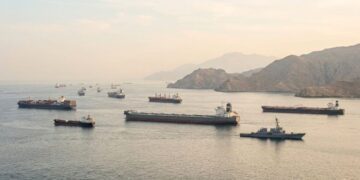
The sharp price increase comes as shipments through the Strait of Hormuz, a route responsible for about one-fifth of the world’s oil and liquefied natural gas — have been largely halted due to the conflict, creating what the International Energy Agency has described as the biggest oil supply disruption in history.
Oil prices had fallen more than 10% on Monday after Donald Trump announced a five-day delay to planned attacks on Iran’s power plants, saying the United States had held talks with unnamed Iranian officials and reached “major points of agreement.” The statement initially calmed markets on hopes of a possible ceasefire.
However, Iran quickly denied any such talks took place, insisting that no negotiations have been held with the United States since the bombing campaign began nearly a month ago. The conflicting signals from Washington and Tehran have added to market uncertainty and volatility.
Analysts say the situation on the ground has not improved despite political signals suggesting possible de-escalation.
“The reality on the ground is unchanged. The Strait of Hormuz remains effectively closed and supply disruptions linger, tightening the market,” said Nikos Tzabouras, an analyst at Tradu.com.
The conflict also escalated on Tuesday, with Iran launching waves of missiles into Israel, while energy infrastructure in Iran was hit in multiple locations, including facilities in Isfahan and Khorramshahr, according to Iranian media reports.
According to a report by BCA Research, while there are early signs of possible de-escalation, the risks to oil supply remain high, particularly around the Strait of Hormuz, meaning oil prices could remain volatile for some time.
Analysts at Macquarie warned that if the Strait remains effectively shut until the end of April, Brent crude could rise to $150 per barrel, exceeding the previous all-time high of $147 set in 2008.
For now, global markets remain on edge as investors watch both the war and the diplomacy — because in today’s oil market, headlines are moving prices almost as much as actual supply.