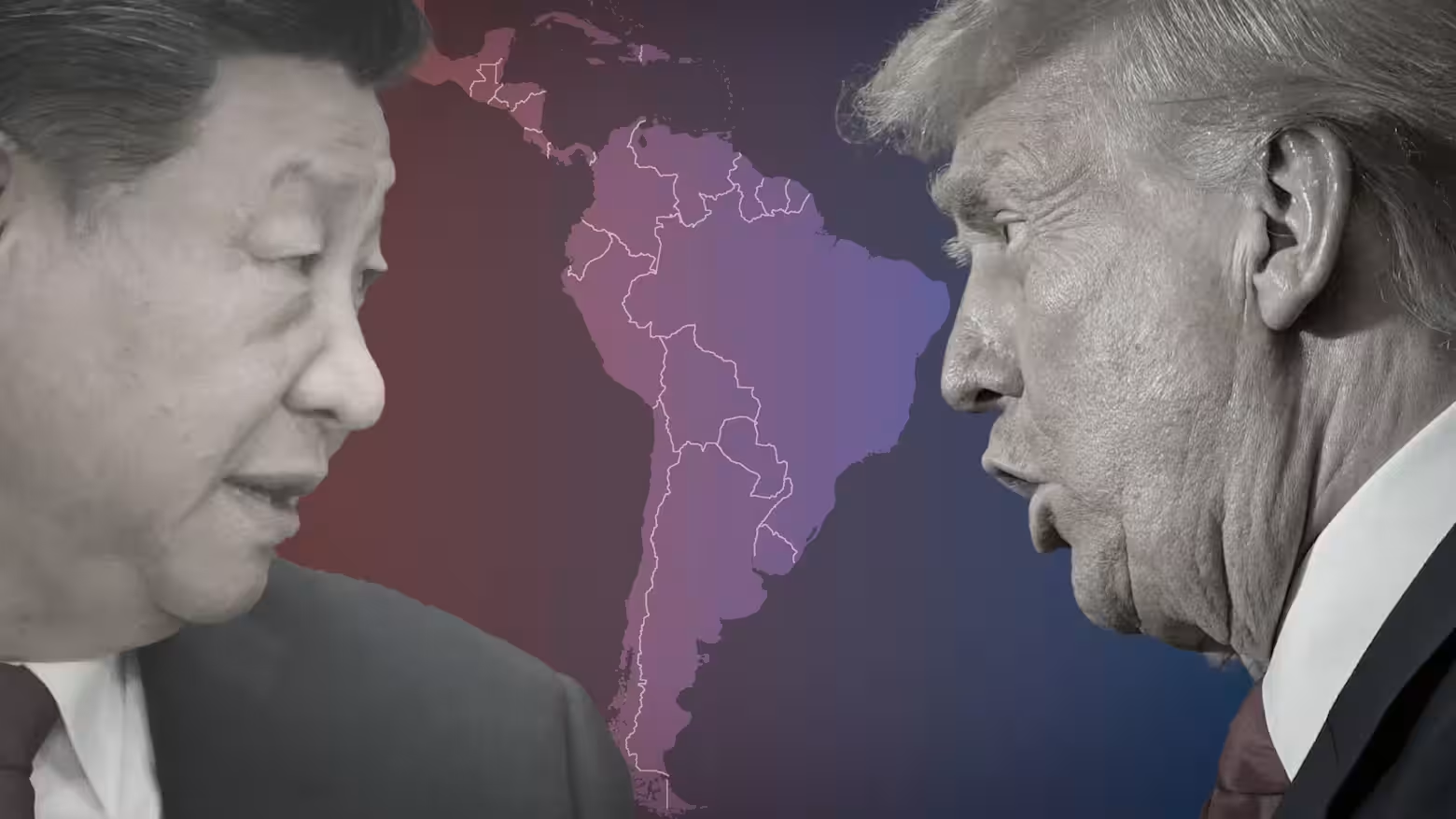




































































U.S. President Donald Trump is set to host several Latin American leaders in Florida on Saturday in a diplomatic push aimed at countering the expanding economic and political influence of China in the Western Hemisphere.
The summit comes just days after U.S. strikes on Iran opened a new front in the Middle East conflict, underscoring the administration’s effort to balance global security challenges while strengthening regional alliances closer to home.
The gathering is also taking place ahead of Trump’s planned talks with Chinese President Xi Jinping in Beijing later this month, where competition for influence in emerging markets, including Latin America, is expected to dominate discussions.
Officials in Washington say the Florida meeting is part of a broader strategy to rebuild U.S. engagement in Latin America after years of expanding Chinese trade, infrastructure investment and lending across the region.
China has dramatically expanded its economic presence in Latin America over the past two decades.
Trade between China and the region reached a record $518 billion in 2024, reflecting Beijing’s deepening ties with countries across South America, Central America and the Caribbean.
Chinese companies have financed major infrastructure projects, including ports, railways, energy facilities and telecommunications networks, while also becoming key buyers of commodities such as soybeans, copper and oil.
U.S. officials worry that the growing economic ties could translate into stronger political influence for Beijing in a region historically viewed as within Washington’s strategic sphere.
According to administration officials, the Florida summit will focus on three main areas: regional security cooperation, migration management and strengthening economic partnerships.
The discussions are expected to address organized crime, cross-border migration pressures and opportunities for increased U.S. investment in Latin American economies.
Washington hopes that expanding economic cooperation will provide an alternative to Chinese financing and encourage closer political alignment with the United States.
The meeting also reflects the Trump administration’s attempt to maintain diplomatic engagement in the Western Hemisphere while navigating escalating tensions elsewhere, particularly in the Middle East.
Analysts say the timing of the summit highlights Washington’s effort to reassure regional partners that the United States remains committed to Latin America despite its growing focus on conflicts in other parts of the world.
For many Latin American governments, the gathering offers an opportunity to balance relations with both global powers while securing trade opportunities and investment needed to support economic growth.