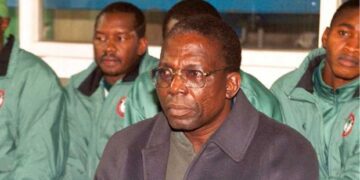





















































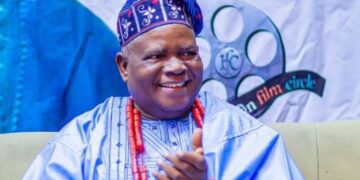





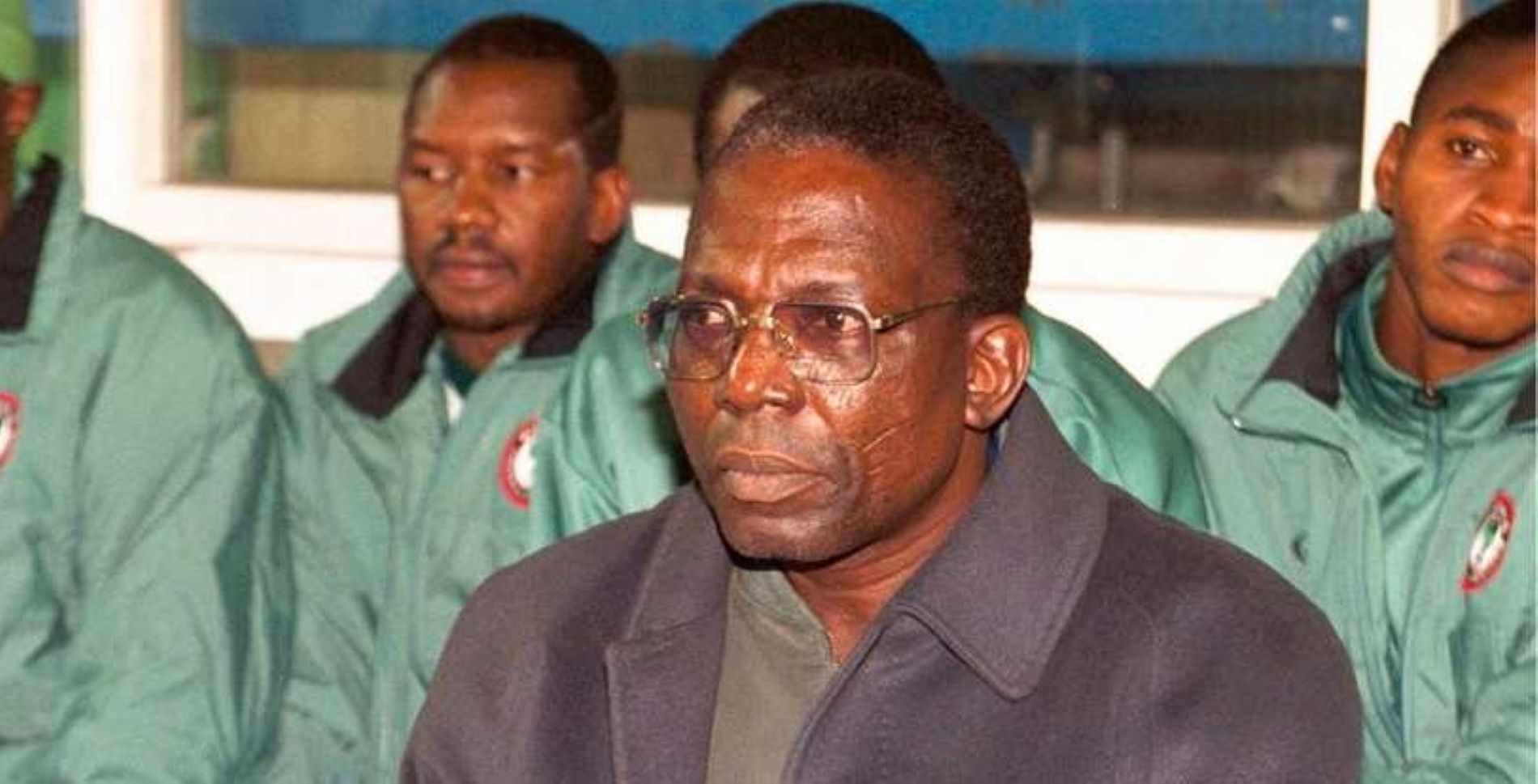
The Nigeria Football Federation (NFF) has expressed deep sorrow over the death of former Super Eagles head coach and respected football administrator, Adegboye Onigbinde, who passed away on Monday at the age of 88.
His death was confirmed in a statement released by Mrs. Bolade Adesuyi on behalf of the family.
In a tribute on Tuesday, the NFF described Onigbinde as a devoted servant of Nigerian football whose influence spanned decades and whose contributions helped shape the development of the sport both nationally and internationally.
NFF General Secretary, Mohammed Sanusi, said the late Modakeke high chief was an extraordinary achiever whose passion for football development never waned, even in his later years.
“Indeed, a big tree has fallen. Onigbinde lived and breathed football development, and we will miss him greatly,” Sanusi said, praying for the peaceful repose of his soul and strength for his family and the Nigerian football community.
Widely respected for his tactical insight and leadership, Onigbinde served in several high-profile roles in global football. He was Technical Director of the NFF and also worked with the Trinidad and Tobago Football Federation as a technical adviser for youth teams.
At the continental and global levels, he served as a technical adviser to the Confederation of African Football and participated in multiple technical study groups organized by FIFA and CAF at major tournaments.
Onigbinde’s coaching journey began in the 1960s, but he rose to national prominence in 1977 when he guided Water Corporation FC of Ibadan to the quarter-finals of the African Champions Cup. He further cemented his reputation in 1984 after leading Shooting Stars FC of Ibadan to the final of the same continental competition.
The veteran tactician etched his name in Nigerian football history in 1984 when he became the first indigenous coach to lead the national team to a medal at the Africa Cup of Nations. Nigeria secured a silver medal at the tournament in Côte d’Ivoire with a squad largely made up of emerging players and a few experienced stars.
Nearly two decades later, Onigbinde again made history when he guided the Nigeria national football team, popularly known as the Super Eagles, to the 2002 FIFA World Cup in Korea and Japan, becoming the first indigenous coach to manage Nigeria at the global tournament.
During the competition, Nigeria narrowly lost to Argentina and Sweden and held England to a draw in a challenging group.
After retiring from frontline coaching, Onigbinde devoted much of his time to mentoring younger coaches and administrators. He served as an instructor for the NFF, CAF and FIFA, contributing to football education and capacity-building across Africa.
His passing marks the end of an era for Nigerian football, with tributes continuing to pour in from across the sports community for a man widely regarded as one of the country’s most influential football thinkers and mentors.