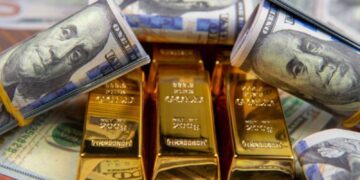






































































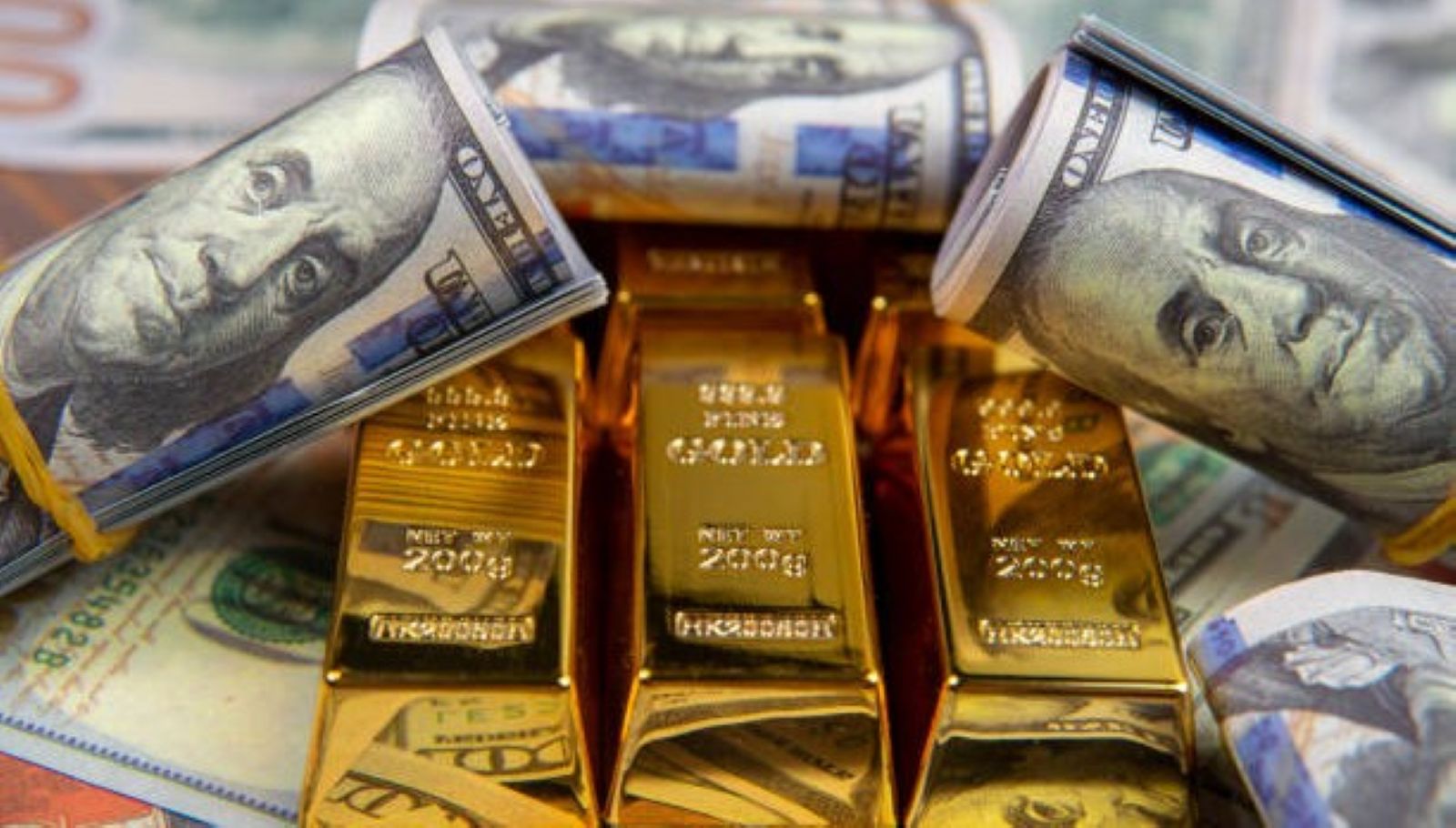
Gold prices fell in global markets as renewed tensions around the Strait of Hormuz strengthened the U.S. dollar and reduced expectations of interest rate cuts by the Federal Reserve.
The decline comes as investors reassess risk following Washington’s decision to escalate pressure on Iran, a move that has rattled energy markets and boosted demand for the dollar as a safe-haven currency.
A firmer dollar typically makes gold more expensive for holders of other currencies, dampening demand. That dynamic played out again as the greenback gained momentum on the back of geopolitical uncertainty and rising oil prices.
Analysts say the shift reflects a broader move by investors toward dollar-denominated assets amid fears of prolonged instability in the Gulf region.
The geopolitical shock has also complicated the outlook for U.S. monetary policy.
Higher oil prices, driven by risks to supply through the Strait of Hormuz, are raising concerns about inflation. As a result, traders are scaling back bets that the Federal Reserve will cut interest rates in the near term.
Lower expectations for rate cuts tend to weigh on gold, which does not yield interest and becomes less attractive compared to interest-bearing assets in a higher-rate environment.
The developments follow the U.S. move to tighten maritime controls linked to Iran, fuelling fears of disruption to a route that handles a significant share of global oil shipments.
With uncertainty still high, market participants remain cautious, balancing safe-haven demand for gold against the competing strength of the dollar.
While gold has retreated for now, analysts note that ongoing geopolitical risks could still support prices if tensions escalate further.
For investors, the current environment highlights a delicate balance between currency strength, inflation concerns and global risk sentiment, all of which are likely to shape gold’s direction in the coming weeks.