








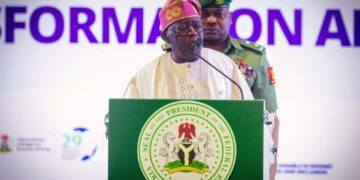





















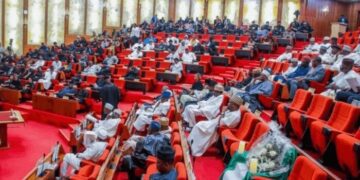





































Vice President Kashim Shettima has made a powerful appeal for “alignment of purpose” and deeper, more sustained cooperation between the Executive and Legislative arms of government, asserting that such synergy is non-negotiable for tackling Nigeria’s persistent national security challenges and consolidating economic recovery.
The Vice President made the call in Abuja on Friday during a dinner organized by the First Lady, Senator Oluremi Tinubu, for members of the National Assembly at the Presidential Villa’s Banquet Hall.
Shettima, an alumnus of the National Assembly himself, stressed that the architecture of President Bola Tinubu’s administration is anchored on a belief in the necessity of the Legislature, noting that the current collaboration is arguably the best since the return of democracy in 1999.
Addressing the lawmakers, the Vice President emphasized that the threats facing Nigeria are potent enough to unite every arm of government, transcending political differences.
“The true essence of democracy manifests not only in respecting the Legislature but in appreciating the indispensable role each arm plays in the architecture of governance. It shines most brightly where there is alignment of purpose, where the Executive and Legislature, despite their distinct constitutional mandates, are united by an unshakable resolve to build a nation that works for all,” Shettima stated.
He called the nation’s promise to deliver a safer country a “solemn covenant with the Nigerian people,” one that can only be fulfilled by working “hand in hand, shoulder to shoulder, heart to heart.”
VP Shettima credited the current relative stability and positive outlook in the Nigerian economy directly to the “cooperation and patriotism” demonstrated by the National Assembly in passing the administration’s bold reform agenda.
He highlighted that the “audacious reforms” undertaken from stabilizing the macroeconomic architecture to repositioning Nigeria for global competitiveness, owe their success to the lawmakers placing the nation above personal interests.
While acknowledging the difficulties inherent in the reform process, the Vice President pointed to the next crucial phase: ensuring that the initial macroeconomic gains translate into tangible relief for citizens.
“What this Administration has achieved is to end the regimes of volatility and unpredictability that once defined our economy. The phase before us now is to ensure that these macroeconomic gains trickle down to the people, from the kiosks of our neighbourhood traders to the boardrooms of multinational corporations,” he said.
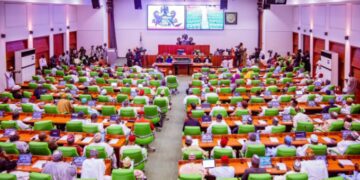
In their responses, the leadership of the National Assembly assured the Executive of their unwavering commitment to national stability.
Senate President, Senator Godswill Akpabio, affirmed that while insecurity is not peculiar to Nigeria, the legislature is determined and united in supporting the President’s efforts. “All Nigerians are fighting extremism, and we in the National Assembly are united behind this administration in fighting insecurity,” Akpabio maintained.
The dinner concluded with VP Shettima urging the attendees to view the event not just as a social gathering but as “a testament to our collective resolve to steer Nigeria toward a horizon where peace is stable, prosperity is shared, and our democracy becomes the pride of future generations.”
However, while Vice President Shettima’s call for unity is politically savvy and perfectly timed, coming as the government faces renewed public pressure over security and the lingering economic hardship from reforms. TheLink News observes that the “alignment of purpose” rhetoric must now pivot from legislative ease, passing bills, to implementation efficiency. The Executive-Legislature relationship, while cordial on paper, faces its true test in two critical areas funding the security war and the “trickle down” challenge.
Because, while the Senate recently proposed the death penalty for kidnappers, effective security requires massive, sustained, and transparent funding of the security agencies. The National Assembly must not only approve security budgets but also enforce stringent oversight to ensure funds are used for modern equipment, intelligence gathering, and operational training, not just recurrent expenditure.
The VP’s mention of macroeconomic gains needing to “trickle down” is the most sensitive point. The success of the economic reforms is currently abstract to the average Nigerian facing high food and energy costs. Real cooperation means the National Assembly pushing for and overseeing targeted, verifiable social interventions and constituency projects that inject liquidity and opportunity directly into the informal sector and rural communities, the areas most susceptible to the criminal economy.
The message is clear, the National Assembly has done its part in lawmaking; it must now double down on its part in oversight and grassroots intervention to validate the VP’s assertion that this collaboration is genuinely working for all Nigerians.