














































The intense scrutiny on Nigeria’s security situation has significantly escalated over the past two weeks, moving beyond individual lawmaker statements to coordinated action by the United States Congress.
The latest update confirms that key committees in the U.S. House of Representatives, following President Donald Trump’s directive, have convened high-level, closed-door investigative roundtables to assess the escalating violence and targeted persecution of Christians in Nigeria. This move signals a strong possibility of imminent, targeted U.S. policy intervention.
The political momentum in Washington, DC, centres on the official redesignation of Nigeria as a “Country of Particular Concern” (CPC) by the Trump Administration on October 31, 2025.
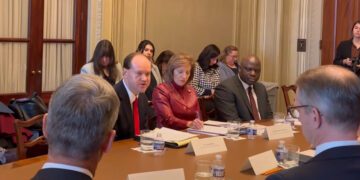
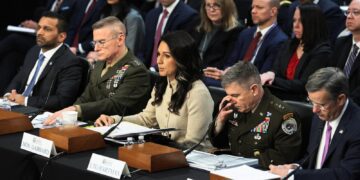
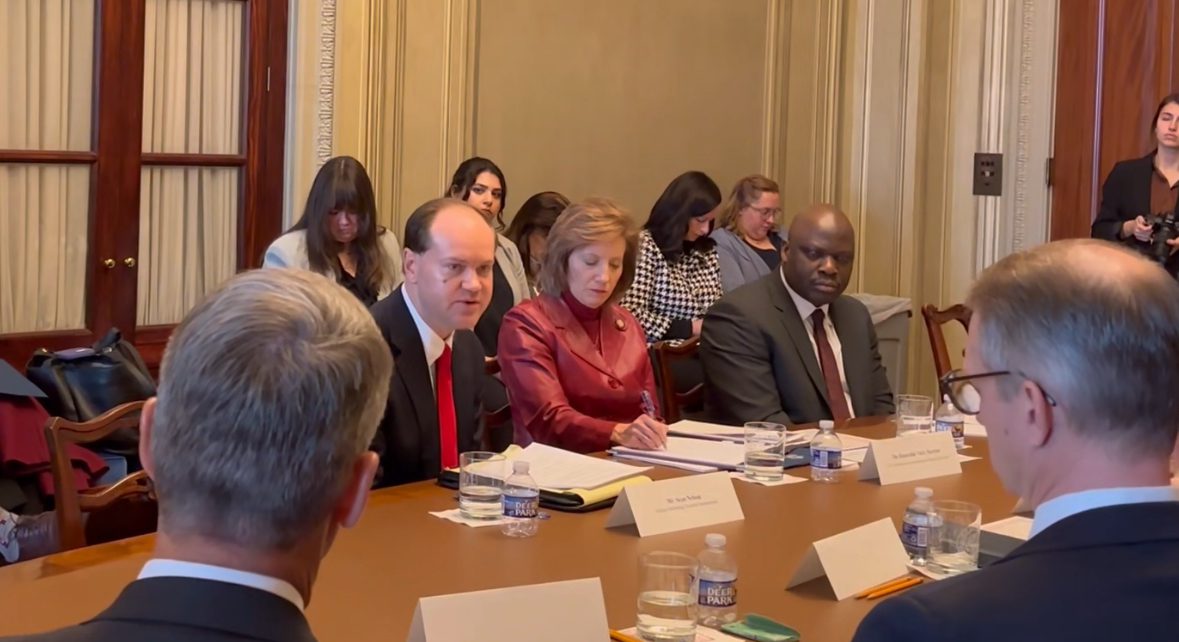
On Tuesday, December 2, 2025 (just yesterday), the House Appropriations Committee, alongside the House Foreign Affairs Committee, hosted a joint congressional roundtable to discuss urgent policy steps.
The meeting was convened to gather evidence and expert testimony for a formal report to President Trump, who had ordered the committee to investigate the “slaughter of Christians in Nigeria” and recommend concrete actions.
The session was led by influential Republican lawmakers, including Appropriations Committee Vice Chair Mario Díaz-Balart and Rep. Chris Smith, who has repeatedly sponsored legislation (H.R. 860) calling for a stronger U.S. response.
Expert testimony at the roundtable, from groups like the U.S. Commission on International Religious Freedom (USCIRF) and the Alliance Defending Freedom International, focused on actionable steps the U.S. government could take.
A primary recommendation is the immediate imposition of targeted sanctions (Global Magnitsky Act), including visa bans and asset freezes, against Nigerian officials and entities deemed complicit in tolerating or enabling religious freedom violations.
Demands for U.S. foreign assistance to be conditioned on verifiable progress from the Nigerian government in prosecuting perpetrators, protecting vulnerable communities, and eliminating the enforcement of blasphemy laws.
Urgent calls for increased security support to the Middle Belt region where violence is most acute, and aid to facilitate the safe return of internally displaced persons (IDPs) to their ancestral homes.
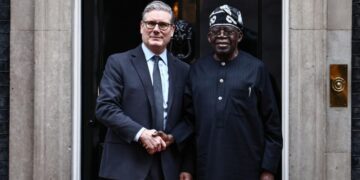
The sustained US pressure, driven by the CPC designation and ongoing Congressional scrutiny, puts the Tinubu administration in a diplomatic bind.
While the Nigerian government has previously rejected claims that the violence is primarily religious, labeling it a complex “social and security issue,” the US action forces the government to engage directly with the persecution narrative to avoid severe diplomatic and economic consequences, including potential cuts to essential U.S. aid.
The coming weeks are expected to feature a strong diplomatic push from Abuja to counter the narrative being solidified in Washington.