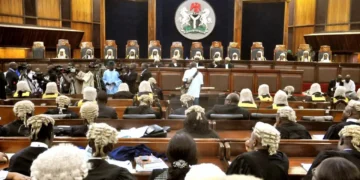










































































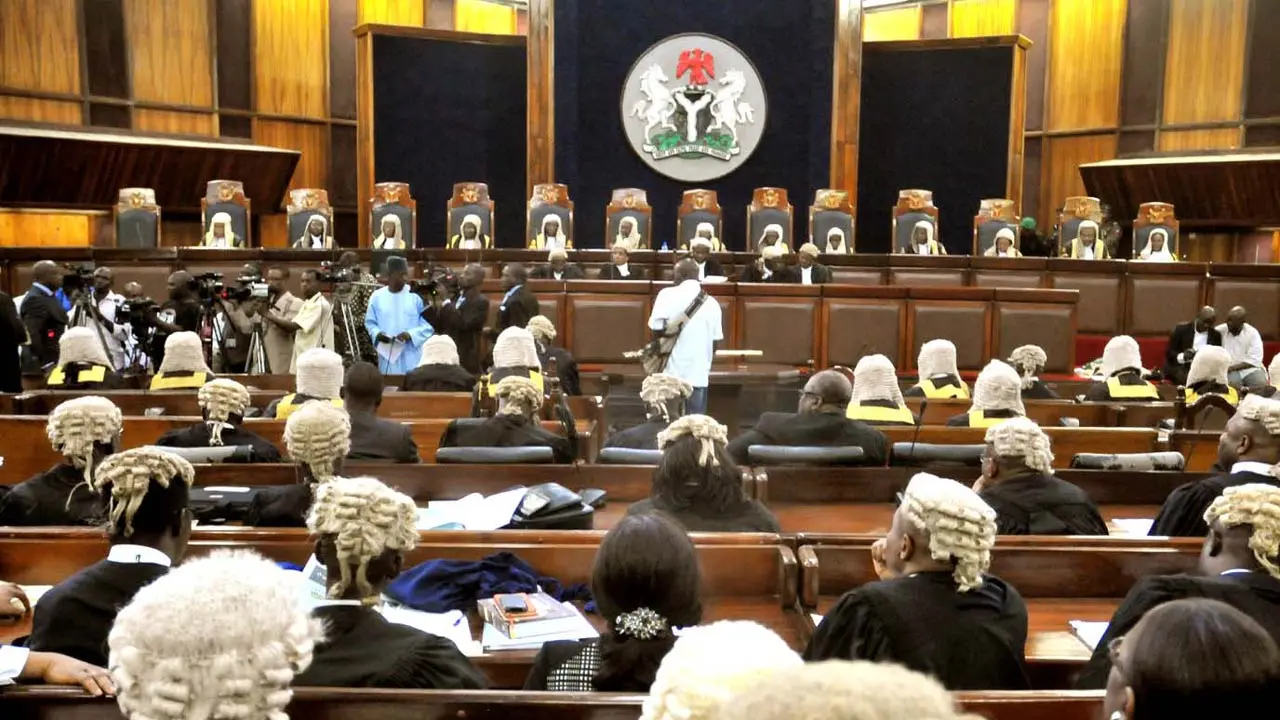
The Supreme Court of Nigeria has delivered a stinging rebuke to the Independent National Electoral Commission (INEC), dismissing its appeal against the Social Democratic Party (SDP) and awarding ₦2 million in costs against the commission.
The judgment, delivered today, Friday, December 19, 2025, marks the end of a protracted legal battle over the substitution of candidates and the commission’s administrative timeline.
A five-member panel of the apex court, led by Justice Mohammed Lawal Garba, unanimously held that INEC’s appeal was “unmeritorious, vexatious, and a calculated attempt to waste the court’s time.”
The Supreme Court upheld the lower court’s finding that INEC had failed to act within the mandatory 14-day window to challenge the primary election outcomes of the SDP.
The court noted that INEC could not provide substantial evidence to support its refusal to recognize the SDP’s substituted candidates, describing the commission’s actions as an “overreach” of its regulatory powers.
In a rare move against a federal agency, the court awarded ₦2,000,000 (Two Million Naira) in costs to the SDP, to be paid personally by the commission as a deterrent against “frivolous appeals.”
The case originated from a pre-election dispute where INEC had initially refused to upload the names of certain SDP candidates for the 2025 bye-elections and upcoming off-cycle polls, claiming the party’s internal congresses were flawed.
| Stage | Ruling |
| Federal High Court | Ruled in favor of the SDP, ordering INEC to accept the candidates immediately. |
| Court of Appeal | Affirmed the High Court’s decision, stating INEC has no power to “veto” a party’s choice of candidates if the primary was conducted according to the Electoral Act. |
| Supreme Court | Final Dismissal: Threw out INEC’s final appeal and imposed financial sanctions. |
This judgment is seen as a significant win for internal party democracy and a warning to the electoral umpire.
The candidates whose names were in limbo are now legally confirmed and must be included in all electoral materials for the Anambra Governorship Election and other upcoming polls.
Legal experts suggest this ruling reinforces the principle that INEC’s role is to monitor and regulate, not to interfere in the internal administrative decisions of political parties unless a clear breach of the Constitution is proven.
The ₦2m cost, while small in the context of INEC’s budget, serves as a high-profile public embarrassment for the commission’s legal department.