



































































Somalia says renewed U.S.-backed airstrikes and expanded ground operations have shifted momentum in its long-running war against al-Shabab, as authorities report territorial gains and intensified targeting of the group’s leadership and bomb-making networks.
The push comes at a pivotal time, with African Union peacekeepers gradually reducing their presence and Somali forces assuming greater responsibility for national security nearly two decades after the insurgency began.
Insurgency roots and resilience
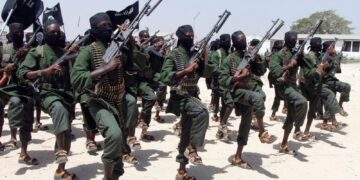
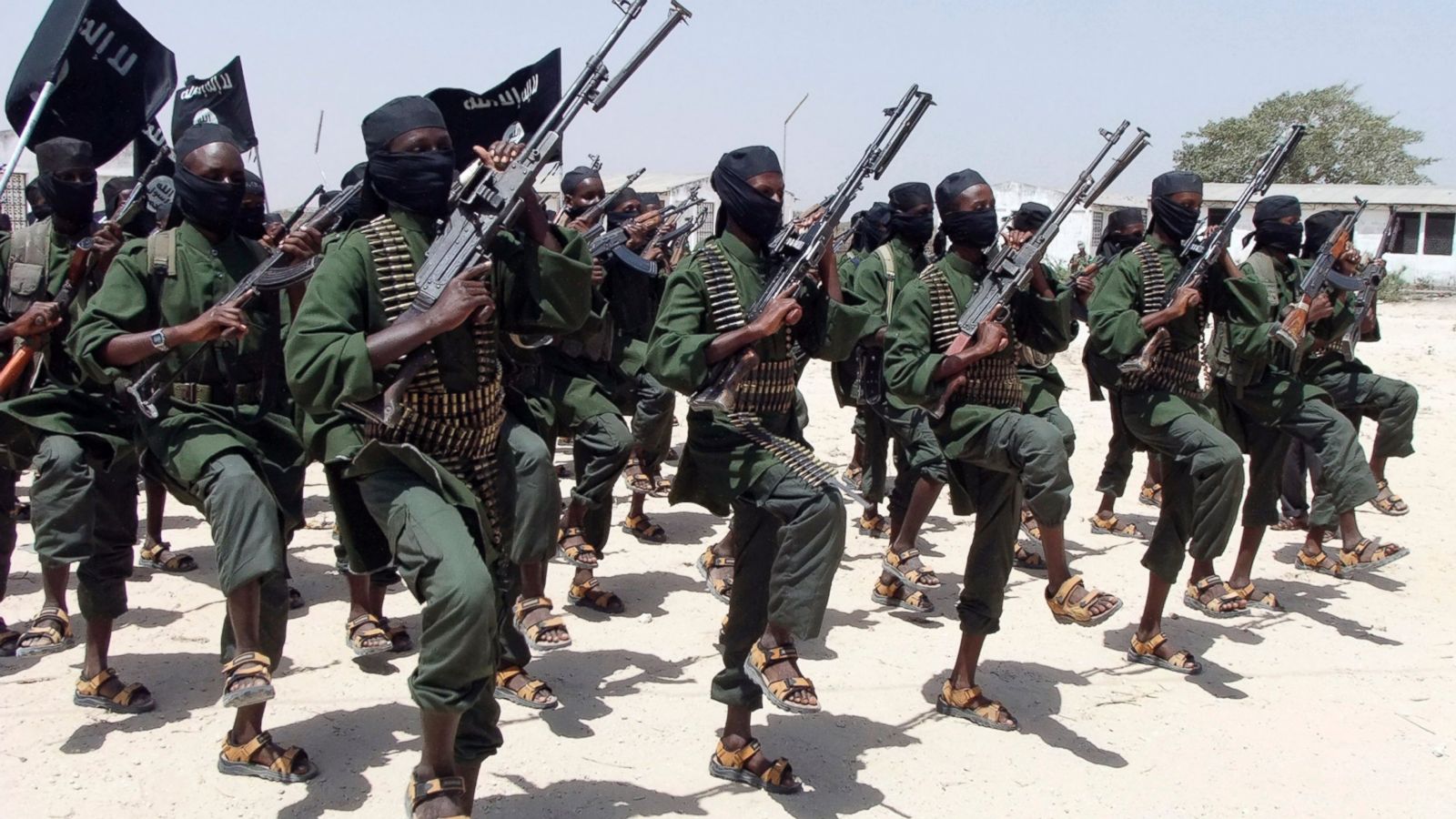
Al-Shabab emerged in the mid-2000s as the armed wing of the now-defunct Islamic Courts Union before aligning itself with al-Qaida. At its peak, it controlled much of southern and central Somalia, including parts of Mogadishu.
African Union troops forced the group out of the capital in 2011, but it adapted by shifting to guerrilla warfare, suicide bombings and targeted assassinations. U.N. monitors say the group continues to raise millions of dollars annually through taxation and extortion.
Renewed U.S. military role
The United States has conducted airstrikes in Somalia for more than a decade. In 2020, during his first term, U.S. President Donald Trump ordered most American troops withdrawn. In 2022, President Joe Biden approved redeployment, restoring a sustained advisory and counterterrorism presence.
U.S. Africa Command, known as United States Africa Command (AFRICOM), says it conducts precision airstrikes targeting al-Shabab leaders, training sites and weapons facilities in coordination with Somalia’s federal government.
Somalia’s state minister for defence, Omar Ali Abdi, said recent air operations destroyed facilities used to manufacture improvised explosive devices and neutralized vehicle-borne explosives before deployment. Somali intelligence services, he said, provide verified targeting information.
AFRICOM has previously faced criticism from rights groups over civilian casualties. The command says it assesses the risk of civilian harm before strikes and investigates allegations when they arise.
Territorial gains claimed
Somali authorities say troops have retaken areas in Lower Shabelle, Hiiraan, Middle Shabelle and parts of Jubbaland that had been under militant control for years.
Abdi told The Associated Press that long-held al-Shabab strongholds in Lower Shabelle, including Jilib Marka, Gendershe and Dhanaane, are now under military control. He also cited gains in Hiiraan and Middle Shabelle, and joint operations in Jubbaland’s Kudhaa area involving regional Darawiish forces and U.S.-trained Danab special forces.
Al-Shabab has not confirmed the reported losses, and independent verification is limited due to restricted access to contested areas.
Airpower shifts battlefield dynamics
Security analysts say expanded aerial surveillance and strike capability have altered the conflict’s dynamics.
Mogadishu-based analyst Abdullahi Ahmed Ali said government forces previously lacked sustained airpower and persistent surveillance, even when ground weaponry was comparable to that of al-Shabab.
Expanded drone coverage, he said, now enables authorities to identify underground hideouts and supply routes that were previously difficult to reach. Airstrikes against such positions have made it easier for government troops to advance and hold territory.
Officials also say drones provide early warning of militant movements near Mogadishu, where al-Shabab continues to carry out bombings despite tightened security.
Transition from AU peacekeepers
The renewed offensive coincides with the gradual drawdown of the African Union Transition Mission in Somalia (ATMIS), as Somali forces take greater control of security operations.
Analysts say that makes international intelligence-sharing and air support more critical during the transition period.
At the same time, Somalia faces overlapping pressures, including climate-driven drought, political tensions between federal and regional authorities, and funding shortfalls affecting security and humanitarian programmes.
Uncertain consolidation
Security experts caution that military gains must be consolidated through governance and service delivery. In past offensives, al-Shabab reasserted control in areas where government forces failed to maintain a sustained presence.
Somali authorities say thousands of militants have been killed since the latest campaign intensified, though those figures could not be independently verified.
Experts note that territorial control in Somalia remains fluid, especially in rural regions. While government forces appear to have expanded their footprint in several areas, al-Shabab retains the ability to operate across vast parts of central and southern Somalia.
Officials say operations will continue in coordination with international partners, combining ground offensives, intelligence-sharing and reconstruction efforts in retaken towns.
According to Abdi, the government plans to rebuild homes and deliver aid in newly captured areas to prevent militants from reestablishing control.
Despite the reported advances, analysts say al-Shabab remains one of Africa’s most resilient militant groups — and that Somalia’s long-term stability will depend not only on battlefield success, but on its ability to secure and govern reclaimed territory as international peacekeeping forces scale back their role.
SOURCE: The Associated Press