

















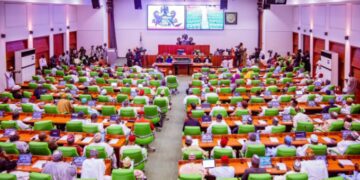
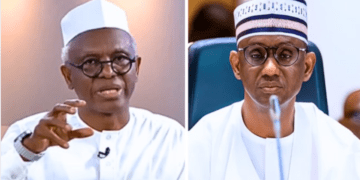








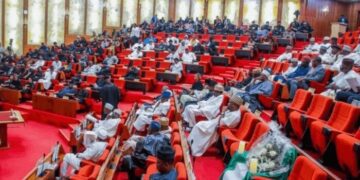






































The Nigerian Senate has intensified its probe into the failure of the Safe School Initiative (SSI) by formally summoning the Minister of Finance and Coordinating Minister of the Economy, Mr. Wale Edun, and the Minister of Education, Dr. Tunji Alausa, to appear before its ad hoc committee.
The summons, issued late yesterday, is aimed at compelling the ministers and other security chiefs to account for the utilization and current status of the estimated $30 million fund, which has failed to secure Nigerian schools from relentless attacks and mass abductions.
The Senate’s Ad Hoc Committee on the Safe School Initiative, chaired by Senator Orji Uzor Kalu (Abia North), adopted its work plan and immediately issued the summons.
The two ministers, along with the Minister of Defence, Lt.-Gen. Christopher Musa (retd.), and the Commandant General of the Nigeria Security and Civil Defence Corps (NSCDC), are directed to appear before the committee next Tuesday, 09 December 2025.
The Committee is investigating why, despite the mobilization of the initial $30 million between 2014 and 2021 (aside from the recent ₦144 billion Federal Government funding), schools remain soft targets. Senator Kalu stated that over 1,680 schoolchildren have been kidnapped and 180 educational facilities attacked since 2014.
Dr. Tunji Alausa is expected to provide comprehensive documentation on the operational effectiveness, implementation strategies, and physical security upgrades achieved with the allocated funds since the initiative’s inception.
Mr. Wale Edun is anticipated to account for the financial custody, disbursement records, and current balance of the SSI funds, tracing every dollar and naira spent.
The investigation follows fresh national outrage triggered by the recent abductions of students in Kebbi and Niger States. The Senate vowed to conduct a comprehensive financial and operational audit; review early-warning and emergency-response systems; and evaluate partnerships with international donors and the private sector.
Senator Kalu stressed, “It is unacceptable that our schools remain soft targets for terrorists and kidnappers… Nigerians deserve to know why, despite enormous investment and global support, our schools remain unsafe.”
The Senate’s intervention underscores a critical governance failure: the ability to raise significant funds for a vital national priority, yet the inability to translate those funds into tangible security results.
The $30 million was meant to create a blueprint for protecting children, but ten years later, the recurring vulnerability of schools suggests that the initiative was either poorly implemented, grossly mismanaged, or politically hijacked.
The summoning of the two key ministers may suggest hat the Senate intends to unravel the complex web of financial and administrative lapses that have left millions of students exposed.