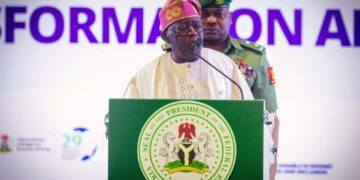

































































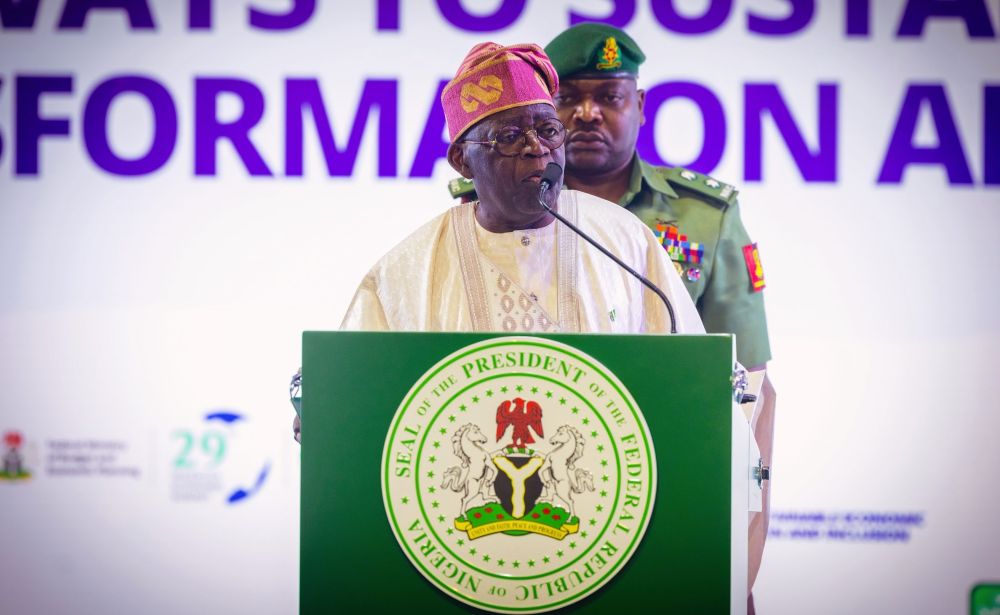
President Bola Ahmed Tinubu has urged Nigerian political leaders to prioritize electoral reforms and foster party unity as the nation engages in a robust debate on the essential elements of its democratic ethos.
The President’s statement emphasizes the need to continually strengthen democratic institutions and practices, ensuring they are transparent, inclusive, and capable of delivering good governance to the Nigerian people.
President Tinubu, speaking at an event focused on Nigeria’s democratic journey, underscored that the credibility of democracy rests heavily on the integrity of the electoral process.
While the Electoral Act 2022 introduced significant technological innovations like the Bimodal Voter Accreditation System (BVAS) and the IReV portal, the President acknowledged that public trust in electoral outcomes remains fragile, a sentiment echoed by many civic groups.
He stressed that electoral reform is not a one-time event but a continuous process required to address the perennial challenges of irregularities, financing (vote-buying), and judicial resolution of disputes.
The President called on the National Assembly and key stakeholders, including the Independent National Electoral Commission (INEC) and Civil Society Organizations (CSOs), to collaborate on further legal and institutional reviews to fortify the system ahead of future elections.
President Tinubu also focused on the role of political parties in sustaining democracy, urging leaders, especially within the ruling All Progressives Congress (APC), to maintain cohesion and internal democracy.
The President cautioned party members against allowing internal feuds and personal ambitions to overshadow the national interest and the commitment to delivering on the “Renewed Hope Agenda.”
In his previous addresses, Tinubu had forcefully dispelled rumors that his administration intends to impose a one-party state, declaring that he would be the “last person” to advocate for stifling the multi-party system. However, his renewed call for unity is seen as an effort to consolidate the APC’s base while facing growing opposition criticism.
The President highlighted that a core tenet of democracy is tolerance for dialogue, fearless debate, and the commitment of all political actors, both ruling and opposition, to work together for the nation’s progress.
The current debate among Nigeria’s political class centers on the quality of leadership, the need for ethical governance, and the urgency of addressing economic hardship and insecurity to ensure democracy translates into tangible benefits for the average citizen.